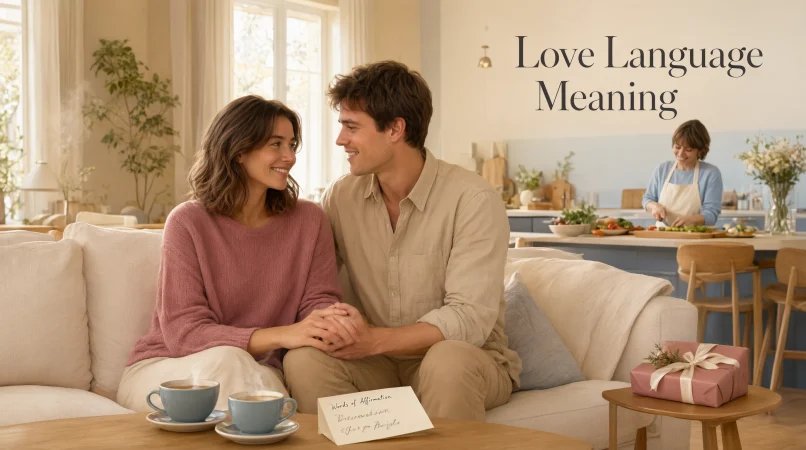
Love language refers to the way a person expresses love and prefers to receive affection from others. The concept is commonly associated with five love languages: words of affirmation, quality time, receiving gifts, acts of service, and physical touch.
For example, someone who values quality time may feel most appreciated when a partner gives them undivided attention, while someone who prefers words of affirmation may value compliments and encouraging words. Understanding love languages can help people communicate their feelings, recognize different expressions of affection, and build stronger relationships.
Have you ever wondered why some people feel loved through thoughtful gifts while others value meaningful conversations, physical affection, or spending time together? The answer may relate to their love language.
People express affection in different ways, and the gestures that make one person feel appreciated may not have the same effect on someone else. Understanding these differences can make romantic relationships, friendships, and family connections more meaningful.
In this guide, you will learn what love language means, explore the five commonly recognized love languages, and discover how they influence everyday relationships. You will also find practical examples of how people express and receive affection through communication, attention, thoughtful gestures, and physical closeness.
By understanding these different expressions of love, you can become more aware of your own emotional preferences and communicate more effectively with the people who matter to you.
Table of Contents
- What Does Love Language Mean?
- Where Did the Five Love Languages Come From?
- The Five Types of Love Languages
- How to Recognize Your Love Language
- Love Languages in Romantic Relationships
- Love Languages in Family and Friendships
- Love Language vs. Attachment Style
- Are the Five Love Languages Scientifically Proven?
- Common Misunderstandings About Love Languages
- How to Use Love Languages in Everyday Life
- Frequently Asked Questions
What Does Love Language Mean?
A love language describes how someone prefers to express affection and feel appreciated by another person. It is a way of understanding the gestures, words, and actions that make emotional connection meaningful.
For example, one person may feel loved when their partner says, “I appreciate everything you do.” Another may feel more connected when their partner puts away their phone and spends uninterrupted time with them.
Both people may care equally, but they recognize affection in different ways.
The concept is especially popular in romantic relationships because it gives couples a simple way to discuss emotional needs. Instead of expecting a partner to guess what makes them feel valued, someone can explain which actions matter most.
Is a Love Language a Personality Trait?
Not exactly. A love language is better understood as a preference than a fixed personality category.
Someone may enjoy receiving compliments but also appreciate practical help and physical affection. Their preferences can depend on the relationship, circumstances, culture, and stage of life.
For example, a person dealing with a stressful week may value acts of service more than usual. Someone in a long-distance relationship may place greater importance on meaningful conversations and planned video calls.
It is useful to treat these preferences as a starting point for communication, not a permanent label that defines everything about a person.
Where Did the Five Love Languages Come From?
The five love languages concept was introduced by American author and relationship counselor Dr. Gary Chapman in his 1992 book, The 5 Love Languages: The Secret to Love That Lasts.
Chapman developed the framework after years of counseling couples. He described five common ways people express and experience affection:
- Words of affirmation
- Quality time
- Receiving gifts
- Acts of service
- Physical touch
His central idea was that people may express love in a way that feels natural to them without realizing that their partner prefers something different.
For instance, a husband may regularly buy thoughtful presents because gift-giving is how he expresses affection. His wife, however, may feel more appreciated when he spends time talking with her without distractions.
Neither person necessarily cares less. They may simply have different preferences.
The framework became widely known because it offers an easy vocabulary for discussing affection. Still, it is a popular relationship model rather than a formal psychological diagnosis or a scientifically established classification of people.
The Five Types of Love Languages
Each category describes a different way of expressing care. Most people can appreciate several types, even if one or two feel especially meaningful.
Words of Affirmation
Words of affirmation involve expressing affection through spoken or written language. People who value this form of connection often appreciate sincere compliments, encouragement, gratitude, and reassuring words.
A simple sentence can make a meaningful difference.
Examples include:
- “I am proud of you.”
- “You make my life better.”
- “Thank you for supporting me.”
- “I believe in you.”
- “I appreciate how hard you work.”
This preference is not about receiving compliments every minute. It is about hearing genuine expressions of appreciation and emotional support.
For example, imagine someone has worked hard to complete an important project. Their partner says, “I know how much effort you put into this, and I am proud of you.” That recognition may feel more meaningful than an expensive present.
Words can also help during difficult moments. A thoughtful message, an apology, or a reminder that someone is not alone can strengthen emotional connection.
However, words should match actions. Repeated promises without follow-through can eventually lose their meaning.
Quality Time
Quality time means giving someone your attention and sharing experiences without unnecessary distractions. People who prefer this type of affection often value meaningful conversations, shared activities, and moments when both people are fully present.
It is not simply about spending many hours in the same room. Attention matters more than the amount of time.
Examples include:
- Having dinner together without checking phones.
- Taking a walk and talking about the day.
- Planning a weekend activity.
- Watching a favorite movie together.
- Listening carefully when someone shares a concern.
Consider a couple who both have demanding jobs. They may not have much free time during the week, but they make an effort to have breakfast together every Sunday.
That regular time can help them maintain closeness.
People who value this preference may feel overlooked when their partner is physically present but constantly distracted. Checking messages during every conversation, canceling plans repeatedly, or giving attention only when convenient can create frustration.
Quality time is about making someone feel that their presence matters.
Receiving Gifts
Receiving gifts involves feeling appreciated through thoughtful objects or gestures. For people who value this preference, a gift can represent attention, affection, and the memory of a meaningful moment.
The value of the gift does not have to be financial.
Examples include:
- Bringing someone’s favorite snack home.
- Giving a handwritten birthday card.
- Buying a book they mentioned wanting.
- Bringing flowers after a difficult week.
- Keeping a small souvenir from a shared trip.
A thoughtful gift shows that someone remembered a detail and made an effort to act on it.
For example, imagine telling your partner that you miss a particular childhood chocolate. A few days later, they bring it home for you. The gesture may feel special because it shows that they listened.
This preference should not be confused with materialism. Someone who appreciates gifts does not necessarily expect expensive purchases or luxury items.
The emotional meaning behind the gesture is often more important than its price.
Acts of Service
Acts of service involve showing affection through helpful actions. People who value this preference may feel appreciated when someone makes their responsibilities easier or offers practical support.
Small actions can communicate care.
Examples include:
- Preparing breakfast before work.
- Helping with household chores.
- Picking up groceries.
- Taking care of a task when someone feels overwhelmed.
- Helping organize an important event.
Imagine someone has an exhausting week and still needs to finish several household responsibilities. Their partner notices and takes care of dinner and the dishes without being asked.
That practical help may communicate affection more clearly than a long romantic speech.
However, acts of service should not become an unequal responsibility. One person should not be expected to handle every task simply because the other prefers this form of affection.
Healthy support involves mutual effort and appreciation.
Physical Touch
Physical touch involves expressing affection through appropriate physical contact. People who value this preference may feel close through hugs, holding hands, cuddling, or sitting near someone they care about.
Examples include:
- Hugging after a long day.
- Holding hands while walking.
- Sitting close during a conversation.
- Giving a comforting touch on the shoulder.
- Cuddling while watching a movie.
Physical affection can communicate warmth and reassurance without requiring words.
For example, when someone feels upset, a gentle hug may help them feel supported. Another person may prefer verbal comfort instead, which is why understanding individual preferences matters.
Consent is essential. A preference for physical affection never gives someone permission to touch another person without agreement. People can also have different comfort levels depending on the setting, relationship, culture, or situation.
Respectful affection always considers personal boundaries.
Comparing the Five Love Languages
The five categories can be easier to understand when viewed side by side.
| Love language | Main expression | Everyday example | What it communicates |
| Words of affirmation | Spoken or written appreciation | Sending an encouraging message | “I value you.” |
| Quality time | Focused attention | Having an uninterrupted conversation | “You matter to me.” |
| Receiving gifts | Thoughtful presents | Remembering someone’s favorite snack | “I thought of you.” |
| Acts of service | Practical help | Preparing a meal | “I want to support you.” |
| Physical touch | Consensual affection | Holding hands | “I feel close to you.” |
No category is automatically better than another. A relationship can include all five, and people may value different forms at different times.
How to Recognize Your Love Language
You do not need a formal test to begin understanding what makes you feel appreciated. Paying attention to your reactions and preferences can provide useful clues.
Notice What Makes You Feel Most Appreciated
Think about moments when someone made you feel genuinely cared for.
Was it a heartfelt compliment? A thoughtful gift? Help with an exhausting task? A long conversation without distractions?
The situations you remember most clearly may reveal which expressions of affection matter to you.
Consider How You Naturally Show Affection
People sometimes express care in the same way they prefer to receive it.
For example, someone who frequently writes thoughtful messages may value words of affirmation. A person who regularly prepares meals for friends may naturally show affection through acts of service.
This is not a perfect test, though. You might express affection differently from how you prefer to receive it.
Think About What You Miss in a Relationship
Your frustrations can also offer clues.
If you feel disconnected when your partner rarely spends uninterrupted time with you, quality time may be important. If you feel hurt when your efforts go unrecognized, words of affirmation may matter more.
The goal is not to criticize someone but to understand what helps you feel emotionally connected.
Ask Yourself What You Would Choose
Imagine receiving one of the following gestures:
- A sincere message expressing appreciation.
- An uninterrupted evening together.
- A thoughtful gift connected to your interests.
- Help with a task that has been stressing you.
- A warm, consensual hug.
Which gesture would make you feel most appreciated?
Your answer can help identify your current preference. It is perfectly normal to choose more than one.
Love Languages in Romantic Relationships
The concept is often used by couples because partners can have different expectations about affection.
One person may believe that paying bills, repairing things around the house, and handling responsibilities are clear signs of love. Their partner may still feel emotionally distant because they want more meaningful conversations.
Neither perspective is automatically wrong.
When Partners Have Different Preferences
Imagine Sarah values quality time, while her partner Daniel values acts of service.
Daniel regularly completes household tasks and believes he is showing how much he cares. Sarah appreciates the help but wishes they would spend more time together without distractions.
A useful conversation might involve explaining what each person needs rather than accusing the other of not caring.
Daniel could set aside an evening for them to talk, while Sarah could recognize the effort he makes through practical support.
Both people can learn to express affection in ways the other understands.
Do Couples Need the Same Love Language?
No. Couples do not need identical preferences to build a healthy relationship.
Different preferences can encourage partners to learn new ways of showing appreciation. What matters is whether both people are willing to listen and make reasonable efforts.
It is also helpful to avoid treating these categories as strict rules. A person who prefers quality time may still enjoy gifts, and someone who values physical touch may also need verbal reassurance.
Love Languages in Family and Friendships
Affection is not limited to romantic partnerships. The same five categories can help people understand how family members and friends prefer to receive care.
Between Parents and Children
Children may respond differently to expressions of affection. One child might enjoy verbal encouragement, while another prefers shared activities or physical affection, when welcomed.
Parents can observe what helps their children feel supported rather than assuming that every child needs the same approach.
For example, helping a child with homework may communicate practical support, while praising their effort can provide encouragement.
Age and development matter, too. A young child may need more direct attention, while an older child may appreciate having their interests respected.
Between Friends
Friends often express care through shared experiences, thoughtful gestures, and emotional support.
One friend may remember birthdays and give small presents. Another may regularly call to check in. Someone else may offer help when a friend moves house or faces a difficult week.
These actions can represent different ways of maintaining a meaningful friendship.
Within Families
Family members may have different preferences because of age, personality, culture, and personal experiences.
An adult child may appreciate practical help from a parent, while the parent may feel most connected through regular visits or phone calls.
Recognizing these differences can make family communication more thoughtful.
Love Language vs. Attachment Style
Love languages and attachment styles are sometimes discussed together, but they describe different things.
A love language focuses on preferred expressions of affection. Attachment style describes patterns in how people experience emotional closeness, trust, and security in relationships.
| Feature | Love language | Attachment style |
| Main focus | How affection is expressed and received | How people relate to emotional closeness |
| Main question | What makes me feel appreciated? | How do I respond to closeness and separation? |
| Common categories | Five popular expressions of affection | Secure, anxious, avoidant, and disorganized patterns |
| Main use | Improving communication about affection | Understanding relationship patterns |
| Example | Preferring uninterrupted time together | Feeling worried when a partner becomes distant |
A person with an anxious attachment pattern may seek frequent reassurance. They might also value words of affirmation, but the two concepts are not interchangeable.
Similarly, someone with a secure attachment style can prefer gifts or acts of service.
Understanding both ideas may offer useful insight, but neither should be used to label someone unfairly.
Are the Five Love Languages Scientifically Proven?
The five love languages are popular in relationship advice, but their scientific support is more limited than their widespread use might suggest.
Researchers have examined whether people have one primary love language and whether matching partners’ preferences reliably improves relationship satisfaction. Findings do not establish that every person belongs to one fixed category or that matching categories guarantees a successful relationship.
Human relationships are complex. Emotional needs can change with circumstances, and people often value several forms of affection at the same time.
The framework is best used as a conversation tool rather than a psychological assessment.
For example, asking your partner whether they prefer verbal appreciation or practical support can lead to a helpful discussion. Insisting that they must fit one category can have the opposite effect.
A useful approach is to stay curious. Ask what makes someone feel cared for, listen to their answer, and adjust your actions when appropriate.
Common Misunderstandings About Love Languages
The concept is easy to remember, but people sometimes use it in ways that create confusion.
Everyone Has Only One Love Language
This is one of the most common misunderstandings. People can appreciate several forms of affection, and their preferences may change over time.
Someone may value quality time most of the year but appreciate practical help during a stressful period.
Your Partner Must Express Love Exactly as You Prefer
A relationship should not become a test in which one person must perform specific gestures perfectly.
It is reasonable to explain what makes you feel appreciated, but healthy communication also involves recognizing the other person’s efforts and preferences.
A Love Language Excuses Harmful Behavior
It does not. Someone cannot justify controlling behavior, unwanted physical contact, or emotional pressure by claiming that it is their preferred way of showing affection.
Every expression of care must respect consent, dignity, and personal boundaries.
Gifts Are Only About Money
Thoughtful gifts can have emotional meaning without being expensive. A handwritten note, a favorite snack, or a small object connected to a shared memory can be deeply appreciated.
Love Languages Guarantee Relationship Success
Understanding preferences may improve communication, but it cannot solve every relationship problem. Trust, honesty, compatibility, conflict management, and mutual respect remain important.
How to Use Love Languages in Everyday Life
You can apply the idea without turning it into a complicated relationship exercise.
Talk openly about preferences. Ask friends, family members, or partners what makes them feel appreciated. Listen without judging their answers.
Show affection in different ways. Do not rely on one gesture all the time. Combine kind words, shared activities, practical support, thoughtful gifts, and appropriate physical affection.
Pay attention to consent. Physical touch should always be welcome. Even familiar gestures may not feel comfortable in every situation.
Recognize the effort behind gestures. Someone may express affection differently from you. Try to understand the intention while communicating what you need.
Revisit the conversation. Preferences can change with age, responsibilities, health, and relationship circumstances. Check in occasionally rather than assuming an old answer still applies.
Avoid keeping score. Affection should not become a competition over who gives more. Healthy relationships involve mutual care, not constant calculations.
FAQs
Can your love language change over time?
What makes someone feel appreciated can change with life experiences, personal growth, relationships, and responsibilities.
Can someone have all five love languages?
Yes. The five categories are not exclusive personality types. Someone can appreciate compliments, shared experiences, thoughtful gifts, helpful actions, and physical affection.
Are love languages important in long-distance relationships?
They can be useful because distance changes how people express affection. Couples may rely more on meaningful messages, scheduled calls, thoughtful deliveries, and planned visits to maintain connection.
What if my partner does not believe in love languages?
You do not need to agree with the framework to discuss emotional needs. Simply explain which actions help you feel appreciated and ask what makes your partner feel supported.
Can love languages apply to self-love?
The framework focuses on expressing affection in relationships, but its ideas can also support self-care through positive self-talk, enjoyable activities, and practical stress reduction.
Is physical touch necessary for a healthy relationship?
Emotional closeness does not require physical touch, as healthy relationships respect each person’s comfort and affection preferences.
Conclusion
Understanding how people express affection can make relationships more thoughtful and communication more direct. The five love languages offer a simple way to discuss what helps someone feel valued, but they should not become fixed labels or relationship rules.
Real connection grows when people listen, respect boundaries, and make an effort to understand each other. The most meaningful expression of love is one that combines care with respect.