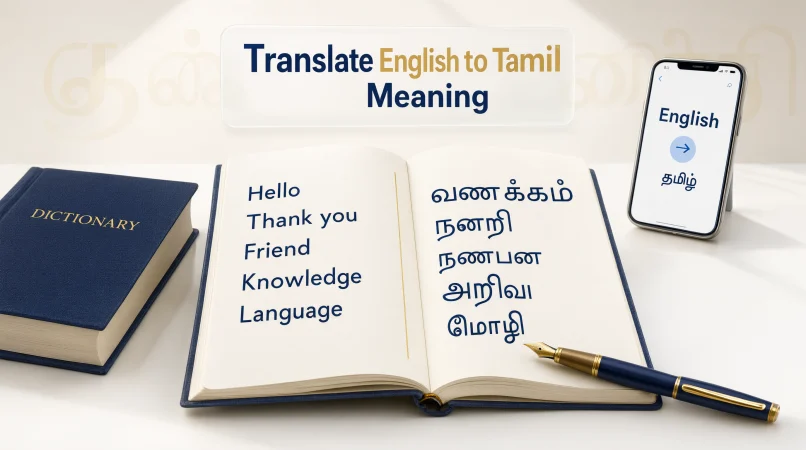
To translate English to Tamil meaning, you need to understand the meaning of an English word or sentence and express the same idea naturally in Tamil. Tamil translations can change depending on context, grammar, formality, and the relationship between speakers.
For example, “Good morning” is commonly translated as காலை வணக்கம் (Kaalai Vanakkam), while “Thank you” is நன்றி (Nandri). Learning common vocabulary and everyday expressions makes translation easier and more accurate.
Have you ever wanted to know the Tamil meaning of an English word or translate an entire English sentence into Tamil? Whether you are learning Tamil, improving your vocabulary, studying, or communicating with Tamil-speaking friends, accurate translation makes understanding different languages easier. However, English and Tamil have different sentence structures and grammatical rules, so translating individual words without considering context can sometimes change the intended meaning.
In this guide, you will learn how to translate English to Tamil, explore common English words and their Tamil meanings, and understand how context affects translation accuracy. With simple explanations, practical examples, and commonly used translations, you can build your vocabulary, improve your language skills, and express everyday thoughts more confidently in Tamil.
Table of Contents
- What Does English to Tamil Translation Mean?
- Why Context Matters in Translation
- Common English Words and Their Tamil Meanings
- Everyday English Sentences Translated into Tamil
- English to Tamil Translation for Different Situations
- Understanding Tamil Grammar and Sentence Structure
- Spoken Tamil vs. Written Tamil
- Common Translation Mistakes
- Practical Tips for Better English to Tamil Translation
- Frequently Asked Questions
What Does English to Tamil Translation Mean?
English to Tamil translation means converting words, phrases, or complete sentences from English into Tamil while keeping their original meaning. It involves more than replacing each English word with a Tamil equivalent. A good translation communicates the same message in a way that Tamil speakers can understand naturally.
Tamil is one of the oldest living classical languages and has a rich literary tradition. It is spoken mainly in the Indian state of Tamil Nadu and the union territory of Puducherry, as well as in Sri Lanka, Singapore, and Tamil-speaking communities around the world.
The language has its own script, sentence patterns, vocabulary, and grammatical rules. These differences explain why a direct word-for-word translation does not always work.
For example:
- English: How are you?
- Tamil: நீங்கள் எப்படி இருக்கிறீர்கள்?
- Pronunciation: Neengal eppadi irukkireergal?
The Tamil sentence communicates the same question, but its structure differs from the English version.
Translation becomes easier when you focus on the message rather than the individual words.
When Do People Need English to Tamil Translation?
People use translation for many everyday purposes. Students may need to understand English lessons, while travelers may want to communicate with Tamil-speaking people. Someone learning Tamil might also translate familiar English expressions to build vocabulary.
Common situations include:
- Understanding English words and their Tamil equivalents.
- Translating messages sent by friends or family.
- Learning basic Tamil for travel or daily communication.
- Understanding school lessons and educational material.
- Reading English instructions and explanations.
- Improving vocabulary in both languages.
- Communicating with Tamil-speaking colleagues and customers.
The purpose of translation can influence the choice of words. A sentence intended for a close friend may sound different from one written for a teacher or employer.
Why Context Matters in Translation
One English word can have several Tamil meanings. The correct choice depends on how the word appears in a sentence.
Consider the English word “light.” It can describe brightness, something that does not weigh much, or a device that produces illumination. Tamil uses different expressions depending on the intended meaning.
| English word or expression | Tamil meaning | Context |
| Light | ஒளி (Oli) | Brightness |
| Light weight | குறைந்த எடை (Kuraindha edai) | Not heavy |
| Light a lamp | விளக்கை ஏற்று (Vilakkai yetru) | Produce a flame |
| Light color | வெளிர் நிறம் (Velir niram) | Pale color |
Another example is the word “right.”
- Right direction: சரியான திசை (Sariyana thisai)
- Right answer: சரியான பதில் (Sariyana badhil)
- Human rights: மனித உரிமைகள் (Manitha urimaigal)
- Turn right: வலது பக்கம் திரும்பு (Valathu pakkam thirumbu)
The same English spelling does not guarantee the same Tamil translation.
Literal Meaning vs. Natural Meaning
A literal translation follows the original words closely. A natural translation communicates the intended idea using expressions that Tamil speakers commonly use.
For example:
English: It is raining cats and dogs.
A literal translation would sound confusing because the expression is an English idiom. The speaker is not describing animals falling from the sky. The intended meaning is that it is raining very heavily.
A natural Tamil equivalent is:
Tamil: பலத்த மழை பெய்கிறது.
Meaning: It is raining heavily.
This example shows why translators must understand idioms, expressions, and cultural references before choosing Tamil words.
Common English Words and Their Tamil Meanings
Building a vocabulary list is a useful starting point for anyone learning Tamil. Begin with words that appear frequently in conversations, reading material, and everyday situations.
The following examples include Tamil script and simple pronunciation guides.
Basic Everyday Vocabulary
| English | Tamil | Pronunciation |
| Hello | வணக்கம் | Vanakkam |
| Yes | ஆம் | Aam |
| No | இல்லை | Illai |
| Please | தயவுசெய்து | Thayavuseithu |
| Thank you | நன்றி | Nandri |
| Sorry | மன்னிக்கவும் | Mannikkavum |
| Welcome | வரவேற்கிறோம் | Varaverkirom |
| Good | நல்ல | Nalla |
| Bad | கெட்ட | Ketta |
| Beautiful | அழகான | Azhagana |
| Important | முக்கியமான | Mukkiyamaana |
| Help | உதவி | Udhavi |
These words are useful in simple conversations. However, some expressions have more than one suitable form depending on the situation.
For example, நன்றி (Nandri) is a common way to say “thank you.” It works in many everyday situations, including conversations with strangers and acquaintances.
Family and Relationship Words
Family vocabulary is especially useful because these words appear in daily conversations.
| English | Tamil | Pronunciation |
| Mother | அம்மா | Amma |
| Father | அப்பா | Appa |
| Brother | சகோதரன் | Sagotharan |
| Sister | சகோதரி | Sagothari |
| Son | மகன் | Magan |
| Daughter | மகள் | Magal |
| Husband | கணவர் | Kanavar |
| Wife | மனைவி | Manaivi |
| Friend | நண்பர் | Nanbar |
| Family | குடும்பம் | Kudumbam |
| Grandmother | பாட்டி | Paatti |
| Grandfather | தாத்தா | Thaatha |
Tamil has several relationship terms that can express age, respect, and family connections. For example, speakers commonly use அண்ணா (Anna) for an older brother or as a respectful way to address an older man.
Similarly, அக்கா (Akka) can refer to an older sister or serve as a familiar, respectful form of address for an older woman.
Food and Household Vocabulary
Food and household words are useful when shopping, cooking, or discussing daily routines.
| English | Tamil | Pronunciation |
| Water | தண்ணீர் | Thanneer |
| Food | உணவு | Unavu |
| Rice | அரிசி | Arisi |
| Milk | பால் | Paal |
| Bread | ரொட்டி | Rotti |
| Fruit | பழம் | Pazham |
| Vegetable | காய்கறி | Kaaykari |
| House | வீடு | Veedu |
| Door | கதவு | Kathavu |
| Window | ஜன்னல் | Jannal |
| Chair | நாற்காலி | Naarkali |
| Table | மேசை | Mesai |
One useful distinction is the difference between அரிசி (Arisi) and சாதம் (Saadham). Arisi refers to uncooked rice, while saadham commonly refers to cooked rice.
This is a good example of how a language can distinguish between two things that English speakers may casually describe with the same word.
Everyday English Sentences Translated into Tamil
Individual words help build vocabulary, but complete sentences show how those words work together. Learning common expressions can also make conversations feel more natural.
Greetings and Introductions
| English sentence | Tamil translation | Pronunciation |
| Good morning. | காலை வணக்கம். | Kaalai vanakkam. |
| Good night. | இரவு வணக்கம். | Iravu vanakkam. |
| How are you? | நீங்கள் எப்படி இருக்கிறீர்கள்? | Neengal eppadi irukkireergal? |
| I am fine. | நான் நலமாக இருக்கிறேன். | Naan nalamaaga irukkiren. |
| What is your name? | உங்கள் பெயர் என்ன? | Ungal peyar enna? |
| My name is Ravi. | என் பெயர் ரவி. | En peyar Ravi. |
| Nice to meet you. | உங்களைச் சந்தித்ததில் மகிழ்ச்சி. | Ungalai sandhithathil magizhchi. |
These expressions are useful when meeting someone for the first time. Notice that Tamil often uses நீங்கள் (Neengal) as a respectful form of “you.”
Daily Conversation
| English sentence | Tamil translation | Pronunciation |
| Where are you going? | நீங்கள் எங்கே செல்கிறீர்கள்? | Neengal enge selgireergal? |
| What are you doing? | நீங்கள் என்ன செய்கிறீர்கள்? | Neengal enna seigireergal? |
| I am coming. | நான் வருகிறேன். | Naan varugiren. |
| Please sit down. | தயவுசெய்து உட்காருங்கள். | Thayavuseithu utkaarungal. |
| Wait for a moment. | ஒரு நிமிடம் காத்திருங்கள். | Oru nimidam kaathirungal. |
| I don’t know. | எனக்குத் தெரியாது. | Enakku theriyaadhu. |
| I understand. | எனக்குப் புரிகிறது. | Enakku purigiradhu. |
| Please tell me. | தயவுசெய்து சொல்லுங்கள். | Thayavuseithu sollungal. |
A small change in the Tamil verb ending can make a sentence more polite. This matters when speaking with older people, teachers, or strangers.
Questions and Useful Responses
| English sentence | Tamil translation | Pronunciation |
| What happened? | என்ன நடந்தது? | Enna nadandhadhu? |
| Why are you late? | நீங்கள் ஏன் தாமதமாக வந்தீர்கள்? | Neengal yen thaamadhamaaga vandheergal? |
| Can you help me? | நீங்கள் எனக்கு உதவ முடியுமா? | Neengal enakku udhava mudiyuma? |
| How much is this? | இது எவ்வளவு? | Idhu evvalavu? |
| Where is the bathroom? | கழிப்பறை எங்கே உள்ளது? | Kazhipparai enge ulladhu? |
| Can I come in? | நான் உள்ளே வரலாமா? | Naan ulle varalama? |
These sentences are practical for shopping, traveling, asking for directions, and communicating with people in unfamiliar places.
English to Tamil Translation for Different Situations
The same message may need different wording depending on where it will be used. A casual conversation, a school assignment, and a formal letter do not always require the same language style.
Translation for Education
Students often translate English words to understand lessons, instructions, and reading passages.
| English | Tamil |
| Education | கல்வி |
| Student | மாணவர் |
| Teacher | ஆசிரியர் |
| School | பள்ளி |
| Book | புத்தகம் |
| Knowledge | அறிவு |
| Question | கேள்வி |
| Answer | பதில் |
| Examination | தேர்வு |
| Learning | கற்றல் |
For example:
English: Education helps people gain knowledge.
Tamil: கல்வி மக்களுக்கு அறிவைப் பெற உதவுகிறது.
Pronunciation: Kalvi makkalukku arivaip pera udhavugiradhu.
This sentence keeps the original idea while following a natural Tamil sentence structure.
Translation for Work and Business
Professional communication often requires clear and respectful expressions.
| English | Tamil |
| Meeting | கூட்டம் |
| Office | அலுவலகம் |
| Manager | மேலாளர் |
| Employee | பணியாளர் |
| Work | வேலை |
| Salary | சம்பளம் |
| Business | வணிகம் |
| Customer | வாடிக்கையாளர் |
| Report | அறிக்கை |
| Appointment | சந்திப்பு நேரம் |
Example:
English: I have a meeting tomorrow.
Tamil: எனக்கு நாளை ஒரு கூட்டம் உள்ளது.
Pronunciation: Enakku naalai oru kootam ulladhu.
Another example:
English: Please send the report today.
Tamil: தயவுசெய்து அறிக்கையை இன்று அனுப்புங்கள்.
Pronunciation: Thayavuseithu arikkaiyai indru anuppungal.
Formal wording helps maintain a professional tone, especially when communicating with customers, managers, and colleagues.
Translation for Travel
Travelers may need basic Tamil expressions to ask questions, find places, or request assistance.
| English | Tamil |
| Bus | பேருந்து |
| Train | ரயில் |
| Railway station | ரயில் நிலையம் |
| Airport | விமான நிலையம் |
| Hotel | தங்கும் விடுதி |
| Ticket | பயணச்சீட்டு |
| Road | சாலை |
| Left | இடது |
| Right | வலது |
| Near | அருகில் |
Useful examples:
- Where is the railway station? — ரயில் நிலையம் எங்கே உள்ளது?
- I need a taxi. — எனக்கு ஒரு டாக்ஸி வேண்டும்.
- Please stop here. — தயவுசெய்து இங்கே நிறுத்துங்கள்.
- How far is it? — அது எவ்வளவு தூரத்தில் உள்ளது?
Memorizing a few travel expressions can make communication easier, even if you cannot speak Tamil fluently.
Understanding Tamil Grammar and Sentence Structure
English and Tamil organize sentences differently. English generally follows a subject-verb-object pattern, while Tamil commonly follows a subject-object-verb pattern.
Consider this example:
English: I eat rice.
Tamil: நான் சாதம் சாப்பிடுகிறேன்.
Word order:
- நான் = I
- சாதம் = Rice
- சாப்பிடுகிறேன் = Eat
The verb appears at the end of the Tamil sentence. This is one of the most noticeable differences for English speakers learning the language.
Pronouns in English and Tamil
Pronouns replace nouns and help avoid repeating names in sentences.
| English | Tamil | Pronunciation |
| I | நான் | Naan |
| You (respectful/plural) | நீங்கள் | Neengal |
| You (informal singular) | நீ | Nee |
| He | அவன் | Avan |
| She | அவள் | Aval |
| We | நாம் / நாங்கள் | Naam / Naangal |
| They | அவர்கள் | Avargal |
| It | அது | Adhu |
The choice between நீ (Nee) and நீங்கள் (Neengal) depends on the relationship and level of respect. Using the respectful form is generally safer when speaking with someone you do not know well.
Verbs and Tense
Tamil verbs change according to tense, person, and other grammatical features. The same basic action may have different forms depending on whether it happened in the past, is happening now, or will happen later.
For example, consider the verb சாப்பிடு (Saappidu), meaning “to eat.”
| English | Tamil | Pronunciation |
| I eat. | நான் சாப்பிடுகிறேன். | Naan saappidugiren. |
| I ate. | நான் சாப்பிட்டேன். | Naan saappitten. |
| I will eat. | நான் சாப்பிடுவேன். | Naan saappiduven. |
Learning common verb patterns helps you create your own sentences instead of memorizing every expression separately.
Spoken Tamil vs. Written Tamil
Tamil has an important difference between its formal written style and everyday spoken forms. This distinction is often called diglossia, which means that a language uses different varieties for different situations.
Formal Tamil appears in books, official documents, news writing, and academic material. Spoken Tamil varies across regions and is commonly used in family conversations and informal settings.
For example:
| English | Formal Tamil | Common spoken form |
| What are you doing? | நீங்கள் என்ன செய்கிறீர்கள்? | நீ என்ன பண்ற? |
| Where are you going? | நீங்கள் எங்கே செல்கிறீர்கள்? | நீ எங்கே போற? |
| What do you want? | உங்களுக்கு என்ன வேண்டும்? | உனக்கு என்ன வேணும்? |
The spoken examples are informal and may change between regions and speakers. They are not always appropriate for professional or respectful conversations.
Why This Difference Matters
A translation tool may provide a grammatically correct formal sentence when you actually need a casual expression. That does not make the translation incorrect. It simply means the language style may not match your situation.
For written assignments, formal Tamil is usually appropriate. For conversations with friends, a familiar spoken form may sound more natural.
Understanding both varieties gives learners greater flexibility.
Common Translation Mistakes
Beginners often make similar mistakes when translating English into Tamil. Most happen because they focus on individual words rather than the full meaning of a sentence.
Translating Every Word Separately
A word-for-word translation can produce awkward or confusing sentences. Idioms, phrasal verbs, and expressions often need a different Tamil equivalent.
For example, “Give me a hand” usually means “help me.” Translating it as a request for a physical hand would completely miss the intended message.
Ignoring Respectful Language
Tamil has different ways to address people. Using an informal pronoun with a teacher, older person, or unfamiliar individual may sound disrespectful.
When uncertain, choose a polite form until you understand the relationship better.
Confusing Similar Words
Some English words have several meanings, and selecting the wrong Tamil equivalent can change the message.
For example, “bank” may refer to a financial institution or the side of a river. The surrounding sentence tells you which meaning is intended.
Depending Only on English Pronunciation
Tamil script represents sounds differently from English spelling. Writing Tamil words using English letters can help beginners, but pronunciation guides are not always exact.
For better results, learn the Tamil script gradually. It will help you recognize words and pronounce them more accurately.
Practical Tips for Better English to Tamil Translation
Improving translation skills takes regular practice. You do not need to memorize hundreds of words in one sitting. A steady routine with useful vocabulary and short sentences is more effective.
1. Start with common words. Learn greetings, numbers, family terms, food names, and everyday verbs before moving to difficult vocabulary.
2. Practice complete sentences. Translating full sentences teaches you how Tamil grammar works and helps you understand word order.
3. Learn words in context. Instead of memorizing only the meaning of “light,” study examples involving brightness, weight, and lighting.
4. Listen to native speakers. Tamil conversations, interviews, and educational programs can help you recognize natural pronunciation and expressions.
5. Understand formal and informal language. Practice respectful expressions alongside casual phrases so you can choose the right form for each situation.
6. Review your translations. Read the Tamil sentence again and ask whether it communicates the same message as the original English.
7. Build a personal vocabulary notebook. Record the English word, Tamil equivalent, pronunciation, and an example sentence. Reviewing these notes regularly helps improve recall.
Can Translation Tools Help?
Online translation tools and language applications can provide quick meanings for individual words and simple sentences. They are useful when you need an initial understanding of unfamiliar vocabulary.
However, automated translation is not always accurate with idioms, humor, cultural expressions, and complicated grammar. Some tools may also produce formal Tamil when a casual expression would be more suitable.
For important documents, educational work, or professional communication, review the translation carefully. A fluent Tamil speaker can help identify awkward wording and correct mistakes that automated tools may overlook.
FAQs
Is Tamil difficult for English speakers to learn?
Tamil may be difficult for English speakers, but learning common words, practicing simple sentences, and listening to native speakers can help beginners improve steadily.
How many letters are there in the Tamil alphabet?
Traditional Tamil grammar recognizes 12 vowels, 18 consonants, and one special character called āytam. Their combinations form additional compound characters used in writing.
Can I learn Tamil without knowing the Tamil script?
Yes. You can begin with English-letter pronunciation guides and spoken expressions. However, learning the Tamil script will improve your reading, spelling, and overall understanding.
What is the difference between Tamil and Hindi?
Tamil is a Dravidian language, while Hindi is an Indo-Aryan language, and they have distinct histories and writing systems.
Should I use formal or informal Tamil in translations?
Use formal Tamil for academic, official, and professional settings, while informal Tamil suits casual conversations with friends and family.
Why does one English word have multiple Tamil meanings?
English words can carry different meanings depending on context. Tamil may use separate words or expressions for those meanings, so the complete sentence is necessary to select the correct translation.
Conclusion
Learning to translate English into Tamil is easier when you combine vocabulary, grammar, pronunciation, and context. Start with everyday words and useful sentences, then gradually practice more complex expressions.
Pay attention to the difference between formal and spoken Tamil, especially when communicating with people of different ages or backgrounds. With consistent practice, you can understand English more clearly and express the same ideas naturally in Tamil.