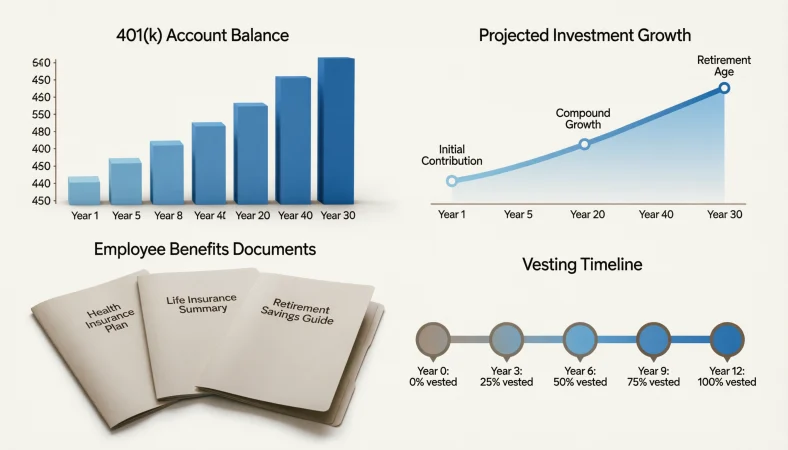
Definition: In a 401(k) plan, being vested means you have earned the right to keep certain money in your retirement account, especially employer contributions, even if you leave your job. Your own contributions are usually 100% vested immediately, while employer contributions may become yours gradually based on a vesting schedule.
When people ask what does vested mean in 401k, they are usually trying to understand whether they can take their retirement savings with them after leaving an employer.
A vested 401(k) balance is money that legally belongs to you. If you are fully vested, you keep all eligible funds in your account, including employer contributions. If you are only partially vested, you may only keep a portion of the employer-funded money.
| Term | Meaning |
| Vested | Money you have earned ownership of |
| Fully Vested | You own 100% of eligible funds |
| Partially Vested | You own only a percentage of employer contributions |
| Not Vested | Employer contributions may be forfeited if you leave |
Vesting rules usually apply to the money your employer adds to your 401(k), not the money you contribute yourself.
Introduction
Imagine leaving a job after several years and checking your 401(k) balance, only to discover that some of the money listed in your account may not actually belong to you yet. This is where the term vested becomes important.
Understanding what does vested mean in 401k helps employees know how much retirement money they can keep when changing jobs. While your personal contributions are generally yours from day one, employer matching contributions often follow a vesting schedule. Knowing how that schedule works can help you make smarter career and retirement decisions.
Origin of the Term “Vested”
The word vested comes from the legal and financial idea of having a secured right or ownership interest in something. In retirement plans, the term describes when an employee gains permanent ownership of employer-provided benefits.
The concept became especially important as employer-sponsored retirement plans developed. Companies introduced vesting schedules as a way to encourage employees to stay longer while still offering retirement benefits.
Today, vesting is common in workplace benefits such as:
- 401(k) employer matching contributions
- Pension plans
- Stock options
- Employee benefit programs
Why Vesting Matters in 401(k) Plans
Vesting matters because your 401(k) account can contain different types of money with different ownership rules.
A typical 401(k) may include:
- Your salary contributions
- Employer matching contributions
- Employer profit-sharing contributions
- Investment earnings from those contributions
Your contributions and their earnings are generally yours immediately. However, employer contributions may require you to work for a certain period before you fully own them.
For example:
- You contribute $10,000 to your 401(k).
- Your employer adds $5,000 in matching contributions.
- You leave before becoming fully vested.
You may keep your $10,000 and its growth, but you might lose some or all of the employer’s $5,000 depending on the vesting rules.
How 401(k) Vesting Works
There are two common types of vesting schedules used by employers.
Cliff Vesting
With cliff vesting, you become fully vested after reaching a specific employment period.
Example:
| Years Worked | Employer Contribution Ownership |
| Less than 3 years | 0% |
| 3 years or more | 100% |
If you leave before reaching the required time, you may not keep employer contributions.
Graded Vesting
With graded vesting, ownership increases gradually over time.
Example:
| Years Worked | Vested Percentage |
| 1 year | 20% |
| 2 years | 40% |
| 3 years | 60% |
| 4 years | 80% |
| 5 years | 100% |
The exact schedule depends on your employer’s retirement plan rules.
How It Is Used in Real Life
The word “vested” often appears when employees discuss retirement benefits, job changes, and financial planning.
Common questions include:
- “Am I fully vested in my 401(k)?”
- “How long until my employer match is vested?”
- “Will I lose my company contributions if I quit?”
- “What happens to my vested balance when I leave?”
The term helps describe the difference between money shown in your account and money you have complete ownership of.
Examples of Vesting in a 401(k)
Friendly Examples
Example 1:
“I’ve worked here for four years, so I’m finally fully vested in my 401(k).”
Meaning: The employee now owns all eligible employer contributions.
Example 2:
“Before accepting a new job, check how much of your retirement match is vested.”
Meaning: The person is suggesting reviewing the amount of employer money you can keep.
Professional Examples
Example 1:
“Employees become 100% vested in employer matching contributions after completing the required service period.”
Meaning: The company is explaining its retirement benefit policy.
Example 2:
“Your vested account balance represents the amount you are entitled to receive from the plan.”
Meaning: The statement refers to money legally owned by the employee.
Funny Examples
Example 1:
“My employer match is almost vested. I’m emotionally invested in staying one more year.”
Meaning: The joke compares financial investment with personal commitment.
Example 2:
“My 401(k) and I are in a long-term relationship. We become fully vested soon.”
Meaning: The person humorously describes waiting for ownership of retirement benefits.
Comparison with Similar Terms
Several retirement terms sound similar but have different meanings.
| Term | Meaning | Main Difference |
| Vested | You own the money | Refers to ownership rights |
| Contribution | Money added to a retirement account | Refers to deposits |
| Employer Match | Money your company adds | May have vesting requirements |
| Balance | Total amount in the account | May include vested and unvested money |
| Rollover | Moving retirement funds to another account | Happens after leaving a job |
Vested vs. Earned
These words are related but not identical.
You may have earned employer contributions by meeting work requirements, but the funds become fully yours only when you are vested.
Vested vs. Available
A vested amount belongs to you, but access to the money may still depend on retirement plan rules, age requirements, or withdrawal conditions.
Alternate Meanings of “Vested”
The word “vested” can appear in other financial and legal contexts.
| Context | Meaning |
| Retirement plans | Ownership of benefits |
| Stock options | The right to exercise or own shares after conditions are met |
| Legal agreements | A secured right or interest |
| Property matters | A recognized ownership claim |
For a 401(k), the retirement ownership meaning is the one that matters most.
Professional or Polite Alternatives
In workplace conversations, people may use clearer phrases instead of “vested,” especially when explaining benefits.
Examples include:
- “You have full ownership of the employer contributions.”
- “Your employer match has fully matured.”
- “You are entitled to keep the company contributions.”
- “You have completed the required vesting period.”
However, “vested” remains the standard financial term used in retirement documents.
Common Mistakes
| Common Mistake | Correct Understanding |
| Thinking all 401(k) money is automatically yours | Employer contributions may have vesting rules |
| Assuming leaving a job means losing everything | Your own contributions usually remain yours |
| Confusing vesting with withdrawing money | Vesting determines ownership, not access |
| Believing every employer uses the same schedule | Plans can have different vesting rules |
Quick Tips for Understanding Your 401(k) Vesting
- Check your plan documents to understand the vesting schedule.
- Look at your account statement for vested and unvested amounts.
- Consider vesting rules when evaluating a job offer.
- Remember that your personal contributions are typically yours immediately.
- Ask your benefits department if you are unsure about ownership rules.
A small difference in vesting status can represent a significant amount of retirement money over time.
FAQs
What does vested mean in a 401k?
Vested means you have earned ownership rights to money in your 401(k), including eligible employer contributions.
Are my own 401k contributions always vested?
Yes, your personal 401(k) contributions are generally fully vested immediately after they enter your account.
What happens to unvested 401k money when I leave?
Unvested employer contributions may be forfeited when you leave your employer before meeting vesting requirements.
How long does it take to become fully vested in a 401k?
The time needed depends on your employer’s vesting schedule and retirement plan rules.
Can I lose my vested 401k balance?
No, your vested 401(k) balance belongs to you, although withdrawal rules and taxes may apply.
Does changing jobs affect my vested 401k money?
Changing jobs does not remove your ownership of vested funds in your retirement account.
What is a vesting schedule in a 401k?
A vesting schedule explains how quickly you gain ownership of employer contributions.
How can I check if my 401k is vested?
You can check your vested balance through your retirement account portal or plan documents.
Conclusion
Understanding what does vested mean in 401k helps you know which retirement funds truly belong to you. Your personal contributions are usually yours immediately, while employer contributions may become yours over time through a vesting schedule. Before changing jobs or making retirement decisions, review your vesting status carefully. Knowing whether you are fully vested, partially vested, or not yet vested can help you make better financial choices and protect the retirement benefits you have earned.
Read More Articles About:
- What Is Conflict In A Story? Meaning, Types, Examples & Why It Matters In 2026
- What Does N Mean In Statistics? Difference Between N and n,Explained In 2026
- What Does Neat Mean In A Drink? Definition, Origin, Examples and How to Order Like a Pro In 2026
- SE In Shoes Meaning: Features, Benefits & Key Differences In 2026