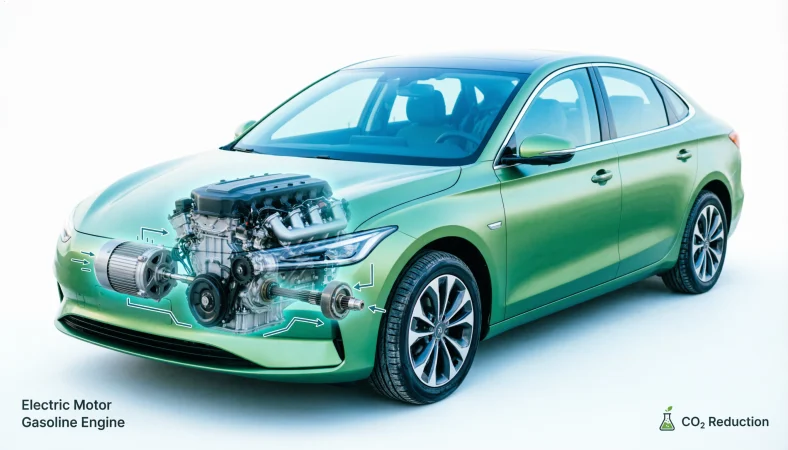
Definition: A hybrid car uses both an internal combustion engine and an electric motor to power the vehicle. The word “hybrid” means a combination of two different systems working together. In cars, this usually refers to gasoline and electric power working as a team.
A hybrid car is a vehicle that uses two different power sources to move: a traditional gasoline engine and an electric motor powered by a battery. When people ask what does hybrid mean in a car, they are usually asking how these vehicles combine fuel and electricity to improve efficiency.
Hybrid vehicles can switch between or combine these power sources depending on driving conditions. They are designed to reduce fuel use, lower emissions, and provide a smoother driving experience compared with many traditional gas-only vehicles.
| Detail | Explanation |
| Main Meaning | A vehicle using gas and electric power |
| Power Sources | Gasoline engine + electric motor |
| Main Benefit | Better fuel efficiency |
| Common Types | Full hybrid, mild hybrid, plug-in hybrid |
| Charging Needed | Depends on the hybrid type |
You may have seen labels like “hybrid,” “hybrid electric,” or “plug-in hybrid” while shopping for a vehicle and wondered what they actually mean. The term does not describe a single technology but rather a group of vehicles that combine a gasoline engine with electric power.
Understanding what does hybrid mean in a car helps you compare fuel economy, maintenance needs, driving habits, and environmental benefits. Hybrid vehicles can operate differently depending on their design, so knowing the basics makes it easier to choose the right type of car for your needs.
How Hybrid Cars Work
A hybrid vehicle combines two main systems:
- A gasoline or diesel engine
- An electric motor and battery system
Instead of relying only on fuel, a hybrid car uses electricity to assist the engine. The vehicle’s computer system decides when to use the electric motor, the engine, or both together.
For example:
- At low speeds, some hybrids can run mainly on electric power.
- During acceleration, the electric motor may help the engine provide extra power.
- During braking, some energy is recovered and stored in the battery through a process called regenerative braking.
This combination allows the vehicle to use less fuel in many driving situations, especially in city traffic where frequent stopping and starting occurs.
Origin of Hybrid Cars
The idea behind hybrid vehicles comes from combining electric technology with traditional engines to overcome the limitations of early electric vehicles, such as limited driving range and charging availability.
Modern hybrid cars became more widely recognized when manufacturers began producing mass-market hybrid models that offered improved fuel efficiency without requiring drivers to depend completely on charging stations.
The basic concept has remained the same: use electricity where it is most efficient while keeping a gasoline engine available for longer trips.
Why Hybrid Cars Became Popular
Hybrid vehicles became popular because they offered a middle option between traditional gasoline cars and fully electric vehicles.
Many drivers choose hybrids because they provide:
- Improved fuel economy
- Lower fuel costs
- Reduced emissions compared with many conventional vehicles
- No need to charge for many hybrid models
- Familiar driving experiences similar to regular cars
A hybrid can be especially appealing for people who want better efficiency but are not ready to switch completely to an electric vehicle.
Types of Hybrid Cars
Not all hybrid vehicles work the same way. The main categories include:
| Hybrid Type | How It Works | Charging Requirement |
| Full Hybrid | Uses electric motor, engine, or both | Charges itself while driving |
| Mild Hybrid | Electric system assists the engine | Does not drive only on electricity |
| Plug-in Hybrid | Larger battery with external charging option | Can be charged using a plug |
Full Hybrid
A full hybrid can operate using the gasoline engine, electric motor, or both. It can often drive short distances using electricity alone, especially at lower speeds.
Mild Hybrid
A mild hybrid uses a smaller electric system to support the engine. It improves efficiency but usually cannot power the vehicle by itself.
Plug-In Hybrid
A plug-in hybrid has a larger battery that can be charged from an external power source. It can travel farther using electric power before switching to gasoline.
Examples of Hybrid Cars in Everyday Use
City Driving Example
A driver commuting through busy city streets may benefit from a hybrid because the electric motor can help during frequent stops and starts.
Example:
Sarah drives a hybrid car to work every day. In traffic, the car uses electric assistance to reduce fuel consumption.
Meaning: The hybrid system helps the gasoline engine work more efficiently.
Highway Driving Example
On highways, many hybrids rely more heavily on the gasoline engine because higher speeds require consistent power.
Example:
Mark uses his hybrid for long road trips because it provides good fuel efficiency without needing frequent charging.
Meaning: The hybrid combines fuel power and electric assistance depending on driving conditions.
Daily Family Use Example
Example:
A family chooses a hybrid SUV because they want more fuel savings while keeping the convenience of a traditional vehicle.
Meaning: Hybrid technology can be used in different vehicle sizes, not only small cars.
Hybrid vs Electric vs Gas Cars
People often confuse hybrid vehicles with fully electric vehicles. Although they are related, they are not the same.
| Vehicle Type | Main Power Source | Requires Charging? |
| Hybrid | Gas engine + electric motor | Usually no external charging |
| Plug-In Hybrid | Gas engine + larger electric battery | Yes, if using electric range |
| Electric Vehicle | Electric motor only | Yes |
A gasoline car depends entirely on fuel. An electric vehicle depends entirely on battery power. A hybrid combines both approaches.
Benefits of Hybrid Cars
Hybrid vehicles offer several advantages.
Better Fuel Efficiency
Because the electric motor assists the engine, hybrids often use less gasoline than comparable traditional vehicles.
Reduced Emissions
Using less fuel can result in lower emissions compared with many non-hybrid vehicles.
Convenient Driving
Most regular hybrids do not require drivers to plug them in. They recharge their batteries through the vehicle’s own systems.
Smooth Performance
Electric motors provide quick power delivery, which can make acceleration feel smooth and responsive.
Common Misunderstandings About Hybrid Cars
| Common Mistake | Correct Understanding |
| All hybrids need charging | Many hybrids recharge themselves while driving |
| Hybrid means fully electric | Hybrids still use a fuel engine |
| All hybrids save the same amount of fuel | Efficiency depends on the vehicle type and driving habits |
Are Hybrid Cars Better for Everyone?
A hybrid car can be a good choice for many drivers, but it depends on individual needs.
A hybrid may work well if you:
- Drive frequently in cities
- Want better fuel economy
- Prefer not to rely on charging stations
- Want a smoother transition toward electric driving
A traditional gasoline vehicle may still make sense for some drivers who have specific needs, such as certain towing requirements or driving patterns where hybrid benefits are limited.
Hybrid Car Maintenance
Hybrid vehicles require many of the same maintenance tasks as regular cars, including:
- Oil changes
- Tire maintenance
- Brake inspections
- Regular servicing
Some hybrid systems can reduce brake wear because regenerative braking helps slow the vehicle while recovering energy.
The battery system is an important part of hybrid maintenance, although modern hybrid batteries are designed to last for many years.
Environmental Meaning of Hybrid Technology
The term “hybrid” generally refers to combining two different technologies. In automotive language, it specifically means combining an engine with electric power.
Hybrid cars are often viewed as a step between traditional gasoline vehicles and fully electric transportation because they reduce dependence on fuel while keeping the convenience of an engine.
When Should You Consider a Hybrid Car?
A hybrid may be worth considering if your driving habits match its strengths.
Good situations include:
- Regular city commuting
- Frequent stop-and-go traffic
- Long ownership periods
- Interest in reducing fuel expenses
Before choosing a hybrid, consider your driving distance, charging access, budget, and vehicle preferences.
FAQs
What does hybrid mean in a car?
A hybrid car combines a gasoline engine with an electric motor to improve efficiency and reduce fuel consumption.
Is a hybrid car electric or gas?
A hybrid car uses both gasoline power and electricity from a battery system.
Do hybrid cars need charging?
Most regular hybrid cars recharge themselves, while plug-in hybrids can also be charged externally.
Are hybrid cars better than regular cars?
Hybrid cars can provide better fuel efficiency, but the best choice depends on driving habits and personal needs.
What is the difference between hybrid and electric cars?
Hybrid cars use both fuel and electricity, while electric cars run only on battery-powered electric motors.
Final Thoughts
Understanding what does hybrid mean in a car makes it easier to see why these vehicles have become a popular option for many drivers. A hybrid combines a gasoline engine with electric technology to improve efficiency while keeping the convenience of a traditional vehicle. Different hybrid types offer different benefits, so the right choice depends on how and where you drive. By comparing your needs with the available options, you can decide whether hybrid technology fits your lifestyle.
Read More Articles About:
- What Is Conflict In A Story? Meaning, Types, Examples & Why It Matters In 2026
- What Does Sigma Mean? Slang Definition, History & Online Trends In 2026
- ERA Meaning In Baseball: Earned Run Average Explained In 2026
- SE In Shoes Meaning: Features, Benefits & Key Differences In 2026