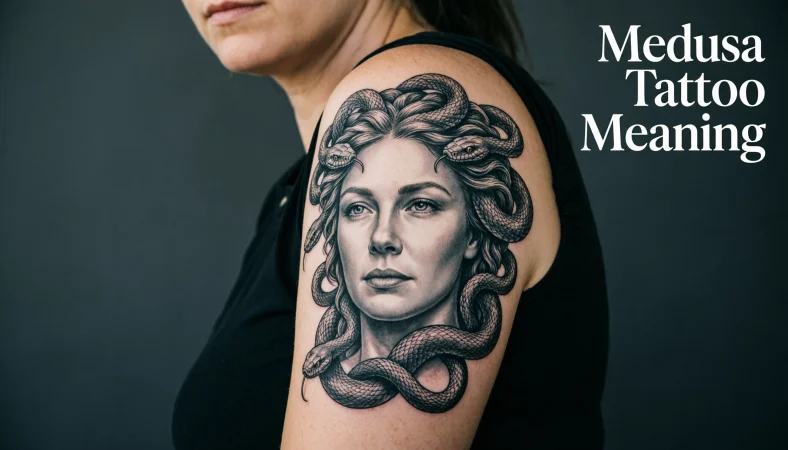
A Medusa tattoo can symbolize protection, strength, survival, independence, and the power to reclaim your identity. In Greek mythology, Medusa was a woman transformed into a Gorgon with snakes for hair and a gaze that turned people to stone.
Today, people choose her image for different personal reasons, including resilience after hardship, although the tattoo does not have one universal meaning.
Table of Contents
- What Medusa Represents in Greek Mythology
- The Deeper Meaning Behind the Tattoo
- Medusa Tattoos and Survival
- Popular Designs and Their Symbolism
- Placement and Style Choices
- Medusa Compared With Other Mythological Symbols
- Cultural Context and Common Misunderstandings
- Frequently Asked Questions
What Medusa Represents in Greek Mythology

To understand this tattoo, it helps to know the story behind the face. Medusa is one of the best known figures in Greek mythology, recognizable by the snakes surrounding her head and her terrifying gaze. Her image has appeared in ancient art, architecture, literature, and modern popular culture.
Medusa is usually described as one of the three Gorgons, alongside her sisters Stheno and Euryale. In the familiar myth, she is the only mortal Gorgon. Her gaze can turn those who look at her into stone, making her both a frightening figure and a symbol of extraordinary power.
The details of her origin vary across ancient sources. In the Metamorphoses, the Roman poet Ovid tells a version in which Medusa was once a beautiful young woman and was transformed by Minerva after Neptune assaulted her in Minerva’s temple. This account has strongly influenced modern interpretations of Medusa as a figure connected with injustice and the experience of surviving harm.
Not every ancient version tells the same story, however. Medusa’s meaning has changed over time because artists, writers, and audiences have interpreted her through different cultural and moral perspectives.
That history helps explain why her image can represent fear to one person and empowerment to another.
The Deeper Meaning Behind a Medusa Tattoo
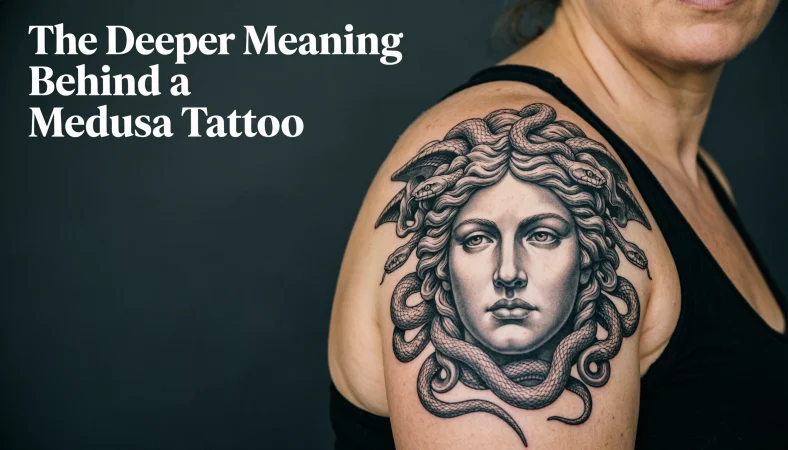
Medusa’s image carries several layers of symbolism. The meaning often depends on the story a person connects with, the artwork they choose, and the reason they want the tattoo.
Protection and Strength
In ancient Greek art, the frightening face of a Gorgon could serve as a protective symbol. Images known as gorgoneia appeared on shields, armor, buildings, and other objects. Their purpose was not simply decorative. The frightening face was believed to ward off danger or frighten away harmful forces.
This protective association still influences modern tattoo designs. Someone might choose Medusa because they want a reminder to establish boundaries, stand up for themselves, or face difficult situations without backing down.
The snakes can reinforce this idea. They give the figure an alert, dangerous appearance, suggesting that she is not someone to approach carelessly.
Resilience After Hardship
For some people, Medusa represents the ability to endure an experience that changed their lives. Her story, particularly the version told by Ovid, has inspired interpretations centered on injustice, blame, and survival.
A tattoo can become a private reminder of how someone has continued after a painful experience. It might represent the decision to move forward, rebuild confidence, or refuse to let another person’s actions define an entire life.
That interpretation is personal rather than universal. Not everyone who chooses Medusa has experienced trauma, and a tattoo cannot tell an observer what happened to its wearer.
Independence and Personal Power
Medusa is not usually depicted as a gentle or submissive figure. Her gaze is dangerous, her appearance is unmistakable, and her mythology makes her difficult to ignore.
For some wearers, these qualities symbolize independence and self determination. The tattoo may express a willingness to be misunderstood rather than change to satisfy other people’s expectations.
This meaning can be especially visible in designs that portray Medusa looking directly outward, with a calm expression instead of an exaggerated snarl.
Transformation and Identity
Medusa’s transformation is central to many modern interpretations. Her body and identity change dramatically in the myths, making her a compelling figure for people who have experienced major personal changes.
The image may represent a new chapter, the end of an old identity, or the process of becoming more comfortable with oneself. The snakes can suggest change and renewal, although this symbolism comes from interpretation rather than a single fixed meaning in ancient Greek tradition.
Medusa Tattoos and Survival
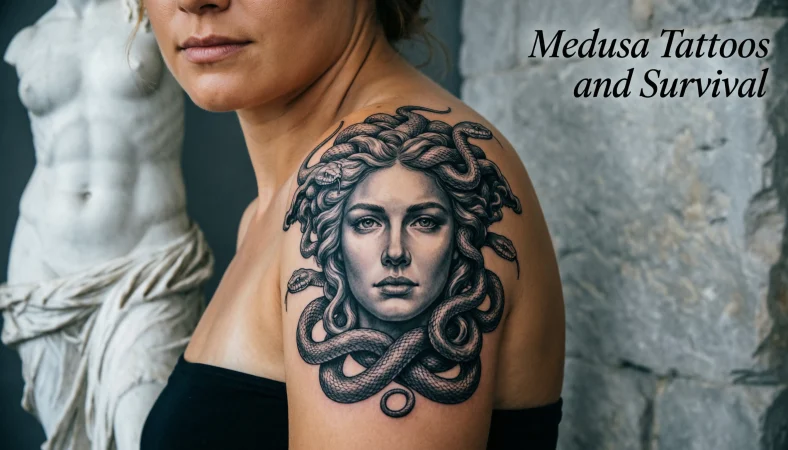
One of the most discussed modern interpretations connects Medusa with survivors of sexual violence and other forms of abuse. This reading draws heavily on Ovid’s account, in which Medusa’s encounter with Neptune and her transformation are followed by a punishment imposed by Minerva.
Readers often interpret this story as an example of a victim being punished for harm done to her. That makes Medusa a powerful symbol for people who want to challenge victim blaming or reclaim a sense of control over their own stories.
For some survivors, the tattoo represents endurance, anger, dignity, or the refusal to remain defined by an experience. Others may choose it simply because they admire the mythology, enjoy the visual design, or connect with her fierce appearance.
There is no single correct way to interpret the image. It is also important not to assume that someone with a Medusa tattoo has experienced sexual violence. A person’s body art is not permission to ask intrusive questions about their past.
If someone explains that their tattoo represents survival, listen to the meaning they give it. The most respectful interpretation begins with the wearer, not with assumptions made by strangers.
Popular Medusa Tattoo Designs and Their Symbolism
The artwork can influence how a tattoo is understood. A classical portrait may suggest mythology and history, while a more contemporary design may emphasize individuality, protection, or personal strength.
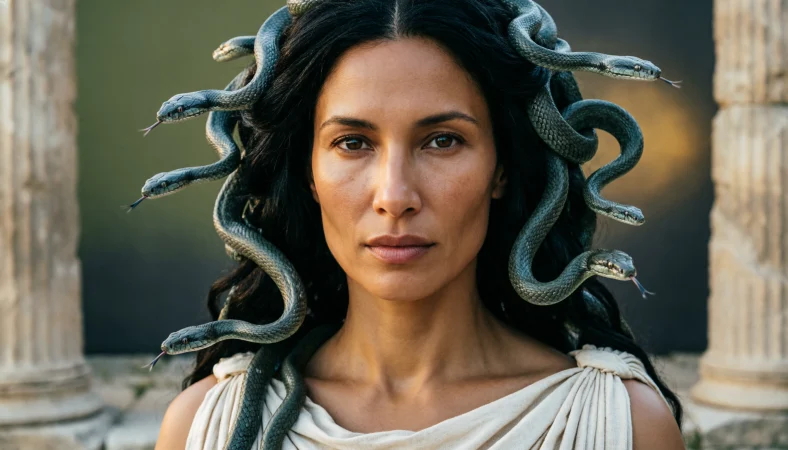
Realistic Medusa Portrait
Detailed facial features and lifelike snakes create a dramatic image. This style can emphasize strength, intensity, and the classical origins of the figure.
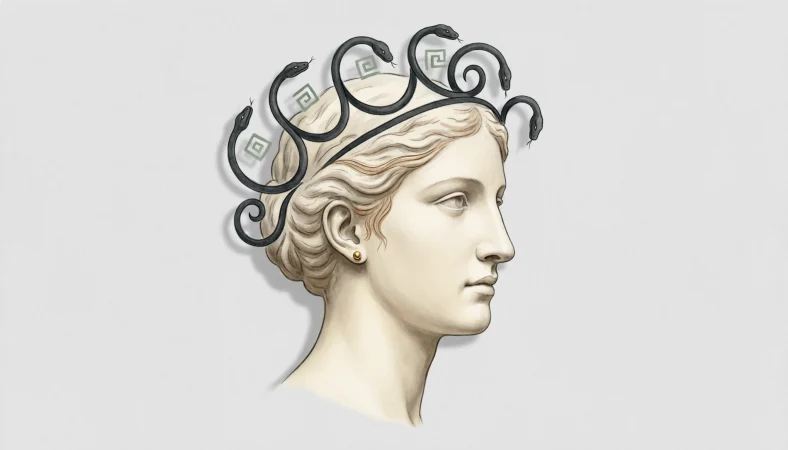
Minimalist Medusa
Fine lines and simplified shapes produce a quieter design. It can represent a deeply personal connection without a large or highly detailed portrait.

Dark or Gothic Medusa
Deep shadows, sharp expressions, and dense blackwork create a more intimidating appearance. This style often suits themes of defiance, mystery, and power.
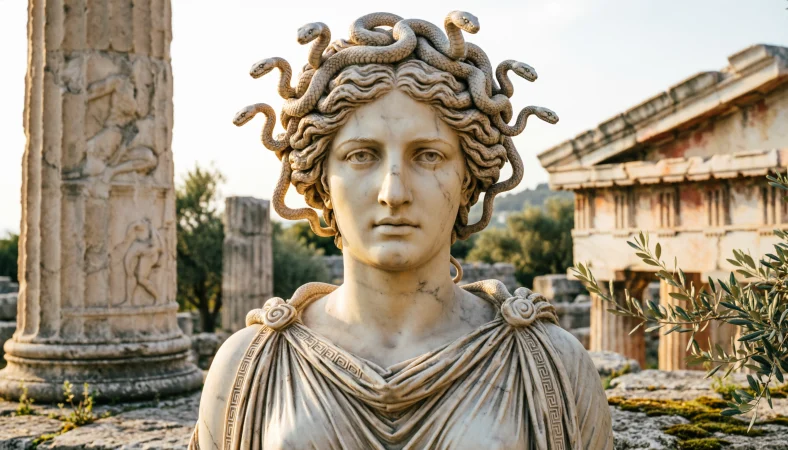
Classical Greek Style
Inspired by ancient sculpture, this approach emphasizes symmetry, flowing hair, and traditional artistic forms. It can highlight an interest in mythology, art history, or ancient culture.
What Do Snakes Represent in the Design?
Snakes are Medusa’s most recognizable feature. In her mythological image, they make her appear dangerous and different from ordinary human figures.
In a modern tattoo, snakes can suggest defense, transformation, wisdom, or a connection with nature. Their arrangement also changes the overall feeling of the artwork. Tightly coiled snakes can make the portrait look threatening, while flowing curves may create a more elegant appearance.
These associations are not universal. Snake symbolism differs across cultures, religions, and artistic traditions, so the wearer’s intended message matters most.
What Does a Calm Medusa Face Mean?
A calm expression can create an interesting contrast with Medusa’s frightening reputation. Instead of showing rage, the design may communicate control, confidence, or the ability to remain composed under pressure.
A fierce expression, by contrast, may emphasize defiance and the refusal to appear harmless. Neither design has a fixed meaning, but the facial expression gives the artist an important way to shape the tattoo’s mood.
Tattoo Placement and Style Choices
Placement affects visibility, detail, and how the design works with the body. It does not determine the tattoo’s meaning, although some people choose a particular location for personal reasons.
| Placement | Design possibilities | Practical consideration |
| Forearm | Portraits, fine line designs, and visible symbols | Easy to see, with limited room for very large compositions |
| Upper arm | Medium or large portraits with detailed snakes | Offers room to build the design around the arm |
| Back | Large classical compositions with extended snake details | Provides a broad area for complex artwork |
| Thigh | Detailed portraits and decorative compositions | Allows larger designs that can remain covered by clothing |
| Chest | Symmetrical portraits or central compositions | Body contours affect the final layout |
| Calf | Vertical portraits and flowing snake patterns | Works well with tall designs |
Before choosing a location, discuss the design’s size, level of detail, and expected aging with a professional tattoo artist. Very small portraits may lose some fine details over time, especially where snake scales, facial features, and thin lines sit close together.
Think about visibility, too. A tattoo on the forearm is generally easier to display than one on the back or upper thigh. That is a practical decision, not a measure of how meaningful the artwork is.
Medusa Compared With Other Mythological Symbols
Medusa shares some themes with other mythological figures, but each has a different story and visual identity.
| Symbol | Main mythological association | Possible modern interpretation |
| Medusa | Gorgon whose gaze turns people to stone | Protection, survival, defiance, or personal transformation |
| Athena | Greek goddess associated with wisdom and strategic warfare | Wisdom, discipline, and thoughtful strength |
| Persephone | Greek goddess associated with the underworld and seasonal change | Transition, dual identity, and renewal |
| Phoenix | Mythical bird that rises from its ashes in later traditions | Rebirth, recovery, and beginning again |
| Hecate | Greek goddess associated with magic, crossroads, and night | Mystery, guidance, and transitions |
These are broad interpretations rather than fixed definitions. A person may combine several symbols to tell a more specific story through body art.
Medusa stands apart because her image brings together beauty, danger, vulnerability, and frightening power. Her story can be interpreted through several conflicting perspectives without reducing her to one simple quality.
Cultural Context and Common Misunderstandings
Medusa has appeared in different forms throughout the history of art. Ancient Greek artists used Gorgon imagery on objects and structures, while later European artists gave her a more human appearance.
The Roman poet Ovid helped shape a particularly influential version of her story. Much later, artists such as Caravaggio portrayed Medusa with intense emotion and striking realism. These works contributed to the figure’s continued presence in art and popular culture.
Museums such as the Metropolitan Museum of Art preserve and interpret ancient objects that help explain how mythological figures appeared in historical art. Such objects provide useful context, but they do not establish one universal interpretation for modern tattoos.
A few misconceptions deserve attention.
Every Medusa tattoo does not represent trauma. Some people choose the image because of its mythology, artistic appeal, or association with personal strength.
The story is not identical in every ancient source. Ovid’s account is influential, but Greek and Roman traditions contain different versions and interpretations.
Medusa is not simply a villain. She is often portrayed as a monster, yet modern readers may focus on the circumstances of her transformation and the injustice within particular versions of her story.
The tattoo does not have a universal cultural meaning. Its significance depends on the wearer’s intentions, the artwork, and the context in which it appears.
Understanding these distinctions allows people to appreciate the symbol without assuming that everyone who wears it shares the same experience or beliefs.
FAQs
Does a Medusa tattoo have a hidden meaning?
A Medusa tattoo may symbolize survival, protection, or an interest in Greek mythology or classical art, but its personal meaning varies by wearer.
Is a Medusa tattoo considered a feminine symbol?
Medusa can symbolize female strength and independence, but anyone can choose the tattoo based on their personal connection to its mythology or artistic meaning.
Can a Medusa tattoo represent anger?
A fierce Medusa design can symbolize anger and defiance, while a calm or dignified portrayal can convey a different message.
Is Medusa associated with protection in ancient history?
Ancient Greek Gorgon images often served as protective symbols on shields and buildings, inspiring the protective meaning some people associate with Medusa today.
What should I consider before getting a Medusa tattoo?
Choose a design, style, and placement that reflect your reasons, and review the artist’s portfolio and the tattoo’s long term clarity before committing.
Does a Medusa tattoo mean someone has survived abuse?
The tattoo may symbolize survival after sexual violence or other harm, but people choose it for different reasons, so it does not reveal someone’s personal history.
Conclusion
Medusa’s lasting appeal comes from the tension between vulnerability and power in her story. Her image can represent protection, defiance, personal change, artistic interest, or survival, depending on the person wearing it. The most meaningful design is one that reflects the wearer’s own reasons rather than a meaning imposed by someone else.











3 thoughts on “Medusa Tattoo Meaning: Mythology, Protection And Personal Strength For 2026.”