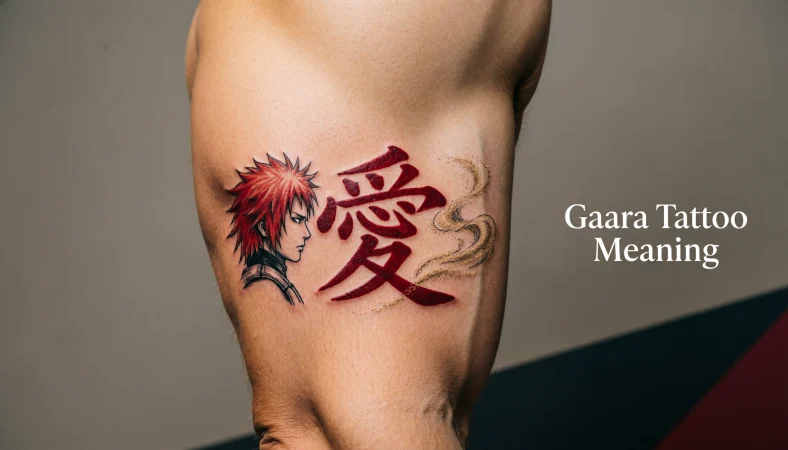
A Gaara tattoo commonly symbolizes survival, loneliness, emotional strength, self acceptance, and personal transformation. Inspired by Gaara from Naruto, the tattoo often represents his journey from a feared and isolated character to someone who discovers friendship, trust, and purpose.
His forehead kanji, which means “love,” carries a particularly powerful message because it reflects his complicated relationship with himself and his eventual growth. For many fans, a Gaara tattoo represents overcoming painful experiences and learning to find strength without letting the past define the future.
Have you ever wondered why Gaara tattoos hold such deep meaning for Naruto fans? At first, Gaara appears as a dangerous and emotionally distant character shaped by rejection, fear, and isolation.
As his story develops, however, he begins to understand friendship, responsibility, and the importance of protecting others. This dramatic change makes his character meaningful to people who connect with themes of loneliness, resilience, and personal growth.
In this guide, you will explore the Gaara tattoo meaning through his iconic forehead symbol, sand imagery, character development, and major themes from Naruto.
You will also learn how different Gaara tattoo designs can represent self love, emotional survival, independence, and transformation.
By understanding the character’s background and symbolism, you can better appreciate why this tattoo means more than simply showing admiration for an anime character.
What Does a Gaara Tattoo Mean?
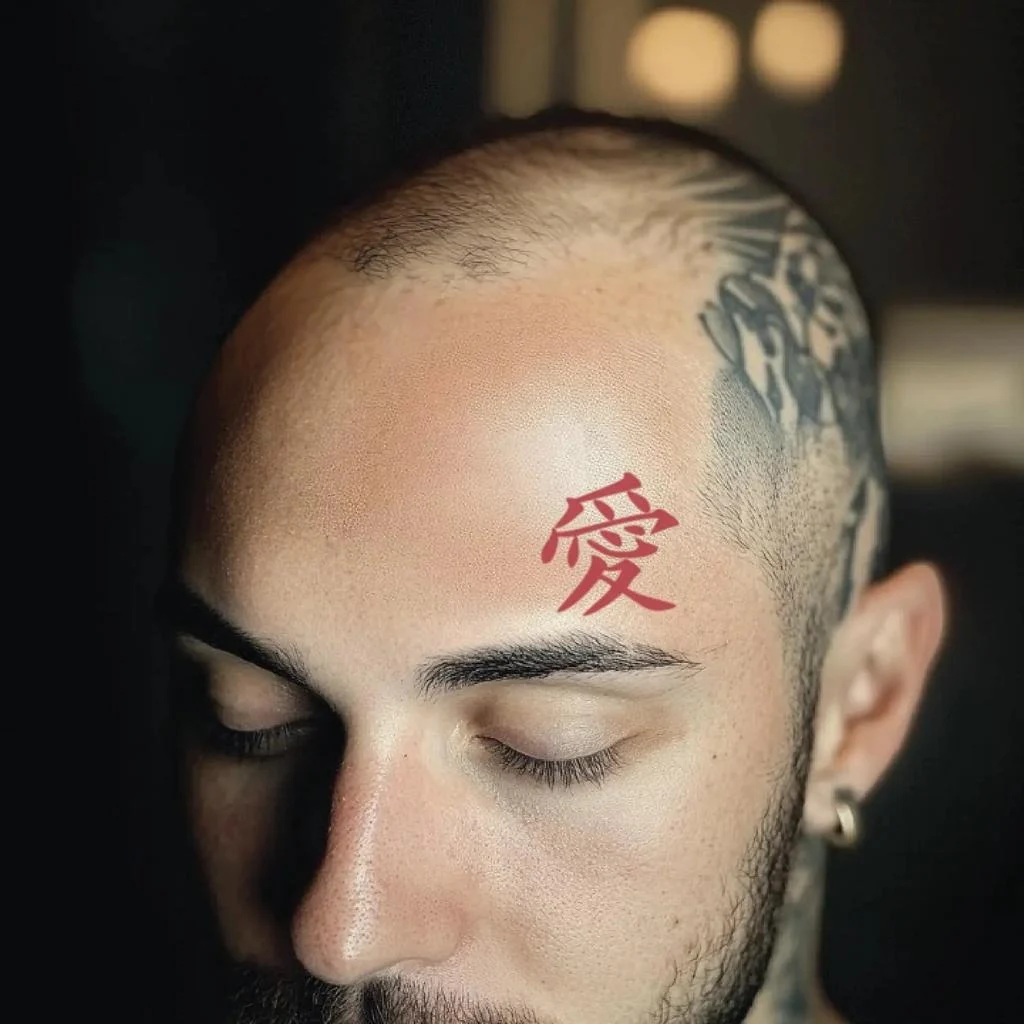
The central meaning of a Gaara tattoo is love shaped by pain and loneliness. In the Naruto story, Gaara grows up believing that nobody loves him. His experiences eventually lead him to mark his forehead with the Japanese kanji 愛, which means “love.”
However, this is not a declaration of affection for another person. At that point in his life, Gaara’s symbol expresses a harsh decision: to live for himself because he believes he cannot depend on anyone else.
That distinction gives the tattoo its emotional depth. It can represent someone who has felt abandoned, struggled to trust others, or learned to protect themselves after being hurt. It can also stand for a more hopeful message: a painful past does not have to determine the person you become.
People choose this design for different reasons, including:
- Self love: Learning to value yourself even when others fail to show you care.
- Loneliness: Recognizing the experience of feeling misunderstood or isolated.
- Emotional survival: Continuing through difficult experiences without giving up.
- Personal transformation: Moving away from anger and toward understanding.
- Protection: Building boundaries after betrayal or rejection.
- Redemption: Accepting that people can change and become better than their past actions.
The meaning depends on the wearer. Some fans connect with Gaara’s early struggles, while others admire the compassionate leader he becomes. Both interpretations fit the character’s story.
What Does the Japanese Symbol on Gaara’s Forehead Mean?
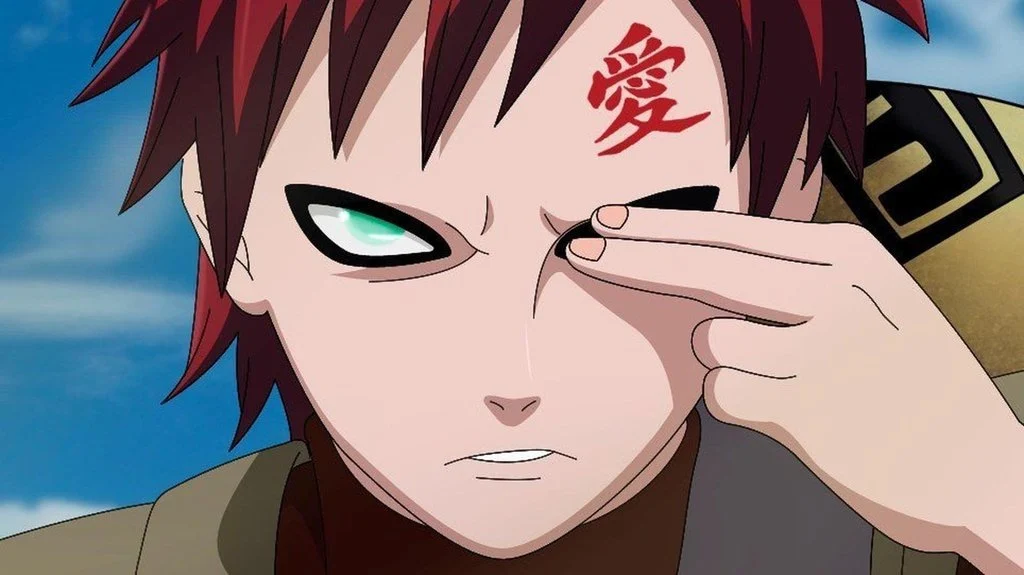
The character on Gaara’s forehead is 愛, pronounced ai in Japanese. It means “love,” particularly love or affection in a broad sense.
The symbol is not simply a decorative mark. Its significance comes from the circumstances in which Gaara chooses to wear it. He has experienced rejection and emotional suffering, and he interprets his survival as a reason to live for himself rather than seek acceptance from others.
For tattoo enthusiasts, this creates an interesting contrast. A word associated with affection becomes a reminder of a period when Gaara struggles to believe in affection from anyone else.
Why the Meaning Is Different From Romantic Love
In Japanese, 愛 can refer to love and affection, including romantic love, but the character itself does not automatically mean heartbreak, loneliness, or self love. Those additional meanings come from Gaara’s character development and the experiences fans associate with him.
If you are considering this tattoo, it helps to understand both parts: the literal meaning of the kanji and the fictional story behind it. Someone who recognizes the symbol may think of Gaara immediately, while another person may simply interpret it as the Japanese word for love.
Make sure the character is reproduced accurately. A small change in the written form can affect its appearance and may result in a tattoo that no longer matches the original design.
Gaara’s Backstory: Why He Chose the Symbol of Love
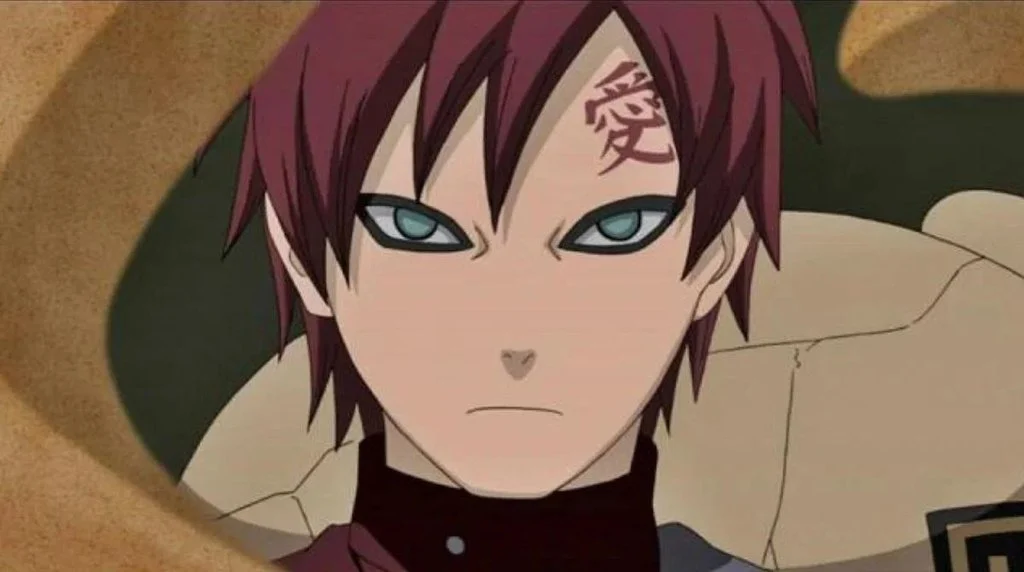
To understand the tattoo fully, it helps to understand the character behind it. Gaara is introduced as a shinobi from Sunagakure, also known as the Hidden Sand Village, in Masashi Kishimoto’s Naruto. Before he becomes a respected leader, he is a deeply troubled child who struggles with rejection, fear, and the belief that he cannot trust anyone.
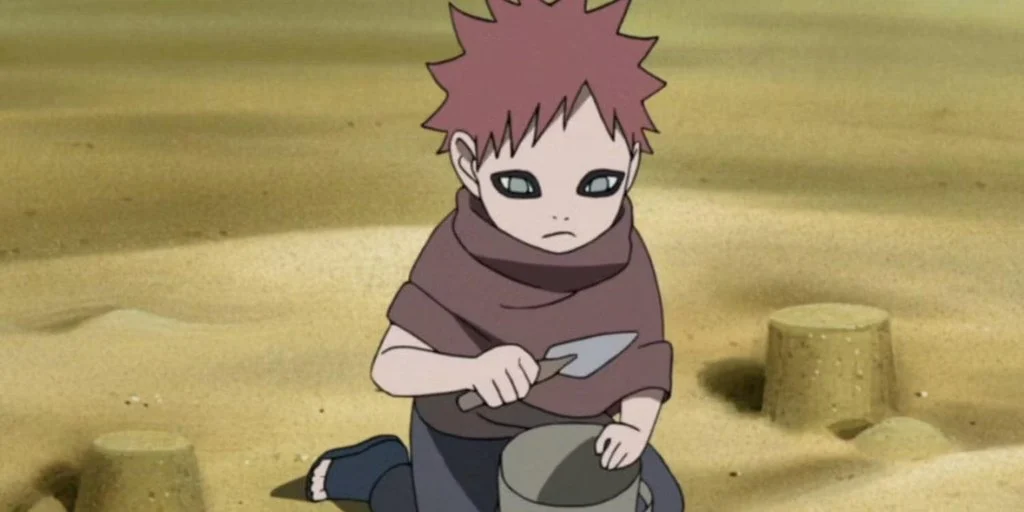
Gaara’s father, Rasa, the Fourth Kazekage, arranges for him to become the jinchūriki of Shukaku, a powerful tailed beast sealed inside a human host. This makes Gaara dangerous in the eyes of others and contributes to his isolation. Rather than receiving the care and reassurance a child needs, he becomes someone whom others fear.
One of the most painful parts of his story involves Yashamaru, his maternal uncle. Gaara believes Yashamaru is one of the few people who cares about him, but a devastating confrontation leaves him questioning that belief. His experience strengthens his conviction that love and trust are unavailable to him.
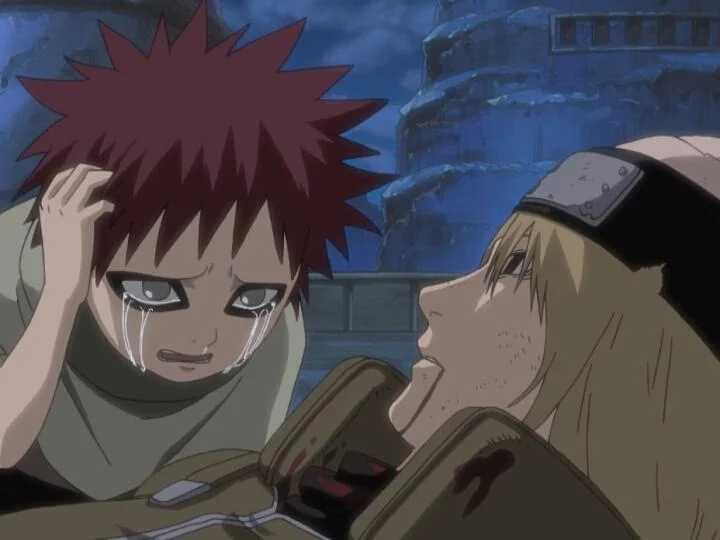
In response, Gaara carves 愛 into his forehead. The act symbolizes his determination to live for himself, even if he believes he must do so without anyone else’s love.
How Naruto Changes Gaara’s Understanding of Love
Gaara’s story does not end with isolation. His encounter with Naruto Uzumaki becomes a turning point because Naruto also knows what it feels like to grow up rejected by his community.
Their circumstances are not identical, but Naruto recognizes something familiar in Gaara’s anger and loneliness. Instead of treating him as a monster who can never change, Naruto confronts him and shows him another way to understand his own suffering.
That encounter begins Gaara’s transformation. He gradually learns to care about other people, accept relationships, and take responsibility for his position in the Hidden Sand Village. He eventually becomes its Fifth Kazekage, a leader whose purpose includes protecting the people who once feared him.
For fans, this character arc gives the tattoo two possible meanings. It can represent the pain that shaped someone, or it can represent the decision to become more compassionate despite that pain.
The Deeper Symbolism Behind a Gaara Tattoo
The design is recognizable to anime fans, but its emotional significance can extend beyond the series.
Self Love After Rejection
Gaara’s forehead symbol initially expresses a form of self reliance born from despair. He believes he must love himself because nobody else will. For some wearers, that idea resonates with experiences of bullying, exclusion, or feeling unworthy of affection.
Over time, the character’s story adds a more hopeful dimension. Self love does not have to mean shutting everyone out. It can mean recognizing your worth while remaining open to healthy relationships.
Turning Pain Into Strength
Gaara’s childhood influences his early behavior, but it does not dictate the rest of his life. He changes through his experiences with Naruto, his siblings, and the people he eventually protects.
A tattoo inspired by this development can serve as a reminder that difficult experiences may shape you without defining your future. Strength, in this interpretation, includes the willingness to change.
The Difference Between Protection and Isolation
Gaara’s sand powers often protect him automatically, reflecting both his unusual abilities and the dangers surrounding him. Yet physical protection cannot give him the emotional connection he lacks.
This contrast adds another layer to the design. Someone might choose it to remember that boundaries are healthy, but complete isolation can make healing more difficult. Protecting yourself does not require rejecting every person who wants to help.
Redemption and Forgiveness
Gaara causes harm during his early life as a shinobi. His later development involves more than overcoming sadness; it also involves changing how he treats others.
For this reason, the tattoo can represent redemption rather than victimhood alone. It may resonate with someone who wants to acknowledge past mistakes, take responsibility, and build a different future.
Popular Gaara Tattoo Designs and Their Meanings
The original forehead symbol is only one way to represent the character. Different styles can emphasize his appearance, personality, or transformation.
The Original 愛 Symbol
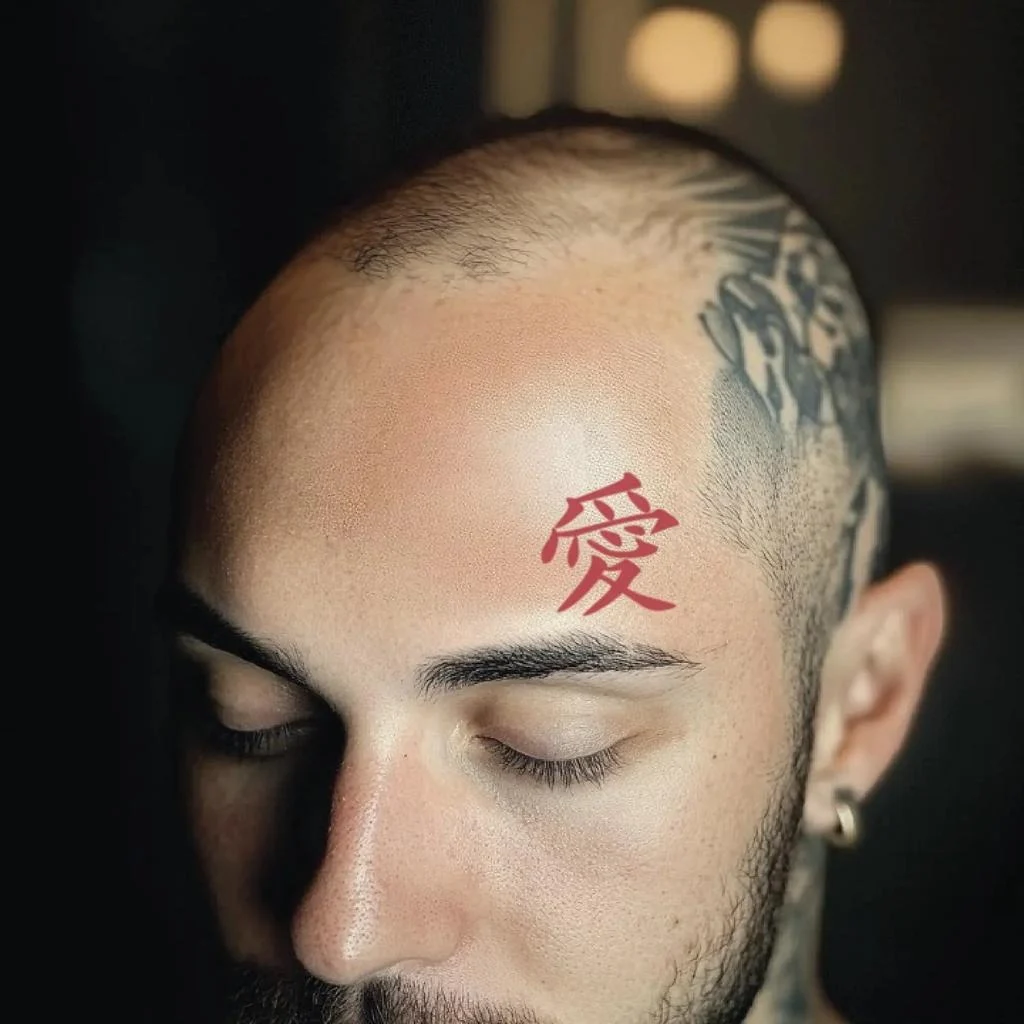
This is the most recognizable option. A red kanji character on the forehead, forearm, wrist, or upper arm preserves the simplicity of the original design. It suits fans who want a small tattoo with a strong connection to Gaara’s story.
Gaara Portrait Tattoo
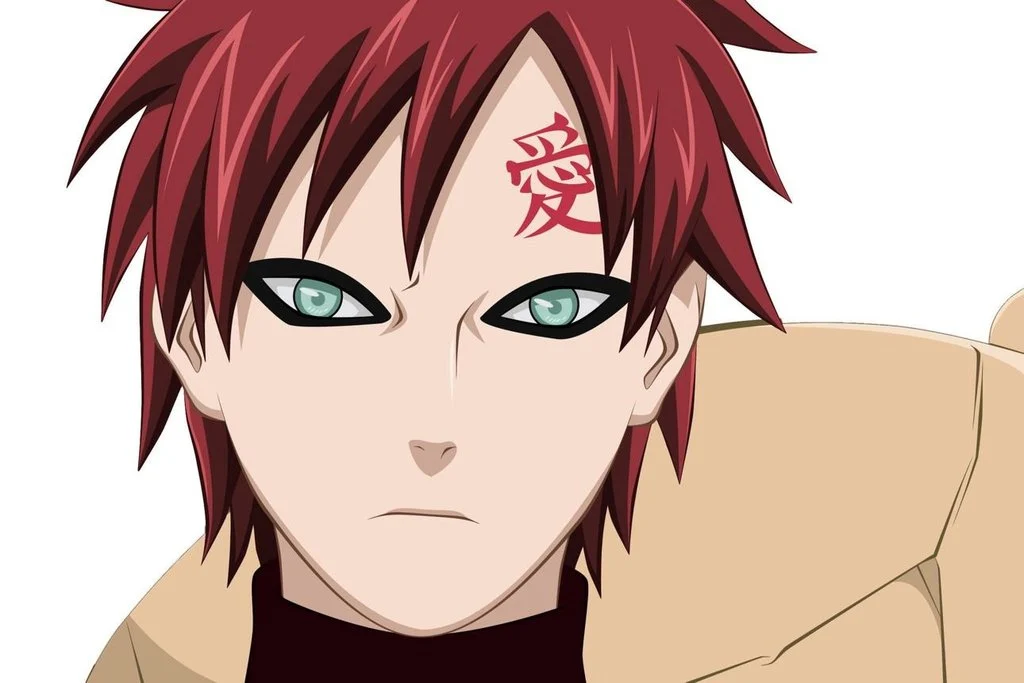
A portrait can capture his red hair, distinctive eye markings, and serious expression. This option allows more artistic detail and works well for fans who connect with his entire character rather than the forehead symbol alone.
Gaara With Sand Imagery
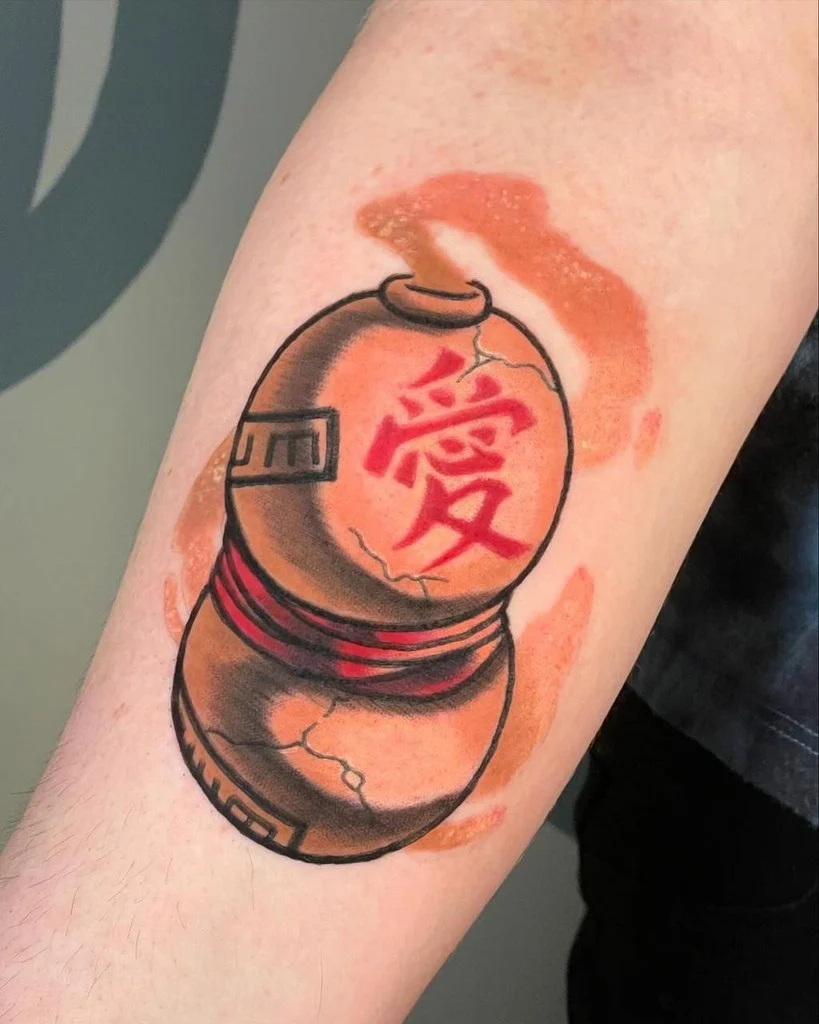
Swirling sand, his gourd, or a sand shield can emphasize protection and his identity as a shinobi. This design can symbolize resilience and the ability to stand firm under pressure.
Minimalist Gaara Silhouette
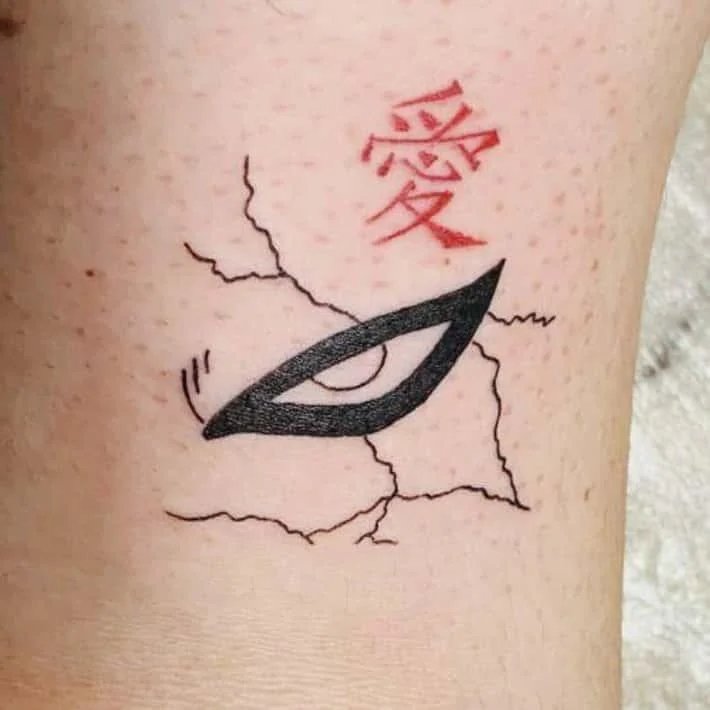
A simple outline of Gaara’s head or hair paired with the kanji makes the design subtle. It is a good option for someone who wants an anime reference without a large, detailed portrait.
Adult Gaara as Kazekage
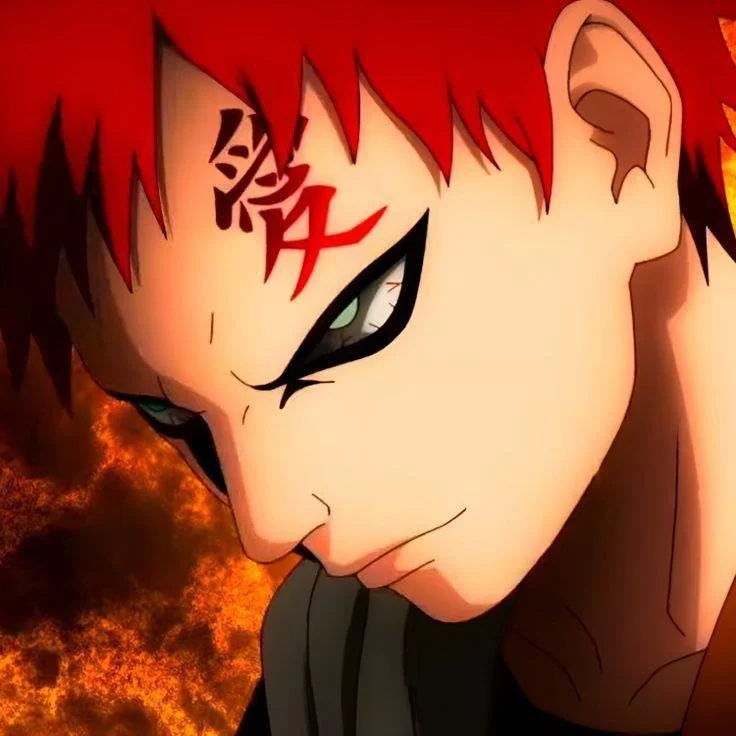
A design showing Gaara as a leader emphasizes responsibility, maturity, and change. It reflects the character’s journey from a feared child to someone committed to protecting others.
Choose the version that reflects the part of Gaara’s story you relate to most. If the emotional message matters more than the character’s appearance, the kanji alone may be enough. If his transformation is what inspires you, a portrait of adult Gaara may be a better fit.
Gaara Tattoo vs. Other Naruto Symbol Tattoos
A Gaara tattoo is often associated with emotional survival, but other symbols in Naruto carry different associations. Comparing them can help you choose a design that reflects your own connection to the series.
| Tattoo | Main association | What distinguishes it |
| Gaara’s 愛 | Self love, loneliness, and transformation | Connects directly to Gaara’s painful childhood and later growth |
| Naruto’s Uzumaki symbol | The Uzumaki clan and its identity | Represents a family and clan connection |
| Kakashi’s Hidden Leaf headband | Shinobi identity and loyalty | Connects to the Hidden Leaf Village and its ninja |
| Itachi’s Akatsuki imagery | Sacrifice, tragedy, and moral conflict | Reflects a character whose choices carry difficult consequences |
| Sasuke’s curse mark | Power, temptation, and inner conflict | Represents the influence of a dangerous source of strength |
These are broad fan interpretations, not official meanings assigned to every tattoo. The significance of a design can change according to which scene, character, or period of the story matters most to the wearer.
Gaara’s symbol stands out because its literal meaning is so simple, while its story is emotionally complicated. That contrast makes it recognizable even when the rest of the character is absent.
Best Placement Ideas for a Gaara Tattoo
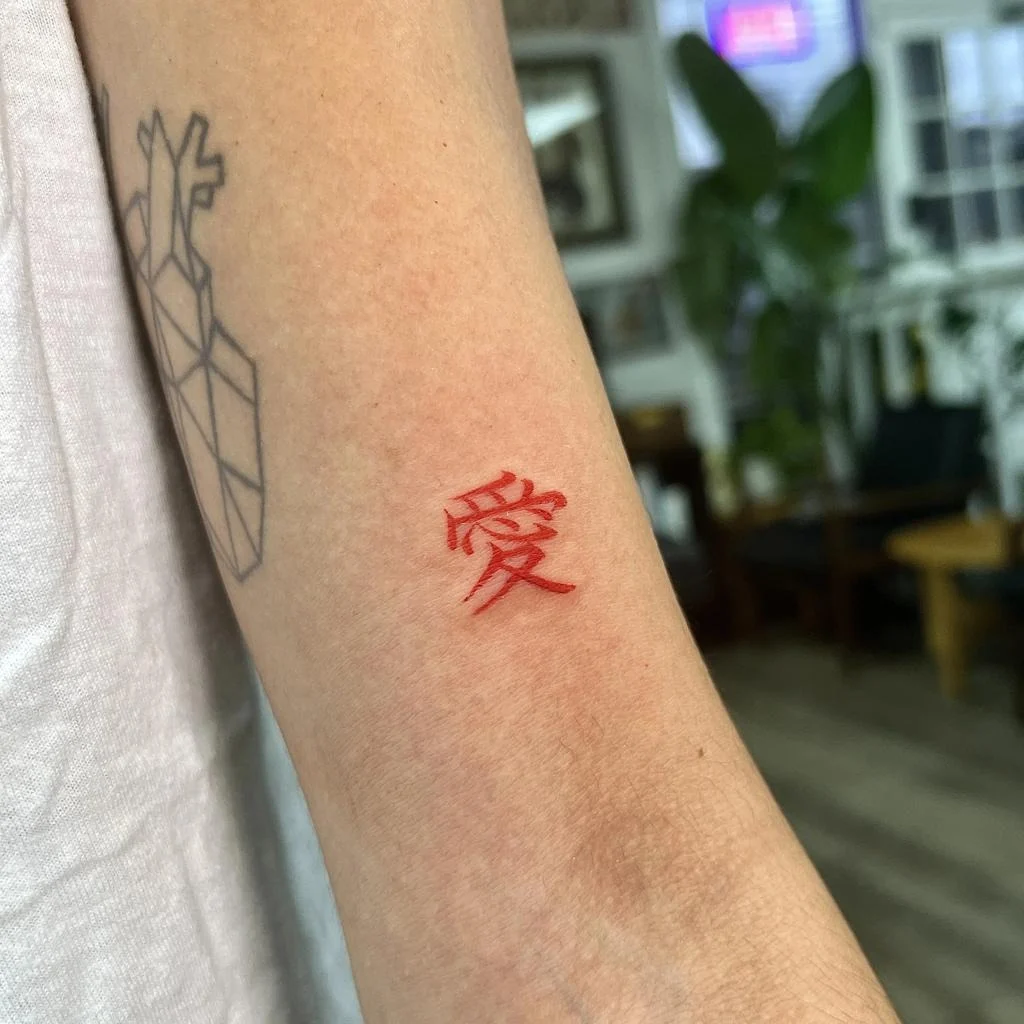
Placement should reflect both the design’s size and how visible you want it to be.
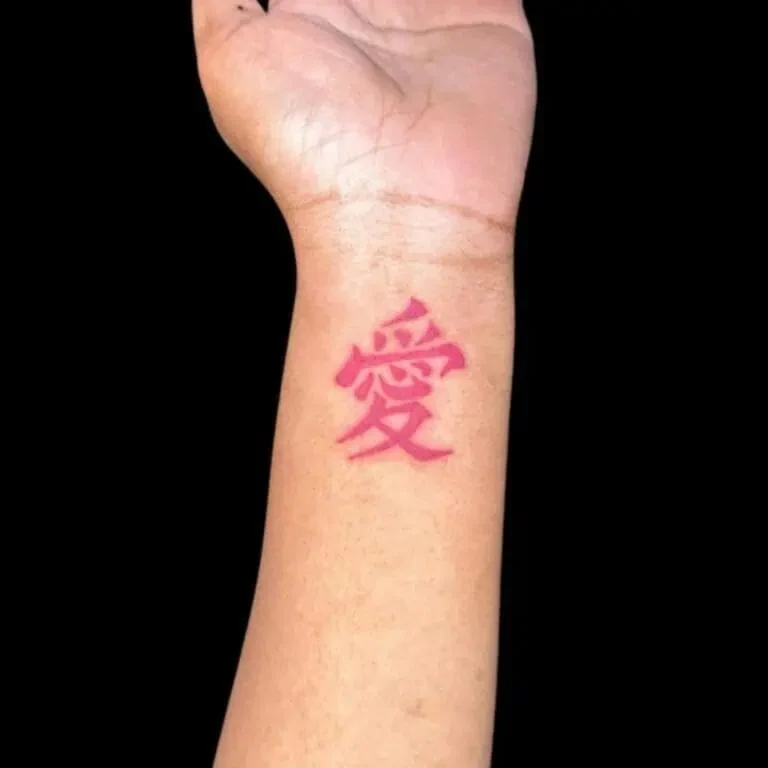
- Forehead: Closely imitates Gaara’s original appearance. It is a highly visible choice, so consider the personal and professional implications before committing.
- Forearm: Offers enough room for the kanji, a small portrait, or sand details. It is easy to view and works well for a personal reminder.
- Wrist: Suits a compact symbol that you can see throughout the day. Fine details may require a slightly larger design to remain clear over time.
- Upper arm: Gives an artist more space for a portrait or a combination of Gaara and the kanji. Clothing can cover the design when needed.
- Shoulder or back: Better for a larger composition featuring sand, the gourd, and a character portrait.
- Chest: Can suit a more private design connected to personal struggles or emotional growth.
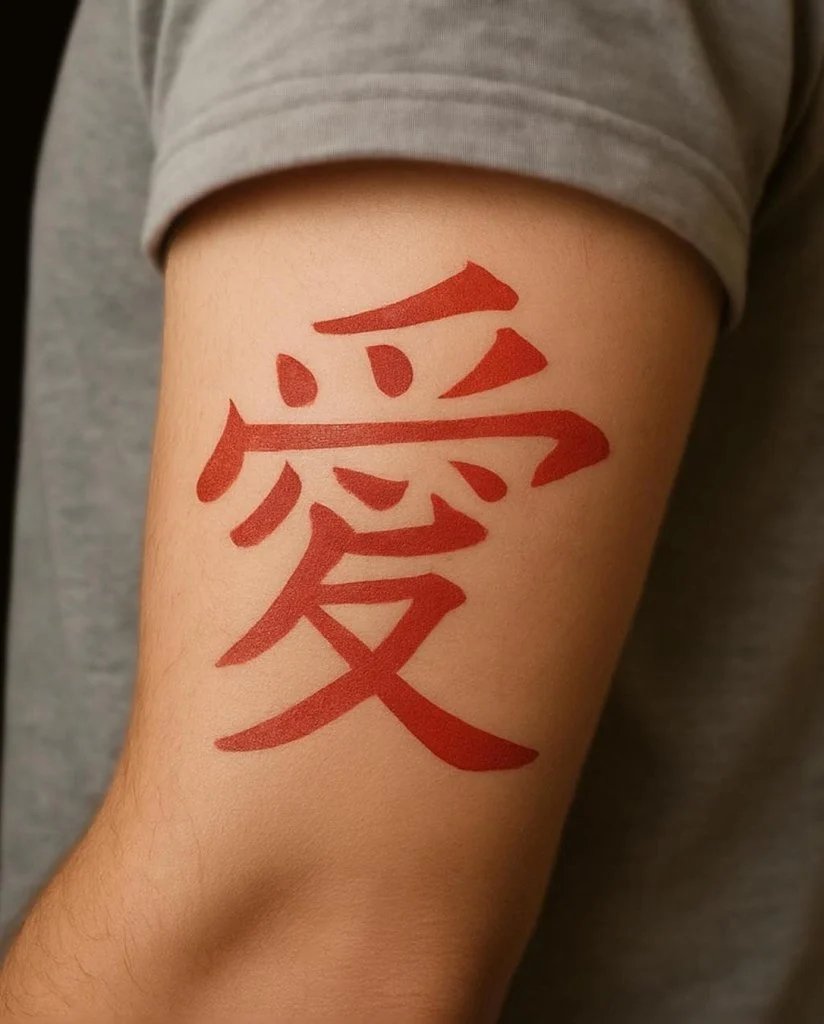
Red ink is the obvious choice for matching the original symbol, while black ink offers a simpler interpretation. Some people combine both, using black for the character outline and red for the kanji.
Before getting the tattoo, show your artist a reliable reference image. Japanese characters require careful attention to their strokes and proportions, particularly when the design is small. Also discuss how the tattoo may age, since fine lines and closely spaced details can become less distinct over time.
Is a Gaara Tattoo a Good Choice for Someone Who Has Not Watched Naruto?
Yes, although the experience may be different. Someone unfamiliar with the series may see 愛 as a Japanese character meaning love, without recognizing the personal history associated with Gaara.
If you want the tattoo to reference the character specifically, a portrait, his red hair, his gourd, or another recognizable feature can make the connection clearer. If you prefer a symbol that stands on its own, the kanji can work independently, provided you understand its literal meaning and cultural context.
It is also worth remembering that the word “love” does not automatically communicate Gaara’s full story. The associations with rejection, self protection, and redemption come from the fictional character, not from the Japanese character itself.
For that reason, think about what you want the tattoo to communicate to people who do not know the anime. You may be comfortable with a symbol whose full meaning remains private, or you may prefer a design that immediately signals your fandom.
FAQs
Is Gaara’s forehead tattoo permanent in the Naruto story?
Yes. The 愛 symbol remains a defining part of Gaara’s appearance throughout the main story. It continues to identify him even as his personality, relationships, and responsibilities change.
Is the Gaara tattoo suitable for both human beings?
Yes. The design has no gender-specific meaning. A person can choose a minimalist kanji, a detailed anime portrait, or a sand-inspired design based on personal taste and the message they want to express.
Does Gaara’s tattoo represent mental health struggles?
Some fans interpret it that way because his story includes isolation, emotional suffering, and difficulty trusting others. However, the symbol is not an official mental health emblem. Its connection to those experiences comes from the character’s story and individual interpretations.
Can I combine Gaara’s tattoo with another Naruto character?
Yes. Pairing Gaara with Naruto can emphasize their shared experiences of loneliness and their different paths toward connection. Combining him with Temari or Kankuro can instead highlight family, loyalty, and the relationships he develops as he grows older.
Does Gaara’s tattoo have to be red?
No. Red matches the anime design, but black, gray, or another color can suit your preferred style. The color choice changes the visual appearance rather than the literal meaning of the kanji.
Final Thoughts
Gaara’s forehead symbol is memorable because its meaning changes alongside the character who wears it. What begins as a mark of isolation becomes part of a story about responsibility, connection, and personal change. For fans, a tattoo inspired by Gaara can honor that journey and serve as a reminder that a painful past does not have to decide who you become.









1 thought on “Gaara Tattoo Meaning: Symbolism, Love, Pain & Redemption Explained For 2026”