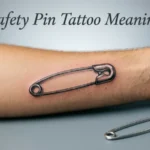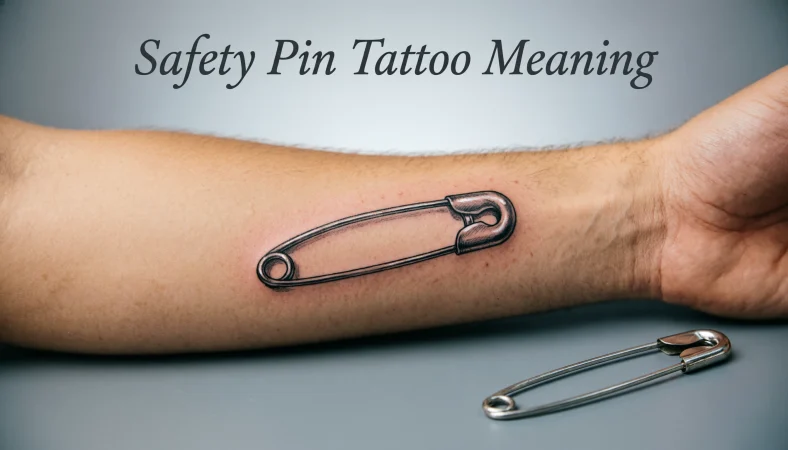
A safety pin tattoo commonly symbolizes protection, solidarity, resilience, individuality, and standing up for people who feel vulnerable or excluded. Because a safety pin holds things together and helps prevent harm, it can represent emotional strength, healing, or the desire to keep yourself and others safe.
In some social and cultural contexts, it also symbolizes support for marginalized communities and resistance to discrimination. Its meaning depends on the wearer’s personal experiences, beliefs, and the design of the tattoo.
Have you ever wondered why someone would choose a simple safety pin as a tattoo? Although it may look like an ordinary everyday object, the safety pin can carry powerful personal and social meanings. Its practical purpose of fastening things together has inspired associations with protection, connection, and resilience.
For some people, it represents surviving difficult experiences, while for others, it expresses solidarity with people who face discrimination or feel unsafe.
In this guide, you will explore the safety pin tattoo meaning through its symbolism of protection, unity, personal strength, and social awareness. You will also learn how different placements and design styles can influence its interpretation.
Because tattoo symbolism is not universal, this guide distinguishes common cultural associations from personal meanings, helping you understand why the safety pin has become a meaningful choice for people who want a small design with a powerful message.
Quick Answer: What Does a Safety Pin Tattoo Mean?
A safety pin tattoo commonly symbolizes protection, solidarity, resilience, and individuality. It can represent a commitment to supporting people who feel vulnerable, a connection to punk culture, or the idea of holding yourself together during difficult times. Some people choose it as a reminder that small acts of kindness can make a difference. Its meaning is personal, so the design does not communicate the same message for everyone.
Table of Contents
- The Symbolism Behind a Safety Pin Tattoo
- Safety Pins and the Meaning of Protection
- Solidarity, Acceptance, and Social Support
- Punk Culture and Personal Rebellion
- The History Behind the Symbol
- Popular Designs and Their Interpretations
- Safety Pin Tattoos Compared With Similar Symbols
- Choosing the Right Placement and Style
- Questions to Consider Before Getting Inked
- Frequently Asked Questions
The Symbolism Behind a Safety Pin Tattoo
The safety pin is a simple object designed to fasten pieces of fabric while protecting the person using it from its sharp point. That practical function gives the object an unusual symbolic quality: it connects things, keeps them in place, and conceals its sharp end when closed.
Tattoo symbolism often grows from these everyday associations. A wearer might connect the pin with a difficult period in life, a relationship that provided support, or a personal decision to help others.
Holding Things Together During Difficult Times
One of the most personal interpretations is the idea of keeping life together when circumstances become overwhelming.
A safety pin can fasten torn fabric, repair a loose seam, or temporarily hold something in place. As a tattoo, that action can represent emotional endurance. The wearer may have experienced grief, a major life change, a difficult relationship, or a period when continuing to move forward required considerable effort.
The image does not have to suggest that everything is fixed. In fact, its appeal may come from the opposite idea: sometimes a temporary solution is enough to get through a difficult day.
For someone who has rebuilt their life after a setback, a small safety pin can serve as a quiet reminder that being imperfect does not mean being broken beyond repair.
Strength Without Aggression
Strength is often represented through large animals, weapons, or dramatic imagery. A safety pin offers a different approach.
It is small, practical, and easy to overlook. Yet it performs a useful task despite its modest appearance. That contrast can appeal to people who value patience, adaptability, and quiet determination rather than outward displays of power.
A minimalist design may communicate this idea more effectively than an elaborate tattoo. A simple outline can suggest that strength does not always need to attract attention.
Individuality and Personal Meaning
Some people choose the symbol because it is unusual without being complicated. Others appreciate its ordinary appearance, especially when they want a tattoo that carries meaning without inviting constant questions.
The wearer can assign the image a specific personal association. It might represent a loved one who offered support, a period of personal growth, or a reminder to remain open to people whose experiences differ from their own.
There is no universal rule that determines which interpretation is correct. The personal story behind the tattoo often matters more than the design alone.
Safety Pins and the Meaning of Protection
Protection is one of the most natural associations with this symbol, although it can refer to several different ideas.
A closed safety pin covers its sharp point, reducing the risk of accidental injury. This feature can suggest care, caution, and the responsibility to prevent harm. In tattoo form, the image may remind the wearer to protect their own boundaries or treat other people with consideration.
Emotional Safety
For some people, protection means having a place where they can speak honestly without fear of ridicule or rejection.
A safety pin tattoo may represent the wish to create that kind of environment for friends, family members, or a wider community. It can also honor someone who provided emotional support during a difficult period.
The symbol is especially meaningful when the wearer connects safety with being accepted rather than being controlled. It may express the belief that people deserve dignity even when they feel different, uncertain, or misunderstood.
Personal Boundaries
A safety pin can also represent the importance of knowing when to offer help and when to protect personal well-being.
Supporting others does not require accepting every demand or ignoring your own needs. A tattoo chosen with this interpretation can serve as a reminder to remain compassionate without losing a sense of self.
The meaning is subtle, but useful: protection can involve looking after other people, maintaining healthy boundaries, or doing both at once.
Solidarity, Acceptance, and Social Support
Beyond personal symbolism, the safety pin became associated with public expressions of solidarity, particularly in discussions about discrimination and hostility toward marginalized communities.
The idea is straightforward. Someone wearing a safety pin may be signaling that people who feel targeted or unsafe can approach them for support. The pin becomes a small, visible gesture of willingness to listen, offer assistance, or stand against mistreatment.
A tattoo based on this association can turn a temporary gesture into a lasting reminder of the wearer’s intentions.
Standing With Marginalized Communities
A safety pin tattoo may express support for people who experience prejudice because of their background, identity, or circumstances.
For example, a wearer might choose it to represent opposition to racism, anti LGBTQ+ discrimination, religious intolerance, or bullying. The precise message depends on the individual and the context in which the tattoo appears.
However, the symbol does not automatically prove that someone is an active ally or that others will interpret it in the intended way. Its meaning becomes more credible when the wearer’s actions support the values the tattoo represents.
Listening to people who face discrimination, challenging harmful comments, and offering practical help can give the symbol substance beyond appearance.
A Reminder to Make Others Feel Welcome
Not every solidarity tattoo refers to a specific political event or movement. Some people simply want to remember that small gestures can help someone feel less alone.
A safety pin might represent checking on a friend, intervening when someone is being mistreated, or making space for a person who feels excluded. These actions may seem minor, but they can change how someone experiences a difficult situation.
For this reason, the tattoo can carry an outward-looking meaning. Rather than focusing only on the wearer’s personal journey, it can express a commitment to how they treat other people.
Punk Culture and Personal Rebellion
The safety pin has a long-standing visual association with punk fashion, where ordinary objects became tools for challenging conventional ideas about clothing, beauty, and social respectability.
In punk style, safety pins have appeared on jackets, trousers, shirts, and other garments. They can hold fabric together, decorate clothing, or create an intentionally rough appearance. Their use fits a broader do-it-yourself approach in which people customize what they own instead of relying on polished, expensive fashion.
Rejecting Conventional Beauty Standards
Punk fashion often uses distressed fabric, bold hairstyles, unconventional accessories, and deliberate visual contrast. A safety pin fits naturally into this approach because it looks practical rather than decorative.
As a tattoo, it may represent comfort with being different. The wearer might reject pressure to look conventional, follow every trend, or seek approval from people who do not understand their style.
This interpretation is not limited to music fans. A person may connect with the broader idea of questioning expectations and choosing a more independent way of living.
Independence and Do It Yourself Values
The do-it-yourself principle is central to much of punk culture. It encourages people to create, repair, perform, publish, and organize without waiting for approval from established institutions.
A safety pin tattoo can reflect that attitude through the idea of making something work with the resources available. It may symbolize resourcefulness, creative freedom, or the determination to build an identity on one’s own terms.
The tattoo does not necessarily indicate that the wearer belongs to a punk scene. Someone may simply appreciate the history and visual character of the symbol.
The History Behind the Symbol
The safety pin has a practical history that predates its modern fashion and tattoo associations.
Walter Hunt, an American mechanic and inventor, developed the familiar coiled safety pin design and received a United States patent for it in 1849. His design used a spring mechanism and a clasp that covered the sharp point. This practical invention helped establish the recognizable form used in clothing and other everyday applications.
The object later took on meanings beyond fastening fabric. Fashion subcultures adopted it as an inexpensive, adaptable accessory, and punk style made its use especially visible during the 1970s.
The pin’s later association with solidarity also reflects how an ordinary object can acquire a public meaning during periods of social tension. In the United Kingdom, safety pins attracted attention after the 2016 Brexit referendum as some people wore them to signal support for those who might face xenophobia or harassment. The gesture drew both appreciation and criticism, including questions about whether wearing a symbol was enough to demonstrate meaningful support.
These different histories help explain why the same tattoo can communicate practical resilience, punk identity, or social solidarity. Its meaning comes from a combination of the object’s design and the experiences people attach to it.
Popular Safety Pin Tattoo Designs and Their Interpretations
The visual style can influence how people read a tattoo. A tiny outline may feel private and understated, while a pin combined with a heart or other symbol can make the intended message more specific.
| Tattoo design | Common interpretation | Best suited to |
| Simple safety pin outline | Resilience, simplicity, or personal strength | People who prefer minimalist tattoos |
| Closed safety pin | Protection, care, and responsibility | Those who value safety and emotional boundaries |
| Open safety pin | Vulnerability, change, or challenging conventions | Wearers who connect with unconventional self-expression |
| Safety pin with a heart | Compassion, love, or emotional support | People honoring a relationship or commitment to kindness |
| Safety pin with a flower | Growth, recovery, or gentleness | Those who want to combine strength with renewal |
| Safety pin with a name or date | Memory, loyalty, or a significant life event | People commemorating someone or a personal milestone |
| Safety pin in punk-inspired artwork | Rebellion, independence, or alternative culture | Fans of punk fashion and music |
| Safety pin with a broken chain | Freedom, resistance, or moving beyond restrictions | People marking a major personal transition |
These interpretations are possibilities rather than fixed definitions. A closed pin does not always mean protection, and an open pin does not necessarily indicate vulnerability. The wearer’s intention remains the most important guide.
Minimalist Safety Pin Tattoos
A minimalist safety pin usually features a clean outline with little or no shading. It works well for someone who prefers a small, understated design.
Its simplicity can also make the tattoo feel more personal. It may be visible only to people who notice it, which suits wearers who do not want to explain the symbolism to everyone they meet.
Because the design contains thin lines and small details, it is important to discuss sizing with a professional tattoo artist. Extremely fine details can become less distinct as a tattoo ages, particularly when the design is very small.
Safety Pin With a Heart
Adding a heart makes the emotional side of the symbol more prominent. The combination can suggest compassion, loyalty, support, or the promise to remain present for someone during difficult circumstances.
Some people choose this design to honor a friend or family member who helped them through a challenging time. Others use it to represent a broader commitment to kindness and acceptance.
The heart does not have to be large or colorful. A small heart attached to the pin can communicate the idea without making the tattoo visually complicated.
Safety Pin With Flowers
Flowers can introduce themes of renewal, growth, and tenderness. Paired with a safety pin, they create a contrast between something associated with repair and something associated with natural development.
A rose may suggest love or remembrance, while a small wildflower can create a more understated appearance. These associations vary by flower, culture, and personal experience, so there is no need to follow a strict symbolic dictionary.
This combination suits someone who wants the tattoo to acknowledge hardship while also expressing hope for what comes next.
Safety Pin Tattoos Compared With Similar Symbols
Several tattoo designs can express protection, solidarity, or resilience. The difference lies in how directly each image communicates its intended message.
| Symbol | Main association | How it differs from a safety pin |
| Safety pin | Support, protection, resilience, punk identity | Suggests holding things together and can carry a specific solidarity association |
| Safety pin with a heart | Compassion and emotional support | Places greater emphasis on care and affection |
| Anchor | Stability and staying grounded | Focuses more directly on steadiness during uncertainty |
| Semicolon | Continuation after a difficult period, often connected with mental health awareness | Has a recognizable association with continuing one’s story |
| Safety pin with a broken chain | Independence and freedom | Adds a clearer visual suggestion of escaping restrictions |
| Ribbon tattoo | Awareness, remembrance, or support for a cause | Often communicates a more specific cause when a recognized ribbon color or design is used |
A person choosing between these designs should consider what they want the image to communicate. An anchor may be a better fit for stability, while a safety pin may feel more appropriate for someone whose story involves repair, solidarity, or alternative fashion.
Symbols can overlap in meaning, but they are not interchangeable. The right choice is the one that fits the wearer’s actual intention.
Choosing the Right Placement and Style
Placement affects how visible a tattoo will be and how much detail an artist can include. It can also influence whether the symbol feels like a private reminder or a public statement.
Wrist
The wrist is a popular option for small tattoos because the design is easy to see. A safety pin here can act as a personal reminder to remain resilient, supportive, or true to one’s values.
The area receives regular sun exposure, so proper aftercare and sun protection once the tattoo has healed can help preserve its appearance.
Forearm
The forearm provides more room for a slightly larger design or additional elements, such as a heart, flower, or short line of text.
It can also make the tattoo easier for others to notice. This may suit someone who wants the symbol to express a visible commitment to solidarity or alternative identity.
Behind the Ear
A small safety pin behind the ear offers a more discreet option. It may appeal to people who want a subtle design that remains partly hidden by their hair.
The available space is limited, so a simple outline usually works better than a highly detailed pin with several decorative elements.
Ankle or Upper Arm
The ankle can suit a compact design that feels personal and understated. The upper arm offers more flexibility for a larger image or a design that may eventually become part of a wider tattoo composition.
Think about clothing, workplace expectations, sun exposure, and your preference for visibility before choosing a location.
Fine Line or Traditional Style
Fine line designs use delicate outlines and restrained detail. They work well for minimalist tattoos, although the artist must ensure that the design remains legible at its intended size.
A traditional or punk-inspired approach may use heavier outlines, stronger contrast, or additional decorative elements. This style can emphasize the safety pin’s connection with alternative fashion.
Before booking, review healed examples of the artist’s work rather than judging a portfolio only by fresh tattoos. A design that looks clear immediately after application may change as the skin heals.
Questions to Consider Before Getting Inked
A meaningful tattoo starts with an honest understanding of why you want it.
Ask yourself what the safety pin represents in your life. Does it connect to a personal experience, a social commitment, a music scene, or an idea you want to carry forward? A clear answer can help you choose a design that remains meaningful after the original inspiration fades.
Consider the cultural associations, too. If you intend the tattoo to communicate solidarity with a marginalized group, learn about the history of the symbol and remember that visible support is only one part of allyship. Consistent behavior matters more than the image alone.
Finally, think about whether you want the meaning to be obvious. A plain pin may leave room for personal interpretation, while a heart, flower, or broken chain can point toward a more specific message.
Choose a licensed professional who follows appropriate hygiene practices, discuss sizing and placement, and follow the artist’s aftercare instructions. A thoughtful design and responsible tattoo care will help you feel more confident in your decision.
FAQs
Is a safety pin tattoo associated with mental health?
A safety pin tattoo can symbolize resilience, recovery, or strength during difficult times, but it is not a universal mental health symbol or proof of someone’s personal history.
Does a safety pin tattoo have a political meaning?
A safety pin tattoo can express opposition to discrimination and support for marginalized people, but it may also represent fashion, strength, or personal memories.
Can a safety pin tattoo represent friendship?
Yes. It may honor a friend who offered support during a difficult time or symbolize a promise to remain dependable. Adding a shared date, initials, or a small heart can make the connection more personal.
Is there a difference between a safety pin tattoo and a regular pin tattoo?
A safety pin tattoo may symbolize protection and security, while a straight pin or sewing needle can represent precision or craftsmanship, depending on the design and wearer.
Does the safety pin tattoo have a negative meaning?
A safety pin tattoo may symbolize punk rebellion, care, solidarity, or resilience; its perceived meaning depends on context and personal interpretation.
Conclusion
A safety pin is a small object with room for several meaningful interpretations. It can represent the effort to hold things together, the courage to express individuality, or a commitment to treating others with care. Its history in punk fashion and public expressions of solidarity gives it additional depth, but no single meaning applies to every wearer. Choose a design that reflects your own story and values, and let its significance grow from the way you live those beliefs.