A moth tattoo commonly symbolizes transformation, intuition, mystery, vulnerability, and the search for light during difficult times. Because moths undergo metamorphosis, they can represent personal growth and the transition from one stage of life to another.
Some designs also express attraction to the unknown, while darker moth imagery may represent mortality, resilience, or acceptance of life’s uncertainties. The exact interpretation depends on the species, artwork, and personal meaning behind the tattoo.
Moths have an unusual place in tattoo art. Their wings can look delicate and beautiful, yet certain species have patterns that resemble skulls, eyes, or other striking shapes. Some people see them as symbols of quiet strength, while others associate them with darkness, mystery, and the pull toward something they cannot fully understand.
Their appeal also comes from their life cycle. A moth begins as an egg, develops into a caterpillar, forms a pupa, and eventually emerges as an adult. That dramatic change offers a natural metaphor for leaving an old identity behind and becoming someone new.
Unlike a butterfly tattoo, which often communicates beauty and freedom, a moth design can carry a more introspective or unconventional tone. It may represent a difficult period, a fascination with the night, or the determination to keep searching for meaning even when the path ahead is unclear.
Understanding the symbolism behind different moth designs can help you choose artwork that reflects your experiences rather than simply following a trend.
Table of Contents
- What Does a Moth Tattoo Symbolize?
- The Deeper Symbolism of Moths
- Popular Moth Tattoo Designs and Their Meanings
- Moth Symbolism in Nature and Culture
- Moth Tattoos Compared With Butterfly Tattoos
- Choosing the Right Design and Placement
- Frequently Asked Questions
What Does a Moth Tattoo Symbolize?
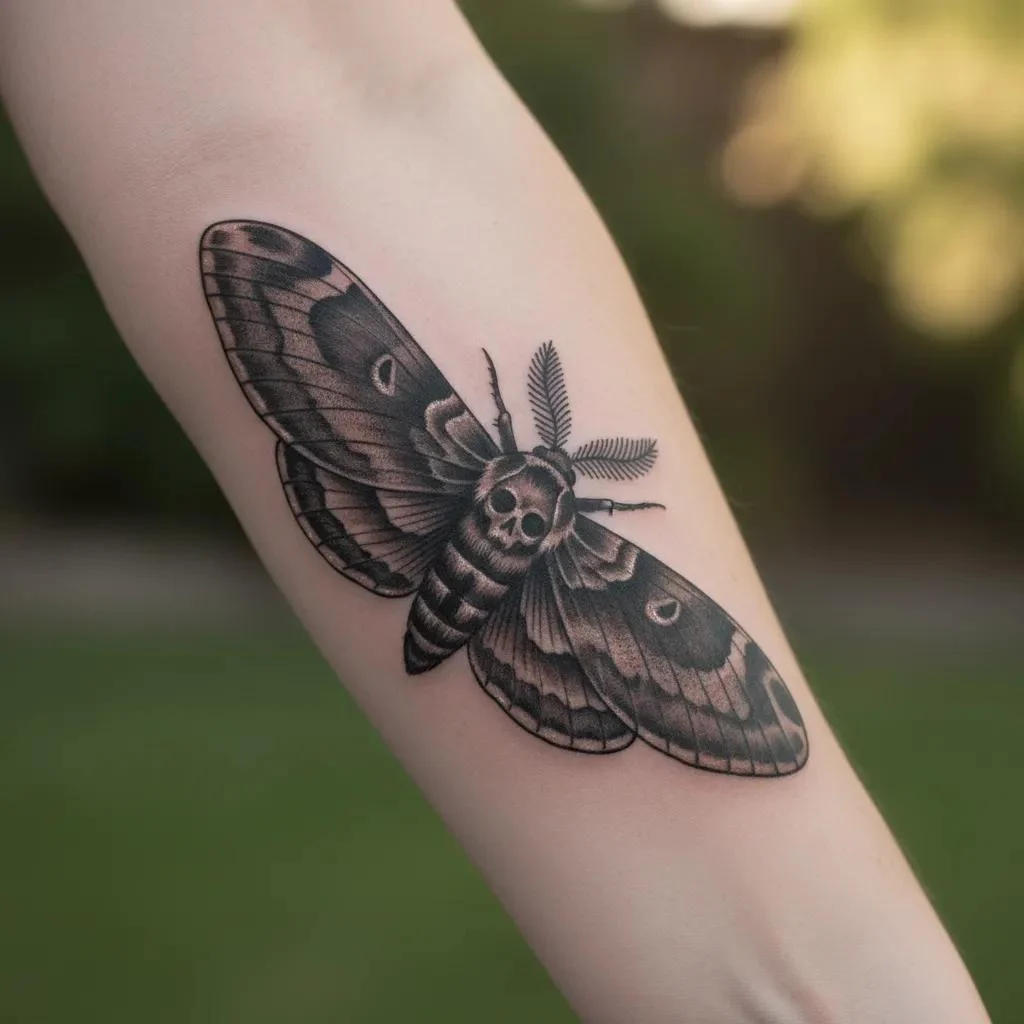
A moth tattoo can represent several ideas at once. Its meaning often depends on whether the design looks delicate, mysterious, threatening, or closely connected to a particular species.
Transformation and Personal Growth
Transformation is one of the most common interpretations of moth imagery. Moths undergo complete metamorphosis, changing from a larva into a pupa and then an adult. This process makes them natural symbols of change, development, and the beginning of a new chapter.
Someone might choose this tattoo after overcoming a difficult experience, ending an unhealthy relationship, or making a major change in their life. The moth becomes a reminder that growth can happen quietly, away from public attention.
The symbolism can feel especially personal for people who have changed their outlook, rebuilt their confidence, or learned to live differently after a setback. The tattoo does not suggest that change is always easy. Instead, it acknowledges that becoming a different version of yourself can take time.
Attraction to Light and Hope
Moths are often associated with light because many species are active at night and may approach artificial lights. This behavior has inspired a familiar metaphor: moving toward a light even when darkness surrounds you.
In tattoo art, a moth flying toward a small flame or glowing moon can represent hope, curiosity, or the desire to find direction during a difficult period. It may reflect a person’s determination to keep looking for something meaningful.
There is also a more complicated interpretation. A moth drawn toward a flame can symbolize attraction to something that may cause harm. The image can therefore represent an unhealthy relationship, a risky desire, or a repeated pattern that someone recognizes but finds difficult to leave behind.
These meanings are not contradictory. The same image can express hope and caution, depending on the wearer’s experience.
Mystery and the Unknown
Moths are often associated with darkness, moonlight, and the hidden parts of the natural world. Their nocturnal habits have helped make them popular subjects in gothic art and tattoo designs.
A moth tattoo may represent comfort with uncertainty, an interest in the mysterious, or a personality that prefers observation over attention. Dark wings and intricate markings can give the design an almost otherworldly appearance.
For some people, this symbolism is not about fear at all. It is about accepting that not every question has an immediate answer and that uncertainty can be part of personal growth.
Vulnerability and Inner Strength
Moths often appear fragile because of their delicate wings and small bodies. Yet their life cycle involves substantial changes, and adult moths must survive in environments filled with predators and other challenges.
This contrast can make the tattoo a symbol of strength that does not depend on looking powerful. A person may choose it to represent sensitivity, endurance, or the ability to continue despite feeling exposed.
The message can be especially meaningful for someone who has learned that vulnerability and resilience can exist together. A delicate design does not have to communicate weakness.
Mortality and Acceptance
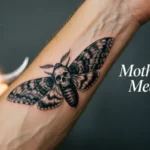
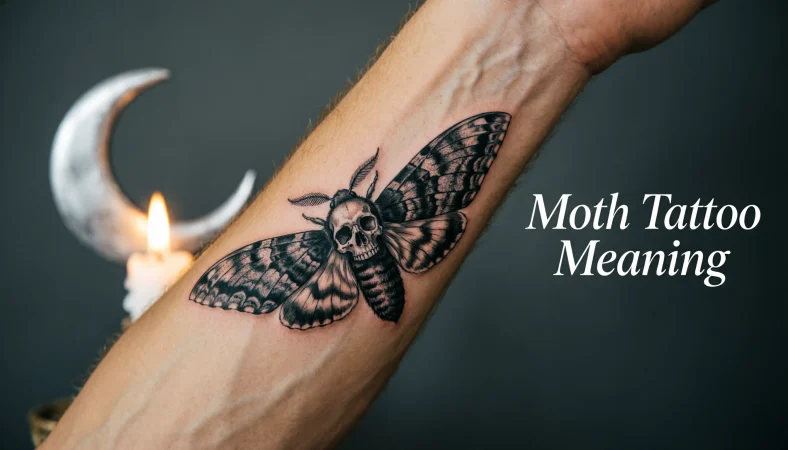
Certain moth species have become associated with death in popular culture, particularly the death’s-head hawkmoth, which has a skull-like marking on its thorax. Its unusual appearance has inspired associations with mortality, fear, and the gothic imagination.
A tattoo based on this species may represent an awareness of life’s impermanence or a willingness to face uncomfortable subjects. Some people choose it simply because they appreciate its dramatic appearance.
Death-related symbolism is not the only interpretation, however. A skull-like marking can be used as a reminder to value the present rather than as an expression of sadness or pessimism.
The Deeper Symbolism of Moths
Beyond their common associations, moths offer a more subtle way to express emotional experiences. Their symbolism often comes from contrasts: light and darkness, attraction and danger, fragility and endurance.
The Moth and the Flame
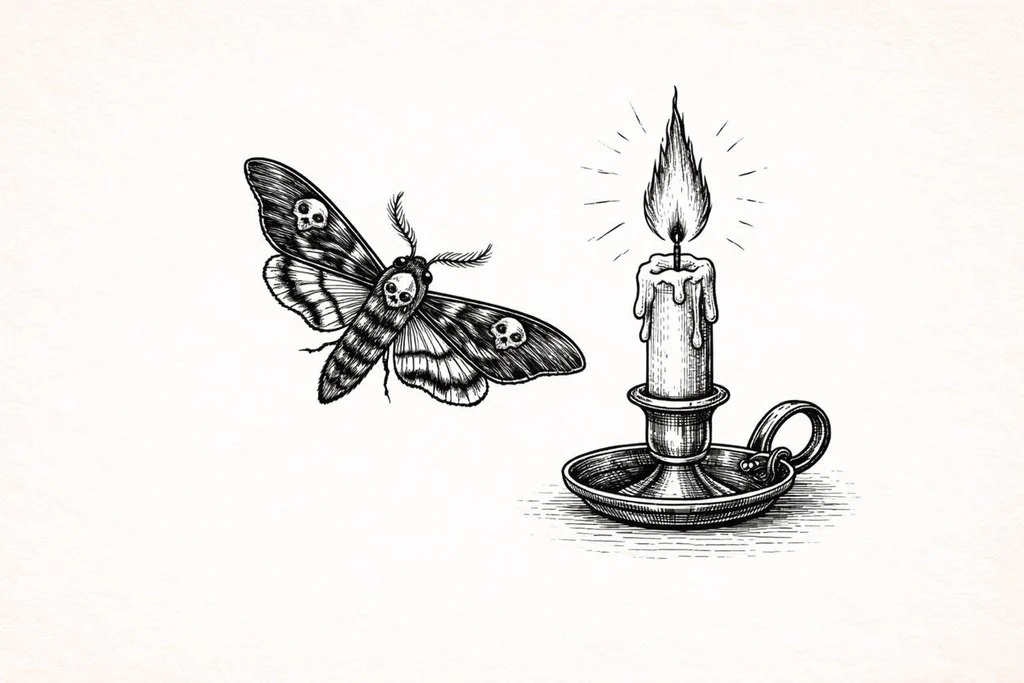
The moth and flame is one of the most recognizable images associated with moth symbolism. It can suggest a person who feels drawn toward something powerful, beautiful, or difficult to resist.
In a positive interpretation, the flame represents inspiration, knowledge, or hope. The moth becomes a figure that keeps moving toward what matters, even when the surroundings are uncertain.
The darker interpretation focuses on the risks of attraction. A person might know that a relationship, ambition, or habit is harmful yet continue pursuing it. In that case, the tattoo represents awareness of the pattern rather than an endorsement of it.
It is important to distinguish this metaphor from moth biology. Not every moth is drawn to every light source, and scientists continue to investigate the mechanisms behind many moths’ responses to artificial light. The familiar phrase captures a human interpretation of the behavior, not a universal rule about all moth species.
Finding Comfort in Darkness
Darkness does not always symbolize something negative. In a moth tattoo, it can represent privacy, rest, reflection, or a preference for experiences that take place away from public attention.
A moth with dark wings against a pale background may express the idea that beauty does not need to be bright or obvious. It can also represent someone who feels more comfortable with their inner world than with constant attention from others.
This interpretation is particularly well suited to minimalist and gothic designs. Rather than using the moth to suggest danger, the artwork can communicate a calm acceptance of the parts of life that remain hidden.
Becoming Yourself Without an Audience
A moth’s transformation takes place before it emerges as an adult. That natural process offers a metaphor for personal changes that happen privately, long before anyone else notices them.
Someone who has rebuilt their life after a difficult period may connect with this idea. The tattoo can represent work that was done quietly, without recognition or approval from others.
This is slightly different from a general symbol of transformation. The emphasis is on the private process of becoming, rather than simply reaching a new stage.
Popular Moth Tattoo Designs and Their Meanings
Different moth species have distinct wing shapes, markings, and colors. Tattoo artists often use these features to create designs that communicate a particular mood or idea.
| Moth design | Common symbolic interpretation | Visual character |
| Death’s-head hawkmoth | Mortality, mystery, and confronting fear | Dramatic, skull-like marking |
| Luna moth | Renewal, beauty, and spiritual reflection | Pale green wings and long tails |
| Atlas moth | Awe, strength, and the beauty of nature | Broad wings with bold patterns |
| Polyphemus moth | Mystery, awareness, and the natural world | Large eyespots on the wings |
| Minimalist moth | Personal change and understated individuality | Simple outlines and limited detail |
| Moth with a moon | Intuition, cycles, and nighttime reflection | Celestial and ornamental |
| Moth with a flower | Delicacy, attraction, and the relationship between life forms | Botanical and decorative |
These meanings are personal and artistic interpretations, not fixed cultural definitions. A moth’s actual biology can inspire a tattoo without determining what the finished design must mean.
Death’s-Head Hawkmoth
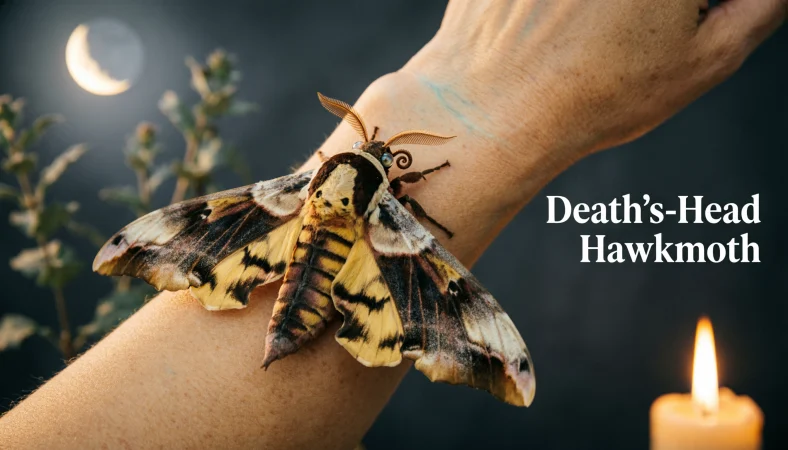
The death’s-head hawkmoth is famous for the skull-like pattern on its thorax, the central body section behind the head. Several species belong to the genus Acherontia, including Acherontia atropos, which is found across parts of Africa and Europe and can migrate into other regions.
Its unusual markings and association with gothic imagery have made it a striking choice for darker tattoo designs. The image may represent mortality, fearlessness, mystery, or an interest in the unsettling side of nature.
The moth also has a real biological feature that adds to its reputation: members of the genus Acherontia are known for entering beehives and feeding on honey. Some can produce a squeaking sound, adding to their unusual character.
A tattoo based on this species can therefore be both a symbolic statement and a tribute to an extraordinary animal.
Luna Moth
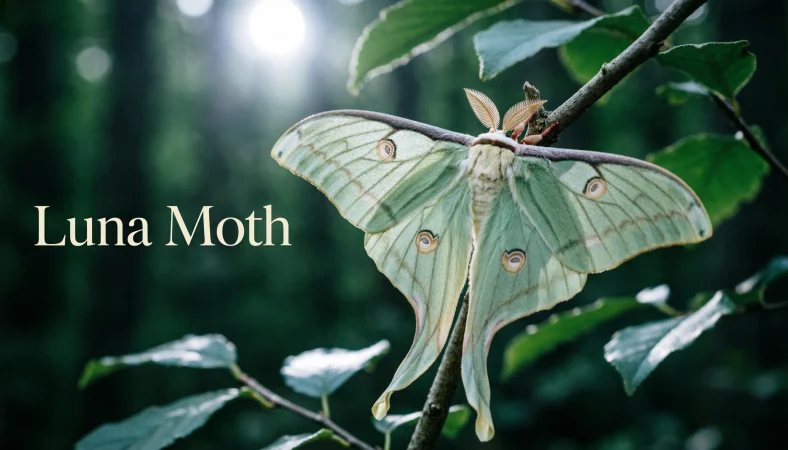
The luna moth (Actias luna) is recognizable by its pale green wings and long hindwing tails. Native to North America, it is one of the most visually distinctive moths used in tattoo art.
Its gentle colors and elegant shape make it popular for designs about renewal, growth, and beauty. The luna moth’s adult life is brief, and adults generally do not feed because their mouthparts are reduced. This feature can inspire reflections on time and the importance of appreciating the present.
Although people sometimes assign spiritual meanings to the luna moth, there is no single universal belief attached to the species. Its symbolism depends on the wearer and the artistic tradition being used.
Atlas Moth
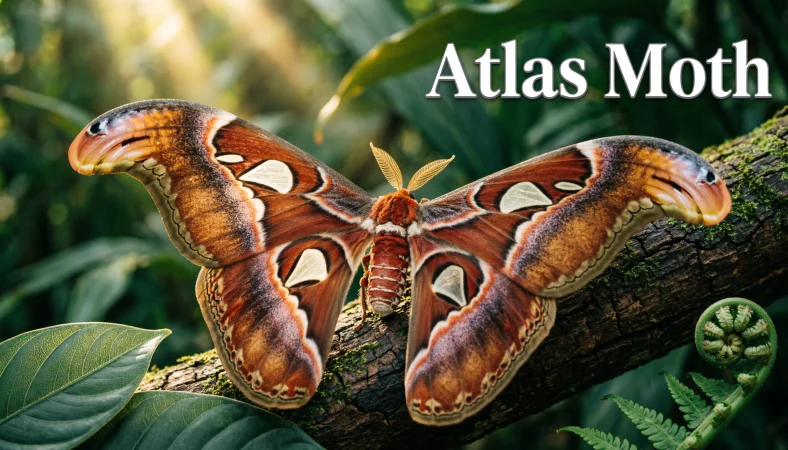
The atlas moth (Attacus atlas) is native to parts of Asia and is known for its large wings and striking patterns. Its wing tips have shapes that can resemble the heads of snakes, a feature that may help deter predators.
For tattoo art, these broad wings create room for elaborate details and strong symmetry. A wearer might associate the species with strength, natural beauty, or the ability to appear formidable without relying on aggression.
The name can also inspire associations with endurance or carrying responsibility, although these are personal interpretations rather than established meanings of the species.
Polyphemus Moth
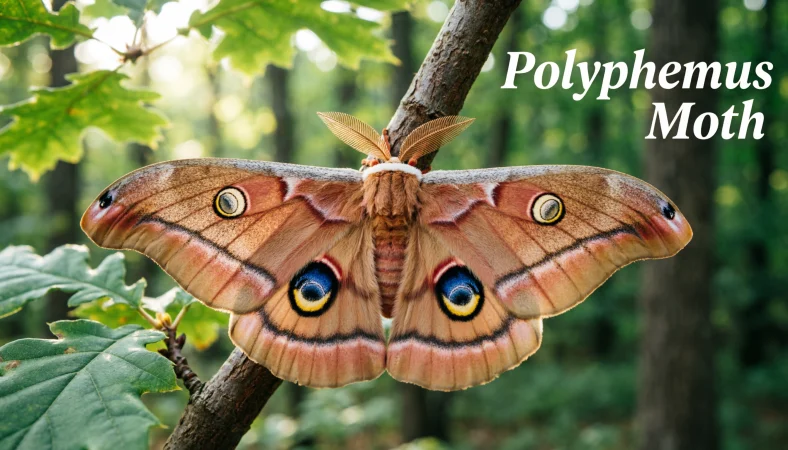
The polyphemus moth (Antheraea polyphemus) is a North American silk moth named after Polyphemus, the one-eyed giant in Greek mythology. Its large eyespots on the hindwings are a recognizable feature.
These markings can inspire a tattoo about awareness, perception, or the difference between appearance and reality. The eyespots also make the design visually distinctive, especially when an artist emphasizes the contrast between the wings.
As with other species-based designs, the mythological name provides artistic inspiration but does not require the wearer to adopt a particular interpretation.
Minimalist and Celestial Moth Tattoos
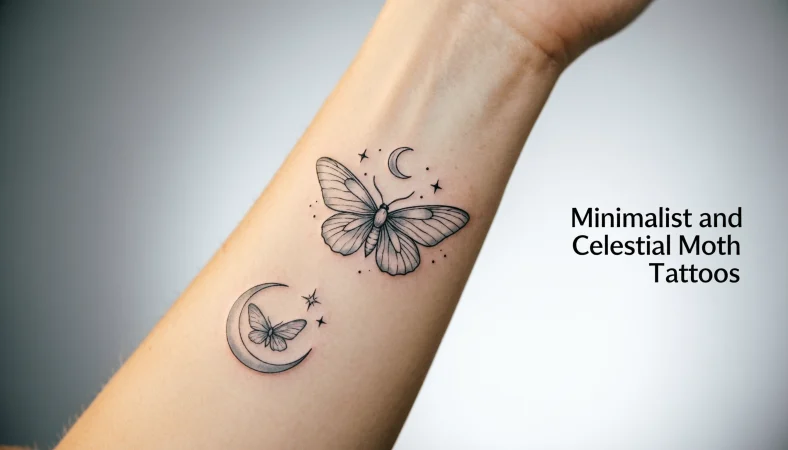
Not every design needs a recognizable species. A simple outline with symmetrical wings can communicate personal growth without making the tattoo feel too elaborate.
Adding a crescent moon, stars, or a small flower introduces a second symbolic element. A moon may suggest cycles or reflection, while a flower may create a contrast between nocturnal life and the familiar imagery of daytime blooms.
These combinations work best when the details have a clear purpose. Too many unrelated symbols can make a design harder to read and weaken the meaning you want to express.
Moth Symbolism in Nature and Culture
Moth imagery has a long history in art, folklore, and popular culture, but it is important to separate documented facts from modern interpretations.
What Moths Actually Do in Nature
Moths belong to the order Lepidoptera, the same insect order as butterflies. Scientists have described well over 150,000 species of Lepidoptera, although estimates vary as researchers discover and classify additional species. Moths make up the larger share of this order.
Their ecological roles are varied. Many caterpillars feed on plants, while adult moths may visit flowers for nectar, and some species help pollinate plants during nighttime hours. Other moths do not feed as adults at all.
The luna moth and the death’s-head hawkmoth illustrate how different moths can be. One is known for its pale green wings and long tails, while the other has a distinctive skull-like marking and unusual feeding habits.
The International Union for Conservation of Nature (IUCN) assesses the conservation status of many species through its Red List. This resource can help readers learn about wildlife conservation, but it does not assign symbolic meanings to moths or tattoo designs.
Moths in Folklore and Popular Culture
Moths have often appeared in stories about nighttime, mystery, and the unknown. Their attraction to artificial lights has inspired metaphors about desire, obsession, and the search for something just beyond reach.
The death’s-head hawkmoth has also gained a strong place in gothic imagery and horror fiction because of its skull-like marking. Its appearance has helped shape modern associations between moths, mortality, and unsettling beauty.
These associations should not be treated as a universal cultural tradition. Different communities may interpret moths differently, and a symbol that feels ominous in one setting may simply represent the natural world in another.
For a tattoo, this flexibility is useful. You can draw inspiration from a species, a story, or an artistic style without assuming that every viewer will understand it in the same way.
Moth Tattoos Compared With Butterfly Tattoos
Moths and butterflies share the same insect order and both undergo complete metamorphosis. Yet their appearances and cultural associations often lead tattoo artists and wearers to use them in different ways.
| Feature | Moth tattoo | Butterfly tattoo |
| Common symbolism | Mystery, transformation, intuition, and attraction to light | Transformation, freedom, beauty, and new beginnings |
| Typical visual style | Dark, muted, gothic, or naturalistic | Bright, colorful, delicate, or ornamental |
| Popular imagery | Moon, flame, skull-like markings, and nighttime scenes | Flowers, gardens, colorful wings, and sunlight |
| Emotional tone | Often introspective or unconventional | Often hopeful or celebratory |
| Personal interpretation | Can express hidden strength or fascination with uncertainty | Can express liberation, growth, or a fresh start |
These differences describe common design trends rather than strict rules. A colorful moth can look cheerful, and a dark butterfly can communicate grief or mystery.
The main distinction is artistic emphasis. Butterfly tattoos often highlight visible beauty and freedom, while moth tattoos frequently explore the tension between attraction and danger, light and darkness, or fragility and endurance.
If you connect more strongly with the quieter, more mysterious side of transformation, a moth may feel like the better choice. If you prefer a design that immediately communicates freedom or a fresh beginning, a butterfly might suit your intentions.
Choosing the Right Moth Tattoo Design and Placement
The best design should suit both your personal story and the space where you plan to wear it. A symmetrical moth can work beautifully on its own, while a detailed species may need more room to preserve its markings.
Choosing the Right Style
- Blackwork: Strong black shapes and contrast suit gothic moths, skull-like markings, and dramatic wing patterns.
- Fine-line: Delicate outlines create a subtle design that can emphasize symmetry and detail.
- Realistic: Accurate wings, textures, and species-specific markings suit people who appreciate natural history.
- Traditional: Bold outlines and simplified shapes create a classic tattoo appearance.
- Ornamental: Decorative patterns, moons, and geometric details can make a moth feel more personal or symbolic.
Best Placement Options
- Forearm: A good option for a medium-sized moth with detailed wings.
- Upper chest: Works well for symmetrical designs, particularly when the wings extend toward the shoulders.
- Upper back: Provides space for large wings, realistic markings, and surrounding botanical details.
- Thigh: Allows for larger designs with flowers, moons, or other imagery.
- Wrist or ankle: Suits smaller, simplified outlines, although very fine details may become less clear as the tattoo ages.
- Shoulder: A natural fit for a moth whose wings follow the curve of the body.
Before committing to a small design, ask your artist which details will remain readable over time. A tattoo should still look balanced when viewed from a normal distance, not just when enlarged on a screen.
Questions to Ask Yourself Before Getting Inked
Consider what you want the moth to represent. Is it a reminder of personal change, an expression of your interest in the natural world, or a way to acknowledge the tension between hope and danger?
Think about whether you prefer a real species or a symbolic illustration. A luna moth offers a distinctive natural form, while a fictional moth gives an artist more freedom to create a design around your story.
Finally, choose an artist whose portfolio matches your preferred style. Detailed moth wings require careful symmetry, and realistic species tattoos benefit from an artist who pays attention to anatomy and markings.
FAQs
Is a moth tattoo associated with good luck?
Moths can symbolize hope, guidance, or positive change, but their association with good luck depends on the design and the wearer’s beliefs.
What does a moth tattoo mean for someone who loves the night?
It may express a connection to nighttime, solitude, mystery, or the beauty of nocturnal wildlife. For someone interested in nature, it can also reflect an appreciation for creatures that are often overlooked.
Does a moth tattoo have a spiritual meaning?
It can. Some wearers connect moths with intuition, spiritual reflection, or the search for guidance. These interpretations vary, and a moth does not have one universally recognized spiritual meaning.
Can a moth tattoo represent grief?
A moth tattoo can honor a loved one or symbolize moving forward after loss, with specific species, dates, or flowers adding personal meaning.
Is a moth tattoo considered gothic?
Moths often appear in gothic tattoos, but they also suit colorful, botanical, minimalist, and realistic designs.
Final Thoughts
A moth tattoo can express the quiet work of transformation, the pull of the unknown, or the courage to keep searching for light during difficult times. Its meaning becomes more personal when you choose a species, style, and set of details that reflect your own experiences. Whether you prefer the delicate luna moth or the striking death’s-head hawkmoth, the strongest design is one that feels meaningful long after the initial attraction fades.