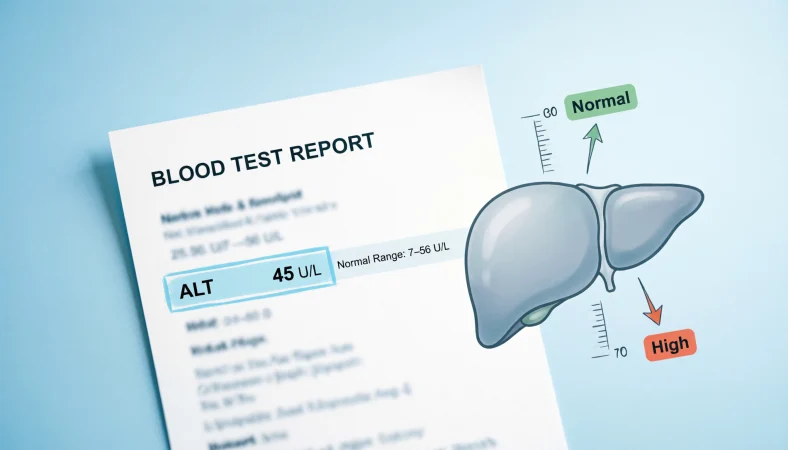
Definition: ALT (Alanine Aminotransferase) is an enzyme found mostly in the liver. It helps convert proteins into energy for your liver cells.
ALT in a blood test measures the level of alanine aminotransferase in your blood. High ALT levels often indicate liver damage or inflammation, while normal levels suggest healthy liver function.
You’ve just received your blood test results, and suddenly you’re staring at unfamiliar abbreviations like “ALT,” “AST,” or “ALP.” Confusing, right? You’re not alone. One of the most commonly asked questions patients have is: what does ALT mean in a blood test, and should I be worried if it’s high or low?
Understanding your lab results doesn’t have to feel overwhelming. In fact, once you break it down, ALT is a simple yet powerful marker that gives insight into your liver health. Whether you’re checking results after a routine physical, monitoring a condition, or just being proactive about your health, knowing what ALT means can help you make smarter decisions.
Let’s decode it together in a clear, friendly, and practical way.
Key Points:
- ALT is mainly located in liver cells
- It enters the bloodstream when liver cells are damaged
- It’s one of the most important markers for liver health
Normal ALT Range (Typical Values)
| Category | ALT Level (Units/L) |
| Normal | 7–56 U/L |
| Mildly Elevated | 57–100 U/L |
| High | 100+ U/L |
⚠️ Note: Normal ranges may vary slightly depending on the lab and individual factors like age and gender.
Origin
The term ALT (Alanine Aminotransferase) comes from biochemistry and medical science. It was identified as an enzyme involved in amino acid metabolism.
- “Alanine” refers to the amino acid it helps process
- “Aminotransferase” describes its role in transferring amino groups
Historically, ALT became widely used in liver function tests (LFTs) as doctors discovered its strong link to liver cell health. Over time, it replaced older markers because it is more specific to the liver compared to some other enzymes.
Popularity
ALT testing is extremely common today, especially in routine health screenings.
Why It’s So Popular:
- Included in standard liver function tests (LFTs)
- Helps detect liver diseases early
- Used to monitor chronic conditions like:
- Fatty liver disease
- Hepatitis
- Alcohol-related liver damage
Real-Life Usage:
Doctors frequently check ALT levels during:
- Annual physical exams
- Pre-employment health checks
- Monitoring medication side effects
In short, ALT is one of the most widely used and trusted indicators of liver health worldwide.
How It Is Used
ALT isn’t just a number it tells a story about your liver.
What Doctors Look For:
1. Normal ALT Levels
- Indicates a healthy liver
- No immediate concern
2. Elevated ALT Levels
Can suggest:
- Liver inflammation
- Fatty liver disease
- Viral infections (like hepatitis)
- Medication side effects
3. Very High ALT Levels
May indicate:
- Acute liver injury
- Toxin exposure
- Severe infection
ALT in Context
Doctors rarely rely on ALT alone. They usually compare it with other markers:
| Test | What It Indicates |
| AST | Liver & muscle health |
| ALP | Bile duct function |
| Bilirubin | Liver processing ability |
👉 Together, these give a complete picture of liver function.
Examples
Even though ALT is a medical term (not conversational), understanding how it’s discussed in different contexts can help.
Friendly Examples
- “My doctor said my ALT is normal, so my liver is doing great 👍”
- “I need to improve my diet my ALT levels are slightly high.”
Professional Examples
- “The patient’s ALT levels are elevated, suggesting possible liver inflammation.”
- “ALT values are within the normal range, indicating no apparent hepatic dysfunction.”
Funny Examples (Light Context 😄)
- “My ALT is high… guess my liver is asking for fewer late-night snacks!”
- “Doctor: ‘Your ALT is elevated.’ Me: ‘So my liver is stressed too?’ 😂”
Comparison with Similar Terms
ALT is often confused with other liver enzymes. Here’s a clear comparison:
| Term | Full Name | Main Function | Location |
| ALT | Alanine Aminotransferase | Liver enzyme | Mostly liver |
| AST | Aspartate Aminotransferase | Liver & muscle enzyme | Liver, heart, muscles |
| ALP | Alkaline Phosphatase | Bile duct enzyme | Liver, bones |
| GGT | Gamma-Glutamyl Transferase | Alcohol-related liver marker | Liver |
Key Difference:
- ALT is more liver-specific than AST
- AST can be elevated due to muscle damage too
👉 That’s why doctors often look at the ALT-to-AST ratio.
Alternate Meanings
While ALT usually refers to a liver enzyme in medical contexts, it can have other meanings in different fields:
| Context | Meaning |
| Technology | “Alt” key on a keyboard |
| Gaming | Alternate account |
| Internet slang | Alternative |
⚠️ Important: In a blood test, ALT always refers to the enzyme.
Professional or Polite Alternatives
In medical or professional conversations, ALT is typically not replaced, but explained more clearly:
Instead of saying:
- “Your ALT is high”
You might hear:
- “Your liver enzyme levels are elevated”
- “There are signs of liver inflammation”
- “We need to evaluate your liver function further”
👉 These sound more patient-friendly and less alarming.
Common Mistakes
Understanding ALT properly can prevent unnecessary panic.
❌ Mistakes to Avoid:
- Assuming high ALT always means serious disease
→ Mild elevations can be temporary - Ignoring slightly elevated levels
→ Could indicate early issues - Comparing results with others
→ Normal ranges vary - Focusing only on ALT
→ Always consider other tests
Quick Tips
✔️ Always review ALT results with a doctor
✔️ Maintain a healthy diet (low fat, balanced nutrients)
✔️ Limit alcohol intake
✔️ Exercise regularly
✔️ Stay hydrated
✔️ Avoid self-diagnosing based on one test
💡 Pro Tip: Lifestyle changes can significantly improve ALT levels over time.
FAQ
1. What does high ALT mean in a blood test?
High ALT usually indicates liver damage, inflammation, or stress on the liver.
2. What is a normal ALT level?
Typically between 7–56 U/L, but ranges can vary by lab.
3. Can ALT levels go back to normal?
Yes! With lifestyle changes or treatment, ALT levels can return to normal.
4. Is ALT more important than AST?
ALT is more specific to the liver, making it slightly more useful for liver issues.
5. What causes ALT levels to rise?
Common causes include:
- Fatty liver
- Alcohol
- Medications
- Viral infections
6. Should I worry about slightly elevated ALT?
Not always but it’s worth monitoring and consulting a doctor.
7. How can I lower ALT levels naturally?
- Eat healthy
- Exercise
- Reduce alcohol
- Manage weight
8. Can stress affect ALT levels?
Indirectly, yes stress can impact lifestyle habits that influence liver health.
Conclusion
So, what does ALT mean in a blood test? In simple terms, it’s a key enzyme that acts like a health signal from your liver. When levels are normal, it’s a good sign your liver is functioning well. When elevated, it’s your body’s way of saying, “Hey, something needs attention.”
The good news? ALT levels are highly responsive to lifestyle changes and medical care. By understanding what this marker means and taking proactive steps like eating better, exercising, and following medical advice you can protect and improve your liver health.
Remember, your blood test isn’t just numbers it’s valuable insight into your overall well-being.











1 thought on “What Does ALT Mean In A Blood Test Results In 2026”