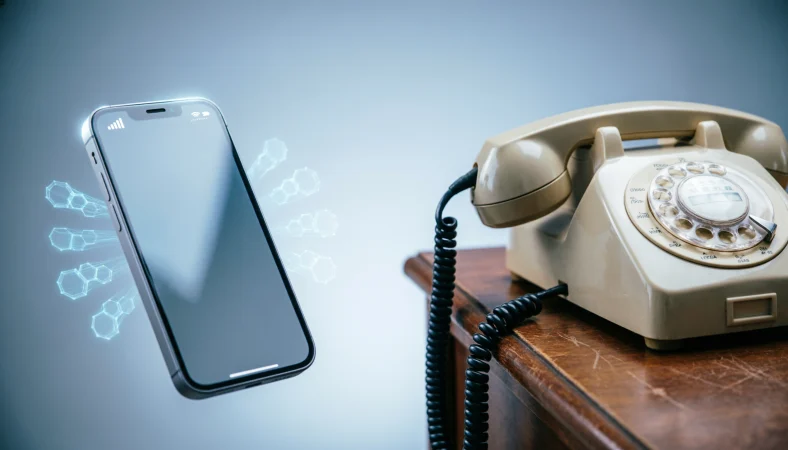
A cell phone connects to a mobile network and lets you make and receive calls from different locations, while a landline uses a fixed physical connection to a telephone network. The choice between them depends on mobility, reliability, cost, internet access, and personal or business needs. In everyday speech, both refer to telephone services.
The terms cell or landline can seem straightforward until a form, business document, technical instruction, or conversation asks which type of telephone service you use. A cell phone is a mobile telephone that communicates through cellular networks, while a landline is a telephone connected to a fixed location through a wired or related fixed telephone network.
The confusion matters because the two systems differ in mobility, infrastructure, reliability, emergency communication, and how telephone numbers are managed. Knowing the distinction helps you choose the right option when completing forms, contacting businesses, setting up services, or describing your phone system.
Cell vs Landline: What’s the Difference?
The most important difference is that a cell phone is mobile, while a landline is associated with a fixed location.
The word cell is commonly used as a noun in American English as a shortened form of cell phone. It can also describe the cellular technology behind mobile communication. In British English, mobile phone is generally more common than cell phone.
A landline is a noun referring to a telephone service connected to a fixed location rather than relying primarily on a cellular mobile network. Traditional landlines used physical telephone wires, although modern fixed telephone services can also use other network technologies.
| Feature | Cell phone | Landline |
| Primary connection | Cellular network | Fixed telephone network |
| Mobility | Highly mobile | Usually tied to one location |
| Physical location | Can be used almost anywhere with coverage | Associated with a specific address |
| Internet capability | Usually available | Depends on the service |
| Battery dependence | Yes | Traditional systems may operate during some power outages |
| Common personal use | Very common | Less common than in previous decades |
| Business use | Common | Still useful for some businesses |
| Number portability | Widely supported | Often supported depending on service |
| Wireless use | Yes | Traditional landlines are generally fixed |
| Main advantage | Mobility and convenience | Fixed location and dependable service |
Quick recap
A cell phone is designed for mobility.
A landline is associated with a fixed location.
Cell phones depend on cellular network coverage and battery power.
Landlines can still be useful where fixed communication and reliability matter.
The right choice depends on how and where the telephone service will be used.
Is Cell vs Landline a Grammar, Vocabulary, or Usage Issue?
The difference between cell and landline is primarily a vocabulary and technology distinction, not a grammar problem.
Both terms can function naturally in ordinary English, but they refer to different types of telephone service. You generally cannot substitute one for the other without changing the meaning.
For example:
Please call me on my cell.
This indicates a mobile phone.
By contrast:
Please call the office landline.
This refers to a fixed telephone service associated with the office.
Are cell phones and landlines interchangeable?
No. They can perform the same basic function of making and receiving voice calls, but their underlying systems and practical characteristics differ.
A cell phone can travel with you. A traditional landline is connected to a particular location.
That distinction becomes important when a form asks:
Do you have a cell phone or landline?
The form is asking you to identify the type of telephone service you have, not merely whether you have a telephone.
Formal versus informal usage
Both cell phone and landline are standard terms, although cell by itself is more conversational.
In a casual conversation, someone might say:
Call me on my cell.
In a professional document, it may be clearer to write:
Please provide your cell phone number.
The term landline is already widely accepted in professional and technical communication.
American versus British English
There is an important regional distinction.
American English commonly uses cell phone.
British English generally uses mobile phone.
The term landline is widely understood in both varieties.
Therefore, if your audience is international, mobile phone may be more universally recognizable than cell phone. However, cell phone is completely standard American English.
How to Use Cell Correctly
The word cell has several meanings in English. It can refer to a biological cell, a small room, a unit in a spreadsheet, or a mobile phone in certain contexts.
When discussing telephones, context makes the intended meaning clear.
Workplace example
Consider this sentence:
Please enter your cell number in the contact information section.
Here, cell is a shortened form of cell phone, and the sentence is completely natural in American English.
A workplace might also say:
I will send the updated schedule to your cell.
This is informal but understandable.
For more formal communication, cell phone number is often clearer.
Academic example
A technology textbook might explain:
A cell phone communicates with nearby cellular network infrastructure.
Here, cell phone is being used as a technical term rather than merely as conversational shorthand.
A research survey might ask participants:
How frequently do you use your cell phone for communication?
Again, the term is straightforward and appropriate.
Technology example
Modern cell phones combine voice communication with many other functions. A single device may provide:
- Voice calls
- Text messaging
- Internet access
- Navigation
- Video communication
- Mobile applications
- Wireless connectivity
This is one reason cell phones have largely replaced traditional household telephones for many users.
Usage recap
Use cell phone when referring to a mobile telephone in American English. Use cell as a shorter form when the context is clear. In international writing, consider mobile phone when addressing a broad audience.
How to Use Landline Correctly
Landline refers to a telephone service associated with a fixed location. Traditionally, the term was strongly associated with wired telephone connections, especially those delivered through copper telephone lines.
Today, the concept can be broader because fixed telephone services may use different technologies.
Workplace example
A receptionist might say:
Please call the main office landline during business hours.
This makes it clear that the number belongs to the office rather than an employee’s mobile phone.
A company directory might contain separate fields for:
Cell phone
Landline
Extension
These distinctions are useful because employees may have several ways to be contacted.
Academic example
A telecommunications course might explain:
Traditional landline telephone systems transmit voice communication through a fixed network.
The term is particularly useful when comparing fixed telephone infrastructure with mobile communication.
Technology example
Landline services have evolved considerably. A modern fixed telephone service does not necessarily rely on the same physical infrastructure used by older telephone systems.
Some fixed services use internet based technologies. Others use newer network infrastructure. Yet users may still call the service a landline because the telephone number is associated with a fixed location.
Usage recap
Use landline when referring to a fixed telephone service. The word remains useful even though modern fixed telephone systems may use technologies that differ from traditional copper telephone networks.
When You Should NOT Use Cell or Landline
Understanding when these terms do not fit can prevent several common mistakes.
1. Do not call every phone a cell phone
A traditional fixed telephone is not a cell phone simply because it makes voice calls.
2. Do not call a mobile number a landline number
A mobile number belongs to a cellular service even if the phone is being used inside a home or office.
3. Do not assume landline always means an old telephone
Modern fixed telephone services can use newer technologies. The term describes the fixed nature of the service, not necessarily the age of the equipment.
4. Do not assume cell means the same thing everywhere
American English commonly uses cell phone, while British English generally prefers mobile phone.
5. Do not use cell by itself when the audience could misunderstand it
In a scientific context, cell might mean a biological cell. In a spreadsheet context, it may mean a spreadsheet cell. If the context is unclear, write cell phone.
6. Do not confuse a phone number with the device
A cell phone is a device. A cell phone number is a telephone number associated with a mobile service.
7. Do not assume landline means wired in every modern context
The traditional association is with a physical telephone network, but fixed services can now use different technologies.
8. Do not choose based solely on age
A landline is not necessarily outdated, and a cell phone is not automatically better for every situation.
Common Mistakes and Decision Rules
| Correct sentence | Incorrect sentence | Explanation |
| Please call my cell phone. | Please call my landline. | The speaker is referring to a mobile device. |
| The office has a landline. | The office has a cell. | The telephone is associated with a fixed location. |
| Enter your cell phone number here. | Enter your landline number here. | The requested number is mobile. |
| Call the landline after 5 PM. | Call the cell after 5 PM. | The intended contact method is a fixed office telephone. |
| I left my cell at home. | I left my landline at home. | A mobile device can be carried away from its usual location. |
| The business maintains a landline. | The business maintains a cell. | The sentence refers to fixed business telephone service. |
Decision Rule Box
If you mean a mobile telephone that connects through a cellular network, use cell phone.
If you mean telephone service associated with a fixed location, use landline.
This distinction is more useful than simply memorizing the words because it focuses on the technology and function behind each term.
Cell and Landline in Modern Technology and AI Tools.
Modern communication technology has changed how people think about telephones.
Cell phones have become multifunctional computing devices. They can run artificial intelligence applications, access cloud services, process images, translate languages, recognize speech, and communicate with other connected devices.
Landlines occupy a different position. They remain relevant in certain offices, businesses, institutions, homes, and communication systems where fixed telephone service is useful.
Artificial intelligence can interact with both types of communication systems. For example, automated voice systems may receive calls from mobile users and fixed telephone users alike. Customer service platforms can route calls based on telephone numbers, account information, or other identifying data.
The important point is that AI does not eliminate the vocabulary distinction. A mobile call remains associated with a mobile service, while a call to a fixed telephone service can still be described as a landline call.
Why Are Cell Phones Called Cell Phones?
The term cell phone comes from the cellular structure of mobile telephone networks.
A cellular network divides a geographic region into areas called cells. Each cell is served by network equipment that communicates with mobile devices within its coverage area.
As a person moves, the phone can communicate through different parts of the network. This design allows many users to share network infrastructure across a large geographic area.
The word cellular therefore describes the network architecture rather than the physical shape of the telephone.
Over time, cell phone became the common American term for a mobile telephone.
Where Does the Word Landline Come From?
The term landline developed in contrast to wireless communication.
A traditional telephone connection used a physical line associated with a fixed location. As mobile telephone systems became widespread, it became useful to distinguish those fixed telephone services from mobile services.
Thus, landline emphasizes the fixed nature of the connection.
The terminology became particularly important as households and businesses began using both mobile and fixed telephone numbers. People needed a simple way to distinguish the two.
Today, the term remains widely understood even though the technology behind fixed telephone services has evolved.
Two Practical Case Studies
Case Study 1: Completing a business form
Imagine an employment form containing separate fields labeled Cell Phone and Landline.
An applicant who primarily uses a mobile phone should enter the mobile number under Cell Phone. If the applicant also has a fixed home telephone, that number can be entered under Landline.
The practical result is better contact information. The employer knows which number belongs to which type of service and can select the appropriate method of contact.
Case Study 2: Managing a business contact directory
Consider a small company with a main office number, individual employee mobile numbers, and internal extensions.
If all numbers are listed without labels, employees may not know which number reaches the office and which number reaches an individual worker.
Separating landline, cell phone, and extension information makes the directory easier to use.
The concrete benefit is clarity. Employees can immediately identify whether a number reaches a fixed office service or a mobile device.
Error Prevention Checklist
Always use cell phone when
- You mean a mobile telephone.
- The device connects through a cellular network.
- You are referring to a personal mobile device.
- You are discussing mobile phone numbers.
- You are using standard American English.
- You need to distinguish a mobile number from a fixed number.
Always use landline when
- You mean a fixed telephone service.
- The telephone number is associated with a specific location.
- You are distinguishing office phones from employee mobile phones.
- A form specifically asks for a landline.
- You are discussing traditional fixed telephone systems.
- You are describing a fixed business telephone service.
Related Communication Terms You Should Master
Understanding cell or landline also makes several related terms easier to distinguish.
- Mobile phone or cell phone: These usually refer to the same general type of device, with regional preferences in terminology.
- Telephone number or phone number: Both identify a number used to reach a telephone service.
- Landline or fixed line: These terms can describe fixed telephone service, although technical meanings can vary.
- Extension or direct number: An extension usually connects callers to a particular person or department within an organization.
- VoIP or landline: VoIP uses internet protocol for voice communication, while landline traditionally refers to fixed telephone service.
- Smartphone or cell phone: A smartphone is a type of mobile phone with advanced computing capabilities.
- Mobile data or WiFi: These are different ways a mobile device can access network services.
- Wireless or wired: These describe connection methods rather than necessarily identifying a specific type of telephone.
- Home phone or cell phone: A home phone usually implies a fixed service, while a cell phone is mobile.
- Business phone or personal phone: These describe the purpose or ownership of a telephone rather than its network technology.
FAQs
Is a cell phone the same as a landline?
No. A cell phone connects through a cellular mobile network and can be used while traveling. A landline is associated with a fixed location and traditionally uses a fixed telephone network.
Is a mobile phone a cell phone?
Generally, yes. Mobile phone is the more common term in British English and many international contexts, while cell phone is especially common in American English.
What is considered a landline phone?
A landline phone is a telephone associated with a fixed location and fixed telephone service. Traditional landlines use physical telephone infrastructure, although modern fixed services can use other network technologies.
Can a landline have internet?
Yes. A fixed telephone service can exist alongside internet service, and some modern telephone systems use internet based technologies. The terms describe different services even when they share infrastructure.
Can a cell phone be used as a landline?
A mobile phone can serve as a primary telephone for a household or business, but it remains a mobile service. Using it in one location does not turn it into a traditional landline.
Is a landline more reliable than a cell phone?
It depends on the technology and circumstances. Landlines can be more reliable in some situations, while cell phones offer greater convenience and mobility. Power, coverage, infrastructure, and service type all matter.r.
Do landlines still exist?
Yes. Although mobile phones have become dominant for many consumers, fixed telephone services are still used by some households, businesses, institutions, and organizations.
Should I give my cell number or landline number?
Give the number requested by the form or organization. If it asks for a cell number, provide your mobile number. If it asks for a landline, provide the fixed telephone number associated with your home or business.
What is the difference between a cell number and a landline number?
A cell number is associated with a mobile cellular service. A landline number is associated with fixed telephone service. The distinction can affect how calls are routed and how the number is used.
Conclusion:
The choice between cell or landline depends on whether you are referring to mobile or fixed telephone service. A cell phone is a mobile device that communicates through cellular networks, while a landline is associated with a fixed location and fixed telephone service. Cell phones offer mobility and multifunctional features, whereas landlines can remain useful for offices, businesses, institutions, and situations where fixed communication is preferred.
When a form asks you to choose between the two, think about the number being requested rather than the device you happen to use most often. Mobile number means cell phone, while fixed telephone service means landline. Once that distinction is clear, the terminology becomes easy to use accurately.