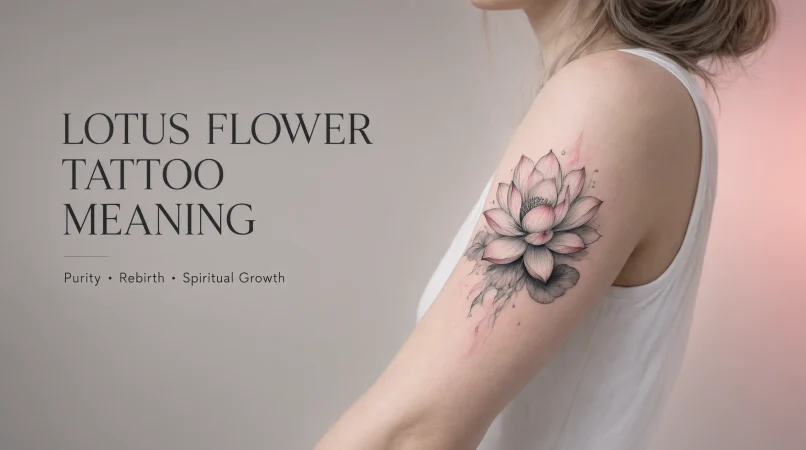
The lotus flower tattoo meaning often centers on purity, spiritual growth, rebirth, and the ability to rise above difficult experiences. Because the lotus grows in muddy water and produces a flower that rises above the surface, many people see it as a symbol of personal transformation and hope.
Its meaning can also reflect Buddhist or Hindu beliefs, depending on the design and the wearer’s cultural or spiritual connection.
Have you ever wondered why the lotus flower has become such a meaningful tattoo design across different cultures? Its beauty is only part of its appeal. The lotus grows in muddy water yet rises above the surface to produce a striking bloom, making it a powerful symbol of transformation, perseverance, and personal growth. For some people, this natural process represents overcoming hardship, while others connect the flower with spirituality, mindfulness, and the search for inner peace.
In this guide, you will explore the lotus flower tattoo meaning, including its symbolism in Buddhist and Hindu traditions, its connection to purity and enlightenment, and its modern interpretations. You will also discover how lotus colors, design styles, and tattoo placements can influence its personal meaning. By understanding both the flower’s cultural significance and the reasons people choose it today, you can appreciate the deeper symbolism behind this timeless tattoo design.
Table of Contents
- The Main Symbolism Behind Lotus Flower Tattoos
- What Different Lotus Colors Represent
- Lotus Flower Meanings in Buddhism and Hinduism
- Popular Lotus Tattoo Designs and Their Meanings
- The Natural Symbolism of the Lotus
- Lotus Tattoos Compared With Other Flower Tattoos
- Choosing the Right Lotus Tattoo
- Frequently Asked Questions
The Main Symbolism Behind Lotus Flower Tattoos
The lotus is more than a decorative flower. Its distinctive shape and natural growing conditions have given it symbolic meaning in several cultures, while modern tattoo art has made it a popular choice for people expressing personal change, hope, and identity.
Purity and a Fresh Start
One of the best-known meanings associated with the lotus is purity. The plant grows in muddy or murky water, yet its flower rises above the surface with delicate petals that appear clean and bright. This contrast has made it a lasting symbol of purity that can endure even when the surrounding environment is difficult.
For a tattoo wearer, purity does not have to mean innocence or perfection. It may represent staying true to personal values, protecting a sense of self, or choosing a healthier direction after a difficult period.
A simple open lotus can communicate this idea without adding many details. Its balanced petals give the design a peaceful appearance, making it suitable for someone who wants a quiet reminder of a fresh start.
Rebirth and New Beginnings
A lotus flower can represent a new chapter in life. People may choose it after leaving a difficult relationship, recovering from a setback, changing careers, or reaching a personal milestone.
The flower’s growth provides a natural image of renewal. It begins beneath the water, grows toward the surface, and opens into a bloom. That process can feel like a fitting metaphor for someone who has changed gradually rather than all at once.
A lotus with a closed bud and an open flower can make this meaning more personal. The bud may represent potential, while the open bloom suggests growth, readiness, or the beginning of a new stage.
Resilience Through Difficult Times
The lotus is often associated with resilience because it grows in conditions that may appear unpromising. In tattoo symbolism, the muddy water can represent hardship, grief, uncertainty, or emotional struggle, while the flower represents the ability to keep growing.
This interpretation can be especially meaningful for people who want to honor a difficult experience without allowing that experience to define them. The flower does not erase the mud beneath it. Instead, it rises above the water and continues to grow.
Some designs include dark shading beneath the petals or roots beneath the bloom to make the contrast more visible. Others use a clean outline to express the same idea with less detail.
Spiritual Growth and Self-Discovery
For many people, the lotus represents a journey toward greater awareness. It can symbolize learning to understand yourself, letting go of harmful habits, or becoming more intentional about how you live.
This meaning is not limited to people who follow a particular religion. Someone may choose a lotus as a personal reminder to slow down, reflect, and make decisions that match their values.
A lotus paired with a subtle circular design can suggest balance and wholeness. A flower shown with several layers of petals may also appeal to someone who views personal growth as a gradual process with many stages.
Peace, Balance, and Emotional Calm
The symmetrical shape of a lotus lends itself to designs that feel balanced and calm. Its petals spread around a central point, creating a natural sense of order.
A lotus tattoo may therefore represent emotional stability, patience, or a desire to approach life with a clearer mind. This interpretation is particularly common in minimalist designs, where the artist relies on clean lines and open space rather than heavy shading.
For someone who has spent years dealing with stress or uncertainty, the tattoo can serve as a reminder to protect their peace. It does not need to represent a perfect or permanently peaceful life. It can simply stand for the effort to return to balance when life becomes difficult.
What Different Lotus Colors Represent
Color can change the mood of a lotus tattoo, although meanings vary across cultures and individual interpretations. These associations can guide your design, but they are not universal rules.
| Lotus color | Common symbolic meaning | Design impression |
| Pink | Spiritual devotion, compassion, and enlightenment | Traditional and gentle |
| White | Purity, clarity, and peace | Clean and understated |
| Blue | Wisdom, knowledge, and self-control | Thoughtful and distinctive |
| Red | Love, passion, and compassion | Warm and expressive |
| Purple | Spiritual mystery and reflection | Artistic and symbolic |
| Black | Endings, change, strength, or personal renewal | Bold and dramatic |
Pink Lotus Tattoo
Pink lotus designs are often linked with spiritual devotion and sacred imagery, particularly in Buddhist art. A soft pink flower can look delicate, while deeper shades create a richer, more noticeable tattoo.
Someone may choose this color to express compassion, a spiritual connection, or a personal commitment to growth. If the design includes a seated Buddha or other religious imagery, it is worth understanding the specific tradition behind those elements rather than relying on color alone.
White Lotus Tattoo
A white lotus can represent clarity, peace, and purity. Its simple appearance makes it a popular choice for fine-line designs and tattoos with plenty of open space.
White petals also pair well with black outlines, gray shading, and subtle geometric elements. Since white ink can fade or change in appearance over time, ask your artist how the design will look on your skin tone and after healing.
Blue Lotus Tattoo
Blue lotus designs are commonly associated with wisdom, knowledge, and disciplined thought in some symbolic traditions. However, the phrase “blue lotus” can refer to different plants in everyday use, so it is important to distinguish the sacred lotus from water lilies.
A blue lotus tattoo can suit someone who values learning, patience, or self-control. Its cool color palette also creates a striking contrast with green leaves or dark water.
Red Lotus Tattoo
Red lotus designs often communicate love, compassion, and strong emotional connections. Unlike a rose, which may focus on romance, a red lotus can combine affection with personal growth or spiritual feeling.
This option may appeal to someone who wants to honor a close relationship, express self-love, or remember a period when compassion helped them move forward.
Black Lotus Tattoo
A black lotus is primarily a modern artistic interpretation rather than a color with one fixed traditional meaning. It can represent change, grief, strength, mystery, or the decision to begin again after a difficult experience.
Heavy blackwork gives the petals a dramatic appearance, while a fine-line black lotus can feel subtle and reflective. The meaning depends on the wearer’s intention and the other elements in the design.
Lotus Flower Meanings in Buddhism and Hinduism
The lotus has deep religious significance, especially in Buddhist and Hindu traditions. Its meaning in these settings goes beyond general ideas of growth or beauty, so understanding the cultural background can help you choose a design thoughtfully.
The Lotus in Buddhism
In Buddhism, the lotus commonly represents purity, spiritual awakening, and the possibility of developing wisdom despite suffering. The flower’s growth through muddy water offers a visual reminder that difficult circumstances do not have to prevent a person from growing spiritually.
Buddhist art often depicts the Buddha seated on a lotus throne. Lotus flowers also appear with bodhisattvas, figures associated with the pursuit of awakening and compassion. These images connect the flower with enlightenment and the development of a clearer understanding of life.
A lotus tattoo inspired by Buddhist imagery may express a commitment to mindfulness, compassion, or spiritual practice. If you choose to include a Buddha figure, a Buddhist symbol, or a traditional mantra, learn what those elements mean in their original context. A religious design can carry a more specific message than a standalone flower.
The Lotus in Hinduism
The lotus also holds an important place in Hindu religious art and symbolism. Hindu deities such as Lakshmi and Vishnu are often depicted with lotus flowers or in association with them. The flower can represent beauty, prosperity, purity, and divine qualities.
In this context, a lotus tattoo may reflect devotion, faith, or a connection to Hindu spiritual traditions. Some people may also associate it with prosperity and the hope of living a balanced, meaningful life.
The lotus does not have exactly the same meaning in every Hindu tradition or image. If you want a tattoo based on a particular deity or religious story, understanding that specific representation will help you create a design with greater care.
The Sacred Lotus as a Real Plant
The sacred lotus, Nelumbo nucifera, is an aquatic plant native to parts of Asia and widely cultivated in other regions. It is the species most closely associated with the lotus imagery found in many Asian religious traditions.
The American lotus, Nelumbo lutea, is a related species native to North America. Although both plants belong to the genus Nelumbo, their appearance and cultural associations can differ. Water lilies, including the blue Egyptian water lily (Nymphaea caerulea), are separate plants that people sometimes confuse with true lotuses.
This botanical distinction matters if you want a historically or culturally specific design. A lotus inspired by Hindu or Buddhist art may look quite different from an Egyptian-inspired water lily tattoo.
Popular Lotus Tattoo Designs and Their Meanings
The shape, surrounding details, and number of flowers can change how a tattoo feels. Some designs focus on simplicity, while others use religious imagery or geometric patterns to express a more specific idea.
Minimalist Lotus Tattoo
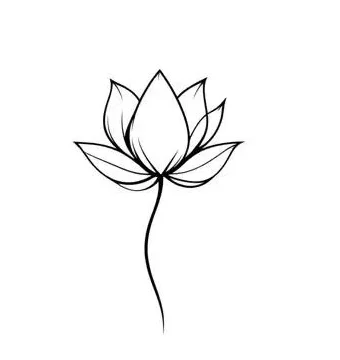
A simple outline emphasizes the flower’s shape without adding visual complexity. It can represent a fresh start, quiet confidence, or personal growth. This style suits people who prefer a subtle design that does not depend on color or heavy shading.
Realistic Lotus Tattoo
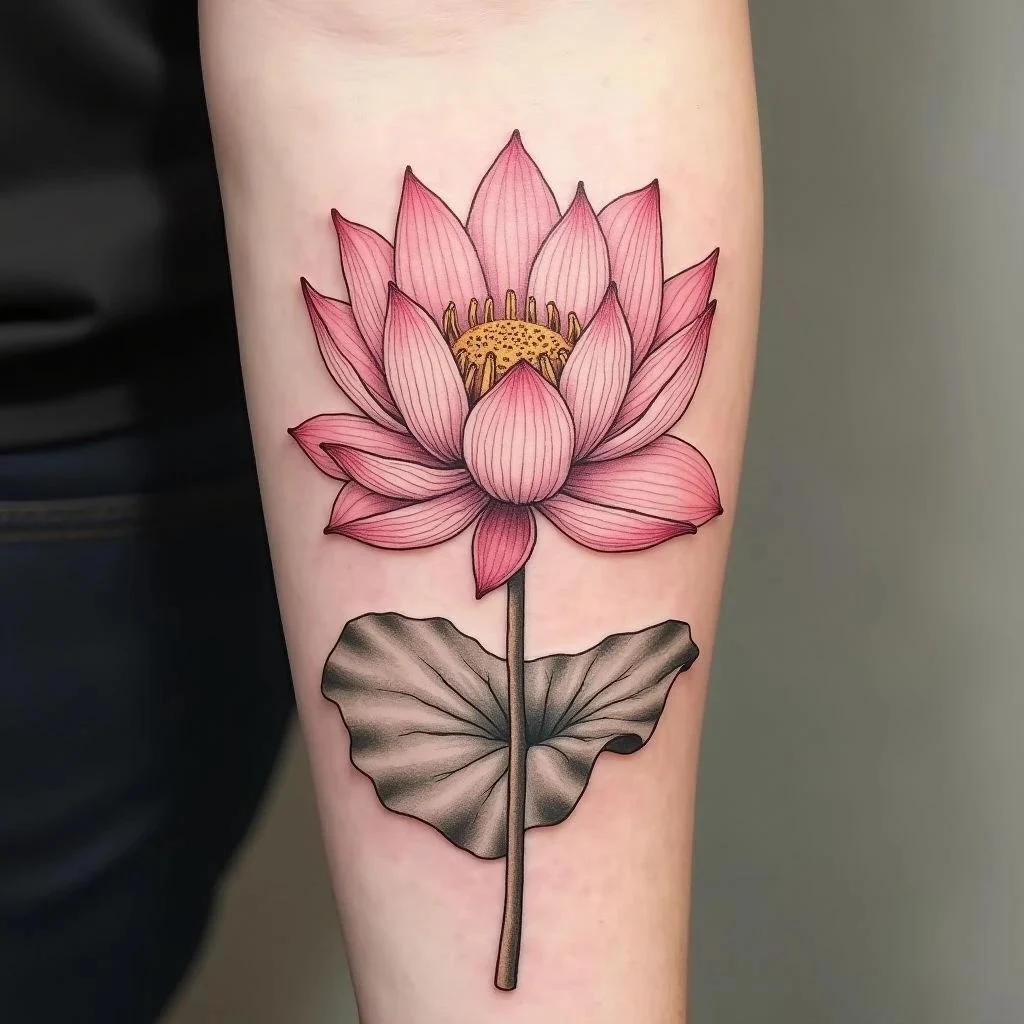
Detailed petals, soft shadows, and natural colors make the flower appear lifelike. This style can honor the beauty of nature or express a personal connection to renewal and resilience. It works best when the artist has experience with botanical realism.
Lotus Mandala Tattoo
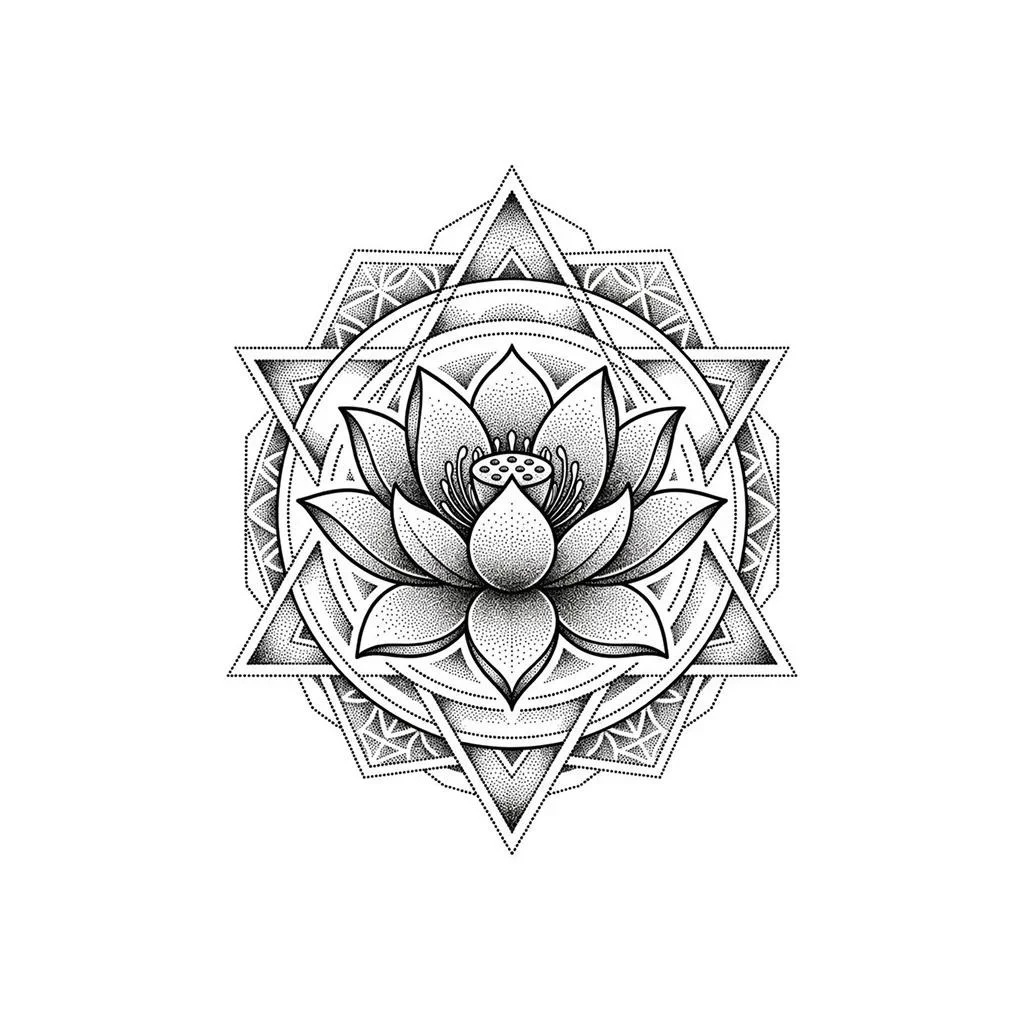
A mandala uses a structured, often circular arrangement of shapes and patterns. Combined with a lotus, it can represent balance, focus, and reflection. Symmetry is important in this style, so placement and careful stencil alignment make a noticeable difference.
Lotus and Moon Tattoo
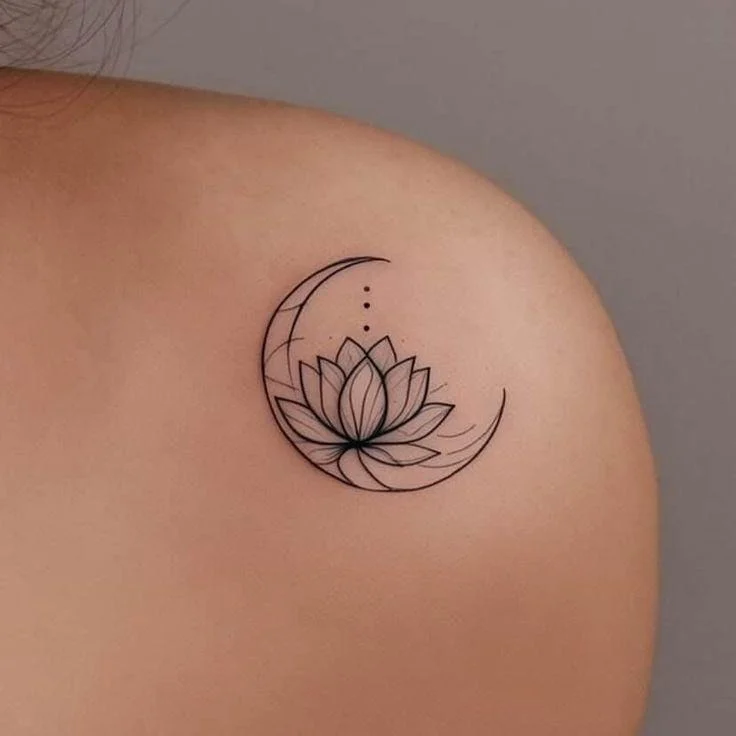
A crescent moon adds a celestial element to the flower. Together, the symbols may represent change, intuition, and personal growth through different stages of life. This combination is especially suitable for people who connect with nighttime imagery or the idea of life’s changing cycles.
Lotus and Unalome Tattoo
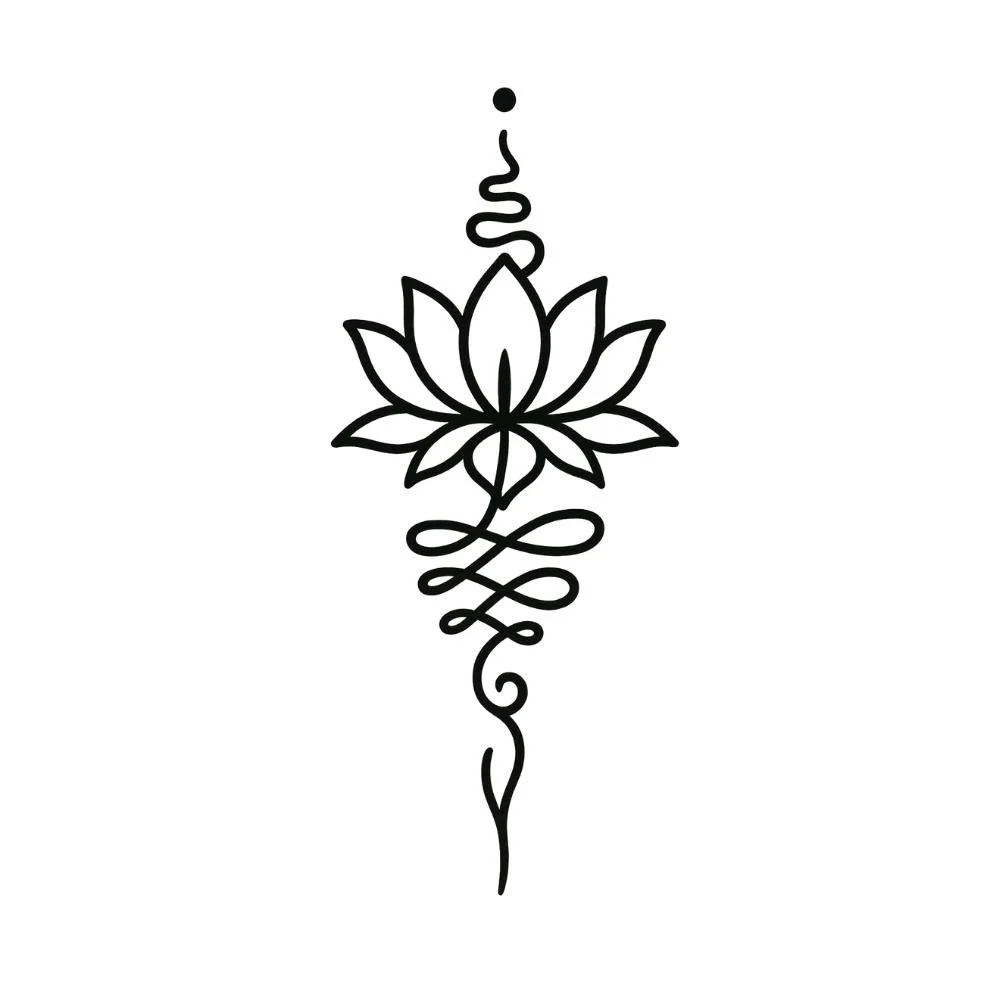
The unalome is a symbol used in some Buddhist contexts to represent a path toward awakening. When combined with a lotus, the design may express spiritual development and the journey toward greater understanding. Because it has religious and cultural associations, research its background before choosing it solely for decoration.
Lotus With a Butterfly
A butterfly is commonly associated with change, transformation, and freedom. Paired with a lotus, it can suggest personal growth that continues beyond a difficult period.
This design may appeal to someone who wants to mark a major life transition. The flower represents growth, while the butterfly adds the idea of change and a new sense of possibility.
Lotus With a Snake
A lotus and snake create an interesting contrast. The lotus may suggest purity or spiritual development, while the snake can represent transformation, renewal, wisdom, or danger, depending on the artistic and cultural context.
Together, the two elements can communicate the balance between vulnerability and strength. The exact message depends on whether the snake appears protective, threatening, or simply intertwined with the flower.
The Natural Symbolism of the Lotus
The lotus’s appearance is part of what makes it such a lasting symbol. Its roots grow in muddy sediment, while its leaves and flowers rise toward or above the water’s surface. This growth pattern gives the plant a visual connection to the idea of moving through difficult circumstances toward something brighter.
Its leaves also have a remarkable physical property. Tiny surface structures and waxy materials help water droplets roll away, carrying some dirt particles with them. Scientists and engineers have studied this water-repelling effect, often called the lotus effect, as inspiration for surfaces that resist water and dirt.
The plant’s natural features do not prove that every lotus tattoo represents resilience or purity. Those meanings come from cultural traditions and personal interpretation. Still, the connection between the flower’s appearance and its symbolism helps explain why so many people find it meaningful.
For someone who has faced a demanding period, the lotus can represent progress without denying what happened. The mud remains part of the story, but it is not the only part.
Lotus Tattoos Compared With Other Flower Tattoos
A lotus is not the only flower associated with personal meaning. Roses, cherry blossoms, and lilies each offer different visual and symbolic possibilities.
| Flower tattoo | Common symbolic associations | Main distinction |
| Lotus | Renewal, purity, spiritual growth, resilience | Strong connection to spiritual traditions and growth through adversity |
| Rose | Love, passion, beauty, remembrance | Often emphasizes relationships and emotional attachment |
| Cherry blossom | Impermanence, beauty, the passing of time | Focuses on life’s temporary nature |
| Lily | Renewal, devotion, remembrance, purity | Meaning varies with the type of lily and cultural context |
| Sunflower | Hope, warmth, positivity, loyalty | Often creates a bright and optimistic impression |
| Peony | Prosperity, beauty, honor, good fortune | Commonly associated with abundance and decorative richness |
These meanings overlap, and no flower has one universal interpretation. A rose can represent recovery, just as a lotus can honor a relationship. Choose the flower that best expresses your own story rather than relying on a rigid symbolism chart.
Choosing the Right Lotus Tattoo
A meaningful design begins with a clear idea of what you want to express. You do not need to settle on a traditional interpretation if a different personal meaning feels more honest.
Where Should You Place It?
- Wrist: A small lotus can serve as a personal reminder that you see throughout the day.
- Forearm: This area offers room for a flower with detailed petals, a stem, or additional symbols.
- Shoulder: A larger lotus can follow the natural curve of the shoulder and upper arm.
- Back: The available space suits a mandala, a large symmetrical flower, or a more elaborate composition.
- Spine: A vertical lotus design can create a balanced, flowing appearance.
- Ankle: A compact flower can feel discreet and work well with a minimalist style.
- Chest: This placement may feel especially personal when the design represents faith, love, or an important life experience.
Think about visibility, movement, and the amount of detail your design needs. A very small tattoo may not retain every fine line as it ages, so ask your artist to recommend a size that allows the petals to remain distinct.
Should You Choose a Traditional or Modern Design?
A traditional religious design may suit you if the flower connects with a specific belief or cultural practice. A modern geometric or minimalist design can work better if you prefer a personal interpretation without explicit religious imagery.
Neither approach is automatically more meaningful. The important thing is to understand the symbols you choose, especially when they come from a tradition you do not practice.
Before your appointment, collect a few reference images and explain what you want the tattoo to represent. A good artist can help you refine the shape, color, and placement without overcrowding the design.
FAQs
Does a lotus tattoo have a negative meaning?
A lotus is generally associated with positive ideas, but its meaning depends on the design and the wearer. A black lotus, for example, may represent grief, change, or mystery rather than peace or purity.
What does a lotus tattoo with three flowers mean?
Three lotus flowers may represent different stages of life, important relationships, or a person’s past, present, and future. There is no single established meaning for every three-flower design, so you can give each bloom a personal significance.
Can a lotus tattoo represent healing after a breakup?
Yes. Some people choose the flower as a reminder that painful experiences can lead to growth and a fresh start. It can symbolize rebuilding confidence without suggesting that healing happens immediately.
What does a lotus tattoo with roots mean?
Visible roots can emphasize the connection between personal growth and the experiences that shaped someone. The design may represent staying grounded, acknowledging your past, or remembering the effort behind your progress.
Is a lotus tattoo suitable for people of all genders?
Yes. Lotus tattoos are not limited to one gender. Bold blackwork, geometric patterns, realistic flowers, and simple outlines can suit anyone, depending on their preferred style and the meaning they want to express.
Final Thoughts
A lotus flower tattoo can mark a new beginning, express a spiritual belief, or honor the strength it took to move through a difficult time. Its cultural history gives the design depth, while your own experiences make it personal. Choose the flower’s color, style, and surrounding symbols with care, and you can create a tattoo that continues to matter as your life changes.