Sisters and weather are completely different words with unrelated meanings. Sisters is the plural of “sister,” referring to two or more female siblings or women with a close relationship. Weather refers to atmospheric conditions such as rain, temperature, wind, and sunshine. The correct word depends entirely on the meaning you want to express.
Have you ever wondered whether sisters or weather is the right word for a sentence? These words don’t share the same meaning, but confusion can happen when you’re trying to identify a word from pronunciation, context, or a quick conversation. Sisters relates to people, while weather describes conditions in the atmosphere.
This guide explains sisters and weather in simple, beginner friendly language, with clear meanings, pronunciation guidance, and practical examples. Understanding how these words differ will help you recognize the correct term quickly and avoid using an unrelated word in your writing.
Sisters OR Weather: What’s the Difference?
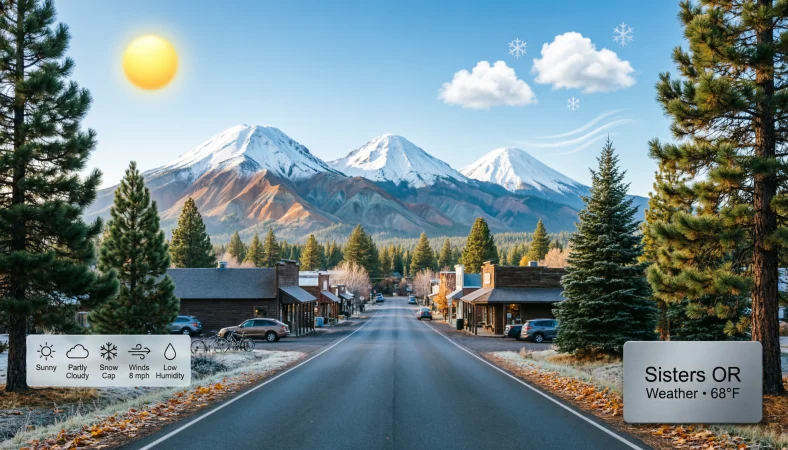
The phrase sisters or weather can look confusing when written exactly as a search query. At first glance, it may appear to ask about a choice between “sisters” and “weather.” In local search terminology, however, the intended meaning is usually Sisters, Oregon weather.
Here, Sisters is a proper noun referring to the city of Sisters in Oregon. OR is the standard postal abbreviation for Oregon. Weather is a noun referring to atmospheric conditions at a particular place and time.
This distinction matters because search queries often leave out connecting words. Someone searching for “sisters or weather” usually wants information about the weather in Sisters, Oregon, not a linguistic explanation of the words sisters and weather.
The phrase may be used to find current conditions, an upcoming forecast, seasonal temperatures, snowfall information, precipitation patterns, or general climate information.
| Search Term | Word Type | Meaning | Typical Search Intent |
| Sisters | Proper noun | A city in Oregon | Location |
| OR | Abbreviation | Oregon | Geographic identification |
| Weather | Noun | Atmospheric conditions | Forecast or climate |
| Sisters OR weather | Local search phrase | Weather in Sisters, Oregon | Local weather information |
Mini Recap
Sisters identifies the Oregon city.
OR identifies the state of Oregon.
Weather refers to atmospheric conditions.
Together, the phrase normally means weather information for Sisters, Oregon.
Is Sisters OR Weather a Grammar, Vocabulary, or Usage Issue?
The phrase sisters or weather is primarily a search and geographic usage issue rather than a conventional grammar problem.
In ordinary English, “or” is a conjunction used to present alternatives.
For example:
“Would you like tea or coffee?”
In a geographic search, however, “OR” can represent Oregon.
For example:
“Sisters OR weather”
is normally understood as:
“Sisters, Oregon weather.”
The capitalization also provides an important clue. When OR appears in uppercase inside a location query, it is commonly being used as a state abbreviation.
Are Sisters and Weather Interchangeable?
No. They refer to completely different things.
Sisters identifies a geographic location.
Weather describes atmospheric conditions.
The relationship between the two terms is therefore geographic rather than grammatical.
A complete sentence might say:
“What is the weather like in Sisters, Oregon?”
A search engine user may shorten that sentence to:
“Sisters OR weather”
Both expressions can have the same basic search intent.
Formal Versus Informal Usage
In formal writing, the clearest form is:
Weather in Sisters, Oregon
or:
Weather conditions in Sisters, Oregon
The shortened form is more typical of search behavior:
Sisters OR weather
Search queries do not need to follow the same grammatical structure as complete sentences.
Academic Versus Casual Usage
Academic or professional writing would normally spell out the location:
“Sisters, Oregon”
A casual search can use the state abbreviation:
“Sisters OR”
This difference is normal because search engines are designed to interpret concise queries.
Sisters Weather: What Is the Climate Like?
Sisters is located in Central Oregon near the Cascade Mountains. Its geographic setting strongly influences the local climate.
The area experiences distinct seasons, with generally warmer and drier conditions during summer and colder conditions during winter. Snow is an important part of the colder season, while spring and autumn act as transition periods between the two extremes.
This seasonal variation is one reason people search for Sisters weather before visiting. A person planning a summer hiking trip needs different information from someone planning a winter road trip.
Weather and climate should also be distinguished.
Weather describes conditions over a short period.
Climate describes typical patterns observed over a much longer period.
For example:
“What will the weather be like in Sisters tomorrow?”
asks about a forecast.
“What is the climate like in Sisters?”
asks about long term conditions.
That distinction is important for accurate search intent.
Workplace Example
People who work outdoors in Sisters need to account for seasonal changes. Construction workers, landscapers, road crews, forestry workers, and outdoor recreation employees may experience very different conditions in summer and winter.
Academic Example
A geography student could study Sisters to understand how elevation, terrain, and the Cascade region influence local weather and climate.
Technology Example
Weather applications can combine location information with forecast models to provide temperature, precipitation, wind, and other weather details for the Sisters area.
Usage Recap
Sisters experiences noticeable seasonal variation.
Summer conditions are generally warmer and drier.
Winter conditions are colder and can include snow.
Local geography plays an important role in weather patterns.
Sisters OR Weather in Spring
Spring is a transition season in Sisters.
Early spring can retain some winter characteristics, including cold mornings and occasional snow. As the season advances, daytime temperatures generally become more comfortable and outdoor conditions become increasingly suitable for hiking, sightseeing, cycling, and other activities.
However, spring weather can be changeable. A pleasant afternoon does not necessarily mean that the morning or evening will feel equally warm.
This is particularly important in locations where daily temperature differences can be noticeable.
People visiting Sisters during spring should therefore consider more than the daytime high. Morning temperatures, nighttime conditions, precipitation chances, wind, and elevation can all affect comfort.
Workplace Example
An outdoor worker may begin the day in cold conditions and finish during a much warmer afternoon. Layered clothing can therefore be more practical than relying on a single heavy garment.
Academic Example
Spring provides an excellent example of seasonal transition. Students studying climate can observe how temperature and precipitation patterns gradually shift from winter conditions toward summer.
Technology Example
A weather application can be especially useful in spring because forecasts can help travelers prepare for changing temperatures and precipitation.
Usage Recap
Spring weather can change considerably throughout the day.
Early spring can still feel wintry.
Late spring is generally more comfortable for outdoor activities.
Sisters OR Weather in Summer
Summer is generally associated with the warmest and driest conditions in Sisters.
The combination of warm afternoons, relatively dry conditions, and cooler evenings makes summer an important season for outdoor recreation.
Visitors commonly plan hiking, camping, cycling, sightseeing, and other activities during this period. Even so, warm daytime temperatures should not be interpreted as consistently warm conditions throughout the entire day.
Morning and evening temperatures can feel considerably cooler.
Summer also requires attention to wildfire and smoke conditions in Central Oregon. Weather conditions such as heat, dryness, and wind can influence fire behavior, so visitors should pay attention to official local information when wildfire activity is present.
Workplace Example
People working outdoors may experience significant afternoon heat. Employers and workers may need to consider hydration, shade, work timing, and appropriate clothing.
Academic Example
Summer provides a useful example of the seasonal precipitation pattern associated with Central Oregon.
Technology Example
Weather applications can provide temperature, wind, precipitation, and air quality information. These tools can help visitors decide whether outdoor activities are appropriate on a particular day.
Usage Recap
Summer is generally warm and relatively dry.
Afternoons can become hot.
Evenings and mornings may be cooler.
Wildfire and smoke conditions can sometimes affect outdoor plans.
Sisters OR Weather in Fall
Fall gradually changes Sisters from summer conditions toward winter.
Early autumn can still feel relatively warm during the day. As the season progresses, temperatures generally decline, nights become colder, and precipitation becomes more relevant.
The difference between daytime and nighttime conditions is important during this period. Someone visiting for an outdoor activity may experience comfortable afternoon temperatures but much colder conditions after sunset.
Fall can also be an appealing period for people who prefer cooler temperatures and fewer extreme heat conditions.
Workplace Example
Outdoor workers may need to adjust clothing and schedules as mornings become colder and daylight hours become shorter.
Academic Example
Fall illustrates how seasonal transitions influence temperature, precipitation, and daylight.
Technology Example
Weather applications can help travelers monitor changing temperatures and precipitation as winter approaches.
Usage Recap
Early fall can remain relatively mild.
Late fall becomes noticeably colder.
Rain and snow become increasingly relevant as winter approaches.
Sisters OR Weather in Winter
Winter brings the coldest conditions of the year to Sisters and can include significant snowfall.
Snow is an important consideration for residents and travelers, especially when temperatures remain below freezing.
Winter weather also affects transportation. People traveling through Central Oregon should consider more than the city forecast when driving into mountainous areas. Conditions can differ substantially with elevation.
A weather forecast for Sisters may therefore be only one part of a larger travel planning process.
Visitors should consider road conditions, snow accumulation, freezing temperatures, wind, and conditions along their entire route.
Workplace Example
Outdoor employees may need additional cold weather equipment and procedures during winter.
Academic Example
Winter demonstrates how elevation and regional geography can influence local temperatures and snowfall.
Technology Example
Weather applications can help users monitor snow, temperature, wind, and precipitation. Travel related applications may also provide information about road conditions.
Usage Recap
Winter is the coldest season.
Snow can be an important part of local conditions.
Mountain travel may involve significantly different weather from conditions within town.
When You Should NOT Use Sisters OR Weather
The phrase is useful as a general local weather search, but it isn’t always specific enough.
1. Do not use it when you need an hourly forecast
If you need conditions at a particular time, add the date and hour to the search.
2. Do not use it when you need statewide Oregon conditions
Oregon covers a large geographic area with major differences between coastal, valley, high desert, and mountain regions.
3. Do not use it when you need mountain weather
A general Sisters forecast may not represent conditions at higher elevations.
4. Do not use it when you need historical climate information
A weather forecast and climate record answer different questions.
5. Do not use it when planning a winter drive without checking road conditions
A temperature forecast alone does not tell you whether roads are icy or snow covered.
6. Do not use it when your main concern is wildfire smoke
Temperature and precipitation do not provide a complete picture of air quality or smoke conditions.
7. Do not use it when comparing several cities
If you want to compare Sisters with Bend or another location, include both locations in the search.
8. Do not use it when you need a long range climate assessment
Long term planning requires climate information rather than a short term weather forecast.
Common Mistakes and Decision Rules
| Correct Search | Less Useful Search | Explanation |
| Sisters Oregon weather today | Oregon weather | The first search identifies the exact city. |
| Sisters Oregon weather this week | Sisters weather | Adding Oregon reduces geographic ambiguity. |
| Sisters Oregon weather tomorrow | Sisters OR | The first query clearly indicates weather intent. |
| Sisters Oregon snowfall | Sisters weather | The first query focuses specifically on snow. |
| Sisters Oregon climate | Sisters weather | Climate concerns long term patterns. |
| Sisters Oregon hourly weather | Sisters weather | The first query specifies the desired forecast format. |
| Sisters Oregon weather in winter | Sisters weather | The first query establishes seasonal intent. |
Decision Rule Box
- If you need short term atmospheric conditions, search for weather.
- If you need long term patterns, search for climate.
- If you need information for a particular day, include the date.
- If you need mountain conditions, identify the specific location or elevation.
This approach makes a search more precise and reduces irrelevant results.
Sisters OR Weather in Modern Technology and AI Tools
Weather information has become increasingly accessible through smartphones, search engines, smart assistants, mapping services, and AI tools.
A user can enter a short query such as “Sisters OR weather” and receive information about temperature, precipitation, wind, alerts, and upcoming conditions.
AI systems can also summarize weather information in conversational language. For example, a user might ask an AI tool to explain whether a particular day is suitable for hiking or what type of clothing might be appropriate.
However, AI summaries should not be treated as a substitute for official weather information when conditions could affect safety.
This is particularly important during severe storms, wildfire events, heavy snowfall, freezing conditions, or other hazardous situations.
The most useful role of AI is often explanation. It can help a person understand forecast terminology, compare days, or organize information.
For immediate safety decisions, users should rely on current official forecasts and alerts.
Etymology and Meaning of Sisters, OR, and Weather
The geographic name Sisters refers to the Oregon community associated with the nearby Three Sisters mountain peaks.
OR is the commonly recognized postal abbreviation for Oregon.
The word weather has a long history in English and refers broadly to atmospheric conditions, including temperature, precipitation, wind, clouds, and storms.
When these elements appear together in a search query, they create a geographic phrase:
Sisters + Oregon + weather
Search engines often compress this into:
Sisters OR weather
This is why the phrase should not automatically be interpreted as a grammar question involving the conjunction “or.”
An Expert Perspective on Sisters Weather
“Weather describes what the atmosphere is doing over a particular period, while climate describes the broader pattern a location experiences over many years.”
This distinction is especially important when researching Sisters.
- Someone deciding what to wear tomorrow needs a weather forecast.
- Someone deciding which season generally offers warmer conditions needs climate information.
- Someone planning a winter road trip may need both.
Using the correct category of information prevents a common mistake: treating a historical average as if it were a prediction for a specific day.
Two Practical Sisters Weather Case Studies
Case Study 1: Summer Hiking Trip
Imagine a visitor planning a hiking trip around Sisters during summer.
The traveler may know that summer is generally warm and dry. That information is useful for choosing the season.
However, it doesn’t answer whether a particular Saturday will be windy, unusually hot, rainy, or affected by wildfire smoke.
The traveler therefore needs two types of information.
First, climate information helps establish the typical seasonal pattern.
Second, the current forecast helps determine the conditions expected on the specific day.
Result: Combining climate context with a current forecast creates a more useful planning strategy than relying on either one alone.
Case Study 2: Winter Road Trip
Now consider a visitor planning a winter trip to Sisters.
Knowing that winter can bring snow establishes the general seasonal expectation.
But it does not establish the actual road conditions on the travel date.
A responsible traveler needs current information about snowfall, freezing temperatures, wind, road conditions, and conditions along the route.
Result: The local weather query provides a starting point, while current travel and road information provide the additional context needed for practical planning.
Error Prevention Checklist
Always use Sisters Oregon weather when:
- You need weather information for Sisters, Oregon.
- You are researching local weather patterns.
- You are planning a visit to Sisters.
- You need a local forecast.
- You want seasonal weather information.
Use climate information when:
- You want long term weather patterns.
- You are comparing seasons.
- You are researching typical temperatures.
- You are studying precipitation patterns.
To Use a current forecast when:
- You need today’s conditions.
- You are planning an outdoor activity.
- You are traveling soon.
- You need an hourly forecast.
- You need to prepare for snow or freezing temperatures.
Use additional information when:
- You are traveling into the mountains.
- You are concerned about wildfire smoke.
- Road conditions matter.
- You are visiting a higher elevation.
Related Weather Confusions You Should Master
Understanding sisters or weather also connects with several related search and language distinctions.
Weather vs Climate
Weather concerns short term atmospheric conditions. Climate describes long term patterns.
Forecast vs Current Conditions
A forecast describes expected future conditions. Current conditions describe what is happening now.
Temperature vs Weather
Temperature is one component of weather. Weather also includes wind, precipitation, cloud cover, and other atmospheric characteristics.
Snow vs Snowfall
Snow refers to frozen precipitation. Snowfall can refer to the amount or occurrence of snow falling over a particular period.
Rain vs Precipitation
Rain is one form of precipitation. Precipitation also includes snow, sleet, and other forms.
Local Weather vs Regional Weather
Local weather concerns a particular location. Regional weather covers a broader geographic area.
Climate Average vs Forecast
A climate average describes typical conditions. A forecast estimates what is expected during a specific period.
Weather Warning vs Weather Watch
These terms communicate different levels of concern and should be understood according to the definitions provided by the relevant weather authority.
Weather Alert vs Forecast
An alert highlights a potentially important condition. A forecast provides expected weather information.
Mountain Weather vs Town Weather
Conditions can change with elevation, terrain, and exposure, so a town forecast may not represent conditions at a nearby mountain location.
FAQs
What is the weather like in Sisters Oregon?
Sisters has distinct seasons, with warm, dry summers and cold winters. Snow can occur in winter, while spring and fall bring milder transitional conditions.
What is the weather in Sisters Oregon today?
Today’s conditions depend on the current date and time. For an accurate answer, users should check a current local forecast rather than relying on historical climate information.
Does it snow in Sisters Oregon?
Yes. Snow is a normal part of winter weather in Sisters. The amount and timing can vary from one winter to another.
What is Sisters Oregon weather like in summer?
Summer is generally the warmest and driest part of the year. Warm afternoons can be followed by considerably cooler evenings and mornings.
What is Sisters Oregon weather like in winter?
Winter is generally cold and can include snow and freezing temperatures. Mountain areas around Sisters can experience different conditions because of elevation.
What is the best time to visit Sisters Oregon for good weather?
It depends on the activity. Summer is warmer and drier, winter is colder with snow opportunities, while spring and fall offer milder temperatures.
How much snow does Sisters Oregon get?
Snowfall varies from year to year. Winter is the main season for snow, and conditions can differ between the city and nearby higher elevation areas.
Is Sisters Oregon cold in winter?
Yes. Winter can be quite cold, particularly at night. Freezing temperatures and snowfall are normal possibilities during the colder season.
What is the difference between Sisters Oregon weather and climate?
Weather describes short term atmospheric conditions, such as today’s temperature or tomorrow’s precipitation. Climate describes the longer term pattern of conditions experienced by the area.
Why does Sisters Oregon weather change so quickly?
Local geography, elevation, terrain, and seasonal weather systems can affect conditions. Mountain areas may experience significant weather changes over short distances.
Conclusion:
The phrase sisters or weather is best understood as a local search query for weather in Sisters, Oregon. In this context, “OR” identifies Oregon rather than functioning as the ordinary English conjunction “or.”
Sisters experiences noticeable seasonal variation. Summer is generally warmer and drier, while winter is colder and can bring snow. Spring and fall provide transitional conditions and can involve substantial differences between morning, afternoon, and evening temperatures.
For everyday planning, the most important distinction is between weather and climate. A weather forecast helps answer what conditions may occur on a particular day. Climate information helps explain what a location is typically like over a much longer period.
Travelers should also consider elevation, mountain conditions, road conditions, wildfire smoke, and other factors when appropriate. A city forecast can be useful, but it may not describe conditions at a higher elevation or along an entire travel route.
In short, sisters or weather is primarily a geographic search phrase. The clearest expanded version is Sisters, Oregon weather, and the right type of weather information depends on whether the user wants current conditions, a forecast, seasonal information, or long term climate patterns.