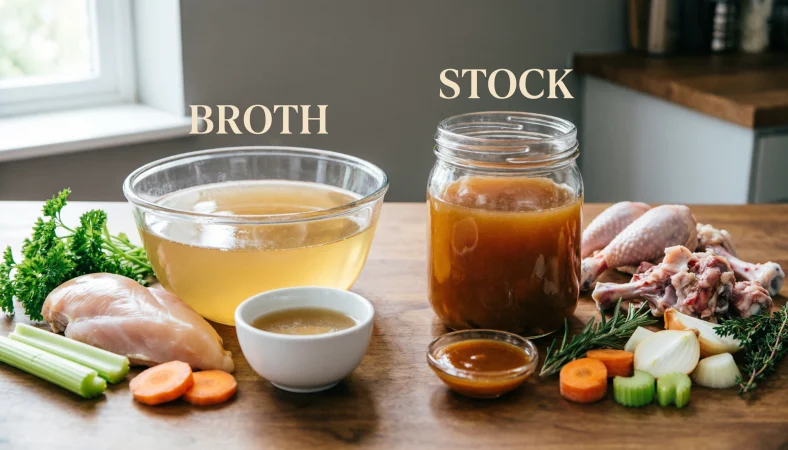
Broth and stock are both flavorful liquids used as the foundation for soups, sauces, and other dishes, but they traditionally differ in ingredients and preparation. Broth is usually made by simmering meat, vegetables, and seasonings, giving it a lighter flavor that people can also enjoy on its own.
Stock is typically made by simmering bones, often with vegetables, to develop a richer body and more gelatin. Although the terms sometimes overlap in modern cooking, the best choice depends on the recipe and the flavor or texture you want.
Have you ever wondered whether to use broth or stock when preparing soup, gravy, or a homemade sauce? These ingredients look similar and often appear side by side in grocery stores, but traditional preparation methods give them different characteristics.
Broth generally offers a lighter, seasoned flavor, while stock often provides a fuller texture because of the collagen released from simmered bones. Knowing these differences can help you choose the right ingredient for your dish.
In this guide, you will learn how broth and stock differ in ingredients, preparation, flavor, texture, and common culinary uses. With practical examples and straightforward explanations, you will discover when to choose each option, whether you are making a comforting soup, preparing a rich sauce, or improving the flavor of a favorite recipe.
You will also learn why these terms sometimes overlap and how to make the best choice for your cooking needs.
Broth vs Stock: What’s the Difference?
The main difference between broth and stock is how cooks prepare them and how they use them. Both add flavor and moisture, but they can differ in seasoning, texture, ingredients, and cooking time. Understanding these differences helps you choose the right liquid for a recipe without making your food too salty, too rich, or too thin.
What Is Broth?
Broth is a savory cooking liquid made by simmering meat, vegetables, herbs, and seasonings in water. Chicken broth, beef broth, and vegetable broth are common varieties. Depending on the recipe, broth may contain bones, but it often emphasizes meat and seasonings to create a liquid that tastes pleasant on its own.
Broth is generally lighter in body than traditional bone based stock. Many commercial broths are seasoned with salt, making them convenient for quick soups, cooking grains, and reheating leftovers. Homemade broth can be seasoned lightly or left unsalted so the cook can control the final flavor.
For example, chicken broth works well in chicken noodle soup because it provides a savory base without necessarily adding the thick, gelatinous texture associated with a rich stock.
What Is Stock?
Stock is a savory liquid typically made by simmering animal bones, connective tissue, vegetables, and aromatic ingredients in water. Chicken stock, beef stock, and fish stock are common types. The bones and connective tissues can release gelatin during cooking, giving some stocks a fuller texture.
Traditional stock is often left unseasoned or only lightly seasoned. This allows cooks to reduce it, use it in sauces, or combine it with other ingredients without concentrating too much salt.
For instance, a well made chicken stock can give a pan sauce a richer mouthfeel. When the stock cools, it may become jelly like because gelatin firms up as the temperature drops. Not every stock does this, and vegetable stock naturally lacks animal derived gelatin.
Broth or Stock Comparison Table
| Feature | Broth | Stock |
| Main purpose | A flavorful liquid that can be served or used in cooking | A foundational liquid for soups, sauces, and other recipes |
| Common ingredients | Meat, vegetables, herbs, water, and seasonings | Bones, connective tissue, vegetables, herbs, and water |
| Seasoning | Often seasoned with salt | Often unsalted or lightly seasoned |
| Texture | Usually lighter and more drinkable | May have a fuller, silkier body |
| Gelatin content | Often lower, depending on ingredients | Can be higher when made with collagen rich bones and connective tissue |
| Typical uses | Soups, sipping, grains, quick meals | Gravies, reductions, sauces, braises, soups |
| Cooking time | Often shorter, depending on the recipe | Often longer, especially for beef or chicken bone stock |
| Can they be substituted? | Usually, with adjustments | Usually, with adjustments |
Quick recap: Broth often prioritizes ready to use flavor and seasoning.
Stock commonly prioritizes body, depth, and versatility in cooking.
These are traditional distinctions, not strict rules. Products vary, and some commercial broths are rich while some stocks are light.
For many home recipes, either liquid can work if you adjust the seasoning and texture to suit the dish.
Is Broth vs Stock a Cooking Technique, Ingredient, or Usage Issue?
The difference between broth and stock is mainly a matter of ingredients, preparation, and culinary purpose. It is not a grammar issue, of course, but the same kind of distinction applies: two terms can overlap without meaning exactly the same thing.
Are Broth and Stock Interchangeable?
In many recipes, yes. You can use chicken broth in a soup that calls for chicken stock, or use vegetable stock in a dish that calls for vegetable broth. The finished dish may taste slightly different, but the substitution usually works.
The difference becomes more noticeable when a recipe relies on body or when the liquid will be reduced. A gelatin rich stock can add a silky texture to gravy or sauce. A highly seasoned broth may contribute more salt than expected, especially if you simmer it until its volume decreases.
Before substituting, consider three things: the salt level, the richness of the liquid, and the role it plays in the recipe.
Homemade vs Commercial Products
Traditional homemade recipes often distinguish broth from stock more clearly than supermarket labels do. At the grocery store, the terms can overlap. Some products labeled broth contain bones and collagen, while some products labeled stock are light in texture and already seasoned.
Read the ingredient list and nutrition label instead of relying on the product name alone. Look for sodium content, added flavorings, and ingredients such as chicken, beef, vegetables, or yeast extract.
Professional Cooking vs Everyday Cooking
Professional chefs may use stock as a base for sauces, reductions, and restaurant dishes because its texture and flavor can be controlled during preparation. Broth is useful when a recipe needs a balanced savory liquid without requiring a particularly gelatinous result.
At home, the distinction is more flexible. If you are making a quick pot of rice or heating canned soup, the liquid’s flavor and salt level often matter more than its name.
The practical rule is simple: use the liquid that gives your dish the flavor and consistency you want.
How to Use Broth in Cooking
Broth is particularly useful when you want a savory liquid that contributes flavor without necessarily making the dish thick or rich. It can be homemade or purchased ready to use, and it is available in chicken, beef, vegetable, and other varieties.
Everyday Uses for Broth
Chicken broth is a popular choice for chicken noodle soup, vegetable soup, and light sauces. Beef broth works in beef stew, onion soup, and some gravies. Vegetable broth adds savory flavor to vegetarian soups, rice, lentils, and bean dishes.
Broth can also replace some or all of the water used to cook grains. For example, cooking rice in low sodium vegetable broth can make it more flavorful without adding complicated ingredients.
Workplace Example
Imagine a restaurant kitchen preparing a large batch of chicken soup for lunch service. The cook uses a seasoned chicken broth because it already has a balanced flavor and requires less adjustment before serving.
The kitchen still tastes the soup before adding salt. Broth can vary considerably in sodium content, so adding extra seasoning without tasting first could make the finished soup too salty.
Academic Example
A culinary student comparing two soup recipes might record that one uses seasoned broth while the other uses a lightly seasoned stock. The student can then evaluate how each liquid affects the final dish’s flavor, texture, and sodium content.
For a fair comparison, the student should note the actual ingredients and preparation method. Product labels alone may not tell the whole story.
Technology Example
A recipe application might recommend chicken broth when a user searches for a quick soup recipe. A cooking assistant can also suggest a low sodium version for someone who wants greater control over seasoning.
However, a digital recipe tool should not assume every broth contains the same amount of salt. Product information and ingredient labels help produce more accurate recommendations.
Usage recap: Choose broth when you want a convenient, flavorful liquid for soups, grains, and everyday cooking. Check its seasoning before adding more salt.
How to Use Stock in Cooking
Stock is particularly valuable when the texture and depth of a dish matter as much as its basic flavor. A well prepared stock can provide a rounded mouthfeel and help sauces develop a more cohesive consistency.
Everyday Uses for Stock
Chicken stock can enrich risotto, pan sauces, casseroles, and braised chicken. Beef stock is useful for beef stew, gravy, and reductions. Vegetable stock can form the base of vegetarian soups, mushroom risotto, and vegetable braises.
Some cooks simmer stock until it becomes more concentrated. This process intensifies its flavor, but it can also concentrate salt if the stock was seasoned beforehand. Unsalted stock gives the cook greater control over the final result.
Workplace Example
Consider a restaurant preparing a pan sauce for roasted chicken. After cooking the chicken, the chef adds stock to the pan to loosen the browned bits left behind. The liquid simmers with herbs and other ingredients until it develops a concentrated flavor.
A rich stock may give the sauce a silkier texture, especially if it contains enough gelatin. The chef then adjusts the seasoning at the end rather than adding too much salt at the beginning.
Academic Example
A culinary student could compare a gelatin rich chicken stock with a light chicken broth in the same sauce recipe. By keeping the other ingredients and cooking method consistent, the student can observe differences in thickness, mouthfeel, and flavor concentration.
The result depends on the actual liquids being tested. Not every stock contains more gelatin than every broth, so the ingredients and preparation method should be recorded.
Technology Example
A smart cooking application may recommend stock for risotto or a reduction sauce because these recipes benefit from a flavorful cooking liquid. A kitchen inventory tool can also identify whether a user has chicken stock, vegetable stock, or broth available and suggest recipes accordingly.
Still, the application should consider sodium content, dietary preferences, and the recipe’s required texture before recommending a direct substitution.
Usage recap: Choose stock when you want depth and potentially more body in sauces, risotto, braises, and gravies. A gelatin rich stock can improve texture, but results depend on how it was made.
When You Should NOT Use Broth or Stock
Although broth and stock can often replace each other, certain situations call for more care. Choosing the wrong product may affect the taste, texture, or consistency of your food.
When You Need a Very Low Sodium Dish
Do not assume that every broth is low in salt. Many ready to use broths contain added sodium, and some stocks do too. Choose a low sodium or unsalted product when you need precise control over seasoning.
When You Plan to Reduce a Liquid
If a recipe calls for a sauce that will simmer until concentrated, a heavily salted broth may become too salty. An unsalted stock can make seasoning easier to control, although you should still check its ingredients.
When You Want a Gelatin Rich Sauce
A thin broth may not provide the body you want for a glossy pan sauce or rich gravy. Choose a stock made with collagen rich bones and connective tissue, or use another thickening method if the available stock is too light.
When You Need a Vegetarian or Vegan Recipe
Do not assume that vegetable broth and vegetable stock are always interchangeable with chicken or beef products. Check the label carefully. For a vegetarian or vegan dish, choose a liquid made entirely from suitable plant ingredients.
When You Need a Strong Meat Flavor
A light vegetable broth may not provide the flavor you expect in a beef based gravy. Select a suitable beef stock or broth, or build depth with ingredients such as mushrooms, browned vegetables, and herbs.
When You Are Making a Delicate Dish
A strongly seasoned broth can overpower subtle ingredients in a delicate soup or sauce. Choose a mild, low sodium liquid so the main ingredients remain noticeable.
When a Recipe Depends on a Specific Texture
If a recipe relies on a gelatin rich stock for body, substituting a thin broth may change the result. You can still make the substitution, but you may need to simmer the liquid longer or adjust the recipe with an appropriate thickener.
When You Have Not Checked the Product Label
The words broth and stock do not guarantee a particular salt level, ingredient list, or texture. Read the label and use the product’s actual characteristics to guide your decision.
Common Mistakes and Decision Rules
Most broth and stock mistakes come from assuming the names tell you everything about a product. The following examples show how to make a more informed choice.
Correct and incorrect cooking choices
| Correct approach | Incorrect assumption | Explanation |
| Taste the broth before adding salt. | Every broth needs extra salt. | Commercial broth can already contain substantial sodium. |
| Choose a gelatin rich stock for a fuller sauce. | Every stock will automatically make a sauce thick. | Gelatin content depends on ingredients and preparation. |
| Check the ingredients of vegetable stock. | Every product labeled vegetable is suitable for every diet. | Check for animal derived ingredients and other dietary concerns. |
| Use unsalted stock when you want seasoning control. | Stock is always unsalted. | Many commercial stocks contain added salt. |
| Substitute broth for stock and adjust the recipe as needed. | Broth and stock always produce identical results. | Flavor, salt, and texture can differ. |
The Simple Decision Rule
Choose broth when you want a flavorful liquid for soup, grains, or a quick meal, especially when its seasoning suits the recipe.
Choose stock when you want a foundational cooking liquid that may provide more body for gravy, risotto, braising, or sauces.
Check the label whenever sodium, dietary requirements, ingredients, or consistency matter.
These are practical guidelines, not absolute rules. A rich broth can work beautifully in a sauce, and a light stock can be excellent in soup. Let the recipe and the product itself guide your decision.
Broth and Stock in Modern Technology and AI Tools
Recipe websites, meal planning applications, and AI cooking assistants increasingly suggest substitutions based on ingredients already available in a kitchen. These tools can recommend broth for a quick soup or stock for a sauce, but accurate recommendations depend on more than the product name.
A useful cooking assistant should consider sodium levels, dietary restrictions, flavor intensity, and the role of the liquid in the recipe. If a user has salted chicken broth but the recipe calls for unsalted stock, the assistant should explain that the substitution may work and recommend adjusting the seasoning.
AI can also help scale a recipe or suggest ways to improve a thin sauce. However, it should not claim that all stock contains gelatin or that all broth is heavily seasoned. Those characteristics vary with ingredients and preparation.
For reliable results, use digital recommendations as guidance and verify the product label before cooking.
The Origin and Culinary History of Broth and Stock
Broth and stock developed from the longstanding practice of simmering ingredients in water to extract flavor. Cooks around the world have used meat, bones, vegetables, grains, and herbs to create nourishing liquids, although their methods and terminology differ across cuisines.
The word broth comes from an old Germanic word associated with brewing or preparing liquid food. In English, it came to refer to a liquid made by cooking ingredients in water, especially a savory liquid used in meals.
The word stock has a different history and developed a culinary meaning connected to a foundational liquid used in preparing other dishes. In professional kitchens, stock became especially important as a base for sauces, soups, and braised foods.
Today, the terms overlap more than some traditional definitions suggest. Commercial production, recipe traditions, and regional habits all influence how manufacturers and cooks use them.
The most reliable approach is to understand the conventional difference while checking the actual ingredients and characteristics of the liquid you plan to use.
An Expert Cooking Principle
A useful culinary principle is:
Choose your cooking liquid for its flavor, salt level, and texture, not for its label alone.
This approach helps home cooks avoid a common mistake: assuming that broth is always light and seasoned while stock is always rich and unsalted. Those descriptions are useful starting points, but products can differ considerably.
For a soup, a pleasant flavor may be the main priority. For a pan sauce, texture and concentration may matter more. For risotto, the liquid should complement the other ingredients without making the dish excessively salty.
A good cook tastes, checks, and adjusts rather than relying on a name alone.
Case Study One: Choosing a Liquid for Chicken Soup
Consider an illustrative home cooking scenario. A cook plans to make chicken noodle soup and has two options: seasoned chicken broth and homemade chicken stock.
The broth tastes balanced straight from the container, while the homemade stock has a fuller texture but very little salt. The cook chooses the broth because the goal is a quick, comforting soup rather than a concentrated sauce.
After adding the chicken, vegetables, and noodles, the cook tastes the soup before adding any extra salt. The final seasoning is adjusted to suit the ingredients.
Result: The broth provides convenient flavor, and the cook avoids unnecessary seasoning. The stock could also have worked, but it would have required more attention to the final flavor.
The lesson is that broth is often a practical choice for everyday soup, especially when the product already tastes good.
Case Study Two: Choosing a Liquid for Pan Sauce
Imagine a cook preparing roasted chicken with a pan sauce. The recipe calls for stock, but the refrigerator contains a carton of seasoned chicken broth.
The cook checks the label and tastes a small amount. Because the broth is already salty, the cook uses it cautiously, adds it to the pan, and lets it simmer with the browned cooking residue and herbs. The sauce is tasted again before any additional salt is added.
If the sauce remains too thin, the cook can reduce it further or use a suitable thickening method rather than assuming the broth will produce the same texture as a gelatin rich stock.
Result: The broth serves as a workable substitute, but careful seasoning and texture adjustment help the cook reach the intended result.
This is an illustrative example, not a measured cooking trial. It demonstrates why substitutions should account for the actual liquid and the purpose of the recipe.
Error Prevention Checklist
Use this checklist whenever you are choosing broth or stock for a recipe.
Always Use Broth When
- You want a convenient, flavorful liquid for a quick soup.
- The broth’s seasoning complements your ingredients.
- You are cooking rice, noodles, beans, or vegetables and want to add savory flavor.
- You need a ready to use liquid that tastes good without extensive preparation.
Choose Stock When
- You want a foundational liquid for sauces, gravies, or braised dishes.
- You need a richer mouthfeel and have a stock with sufficient gelatin.
- You want more control over seasoning by choosing an unsalted product.
- You plan to develop flavor through simmering or reduction.
Never Assume
- Every broth contains more salt than every stock.
- Every stock is made exclusively from bones.
- Broth cannot be used in a sauce.
- Stock always produces a thick consistency.
- The label alone tells you whether a product meets your dietary requirements.
The best choice depends on the ingredients, preparation, and desired result.
Related Cooking Confusions You Should Understand
Broth and stock are part of a wider group of culinary terms that sound similar but describe different ingredients or techniques.
- Broth vs bouillon: Learn the difference between a cooking liquid and concentrated seasoning products or prepared bouillon.
- Stock vs bone broth: Compare traditional stock with products marketed as bone broth, including differences in preparation and intended use.
- Soup vs stew: Understand how the amount of liquid and the preparation method influence the finished dish.
- Simmering vs boiling: Learn why gentle simmering is useful when extracting flavor from stock ingredients.
- Reduction vs thickening: Distinguish concentrating a liquid through evaporation from increasing thickness with a thickener.
- Gravy vs sauce: Explore the relationship between cooking liquids, pan drippings, and thickened preparations.
- Seasoned vs unsalted broth: Understand how salt affects flavor and recipe flexibility.
- Chicken stock vs beef stock: Compare their flavor profiles and common uses.
- Vegetable broth vs vegetable stock: Explore how ingredients and cooking methods can influence flavor and body.
- Gelatin vs collagen: Learn how collagen rich ingredients can contribute to gelatin in cooked liquids.
Understanding these related terms can help you follow recipes accurately and make confident substitutions.
FAQs
What is the difference between broth and stock?
Broth is often seasoned and ready to serve, while stock typically uses bones to create a richer base for other dishes.
Is broth or stock better for soup?
Broth offers convenient seasoning, while stock can provide deeper flavor and fuller body in soups; choose based on the recipe and adjust salt to taste.
Can you substitute broth for stock?
Broth can replace stock in most recipes, but you may need to adjust the seasoning and consistency; low sodium broth offers better control over salt.
Can you substitute stock for broth?
Stock can replace broth in most recipes, but you may need to adjust the seasoning because some stocks contain less salt and spices.
Which is healthier, broth or stock?
Broth and stock are not automatically healthier than each other; compare their sodium, protein, calories, and other nutrients based on your needs.
Is chicken broth the same as chicken stock?
Chicken broth often emphasizes meat and seasoning, while stock uses bones and connective tissue for body, though commercial products can overlap.
Is stock always thicker than broth?
Stock is often thicker due to collagen from bones and connective tissue, but both stock and broth can vary in richness depending on their ingredients and preparation.
Which is better for gravy, broth or stock?
Stock often makes richer, thicker gravy because gelatin adds body, while broth also works well and can be thickened if needed.
Is vegetable broth or vegetable stock better for cooking?
Vegetable broth and stock both work in soups, risotto, rice, and vegetables, but their flavor, sodium, and texture can vary; vegetable liquids lack animal derived gelatin.
Conclusion:
Choosing broth or stock comes down to the job you need the liquid to do. Broth is often a convenient choice for soups, grains, and quick meals because it can provide a balanced flavor straight from the container. Stock is commonly used as a foundation for sauces, gravies, risotto, and braised dishes, particularly when a fuller texture is desirable.
However, neither term guarantees a specific salt level or consistency. Homemade methods and commercial products vary, so check the ingredients and taste the liquid before adjusting a recipe.
The simplest rule is to choose broth for convenient flavor and stock when you want a foundational cooking liquid that may add more body. When either option can work, let the recipe and the product’s actual characteristics guide your decision.